
Squale has been on my radar for quite some time, even before this blog existed. I first came across the brand on a popular YouTube channel back in the day (you probably know the one). At first, the watches seemed intriguing, but as time went on, the enthusiasm turned into skepticism. The channel’s host started aggressively promoting Squale, dubbing it “the next Rolex,” which, let’s be honest, was quite the stretch. Squale makes decent watches, but they are nowhere near Rolex in terms of quality and craftsmanship.
Things took a turn when the same YouTuber launched his own Squale Limited Edition, the “Lionshark.” Let’s just say it was… an acquired taste. The color scheme was questionable, and it didn’t seem like Squale had much, if any, involvement in the design. Instead, it appeared to be a collaboration between the YouTuber and Mark from Long Island Watches, given that it was only available through their websites. The watch had all the makings of a Franken-watch, and this whole episode soured many enthusiasts on the brand.


The backlash was swift. Squale became a running joke in watch forums and Facebook groups, often mentioned in the same breath as Invicta. The brand’s reputation was also hindered by questionable marketing, particularly from its Italian ownership. On top of that, doubts started creeping in about where Squale was actually producing its watches. Many, myself included, suspected that while they carried the “Swiss Made” label, a good portion of the parts were sourced from China and merely assembled in Switzerland—made possible by the looser regulations surrounding the “Swiss Made” designation today.
As a result, Squale faded into the background, going from a respected case manufacturer to a brand that mostly trades on its name. And that’s a shame because Squale’s history is actually pretty fascinating and deeply rooted in the golden age of dive watches.
The brand’s story dates back to 1948, when Charles Von Buren began assembling watches under his own name in Neuchâtel, Switzerland. By the late 1950s, as scuba diving surged in popularity, brands like Blancpain, Rolex, and Omega were leading the charge with iconic dive watches. Von Buren, himself an avid diver in the chilly waters of Lake Neuchâtel, saw an opportunity and started producing high-quality dive watch cases. In 1959, he officially adopted the name “Squale”—Italian for “shark”—and introduced the now-iconic curved shark logo on his watches.
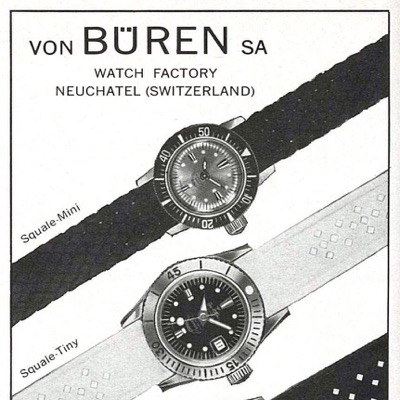
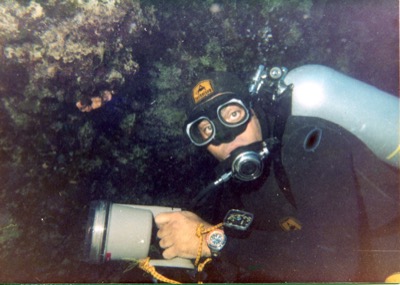
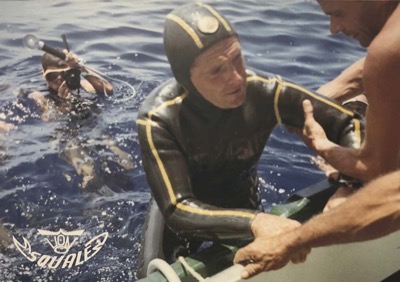

Back then, outsourcing was common practice in Swiss watchmaking. Movements came from one supplier, dials and hands from another, and cases from specialists like Squale. While modern brands often try to maintain the illusion of complete in-house production, back in the day, case makers were celebrated for their craftsmanship. One of the best-known examples was Erwin Piquerez SA (EPSA), whose dive helmet logo adorned legendary Super Compressor watches from Longines, Wittnauer, and others.
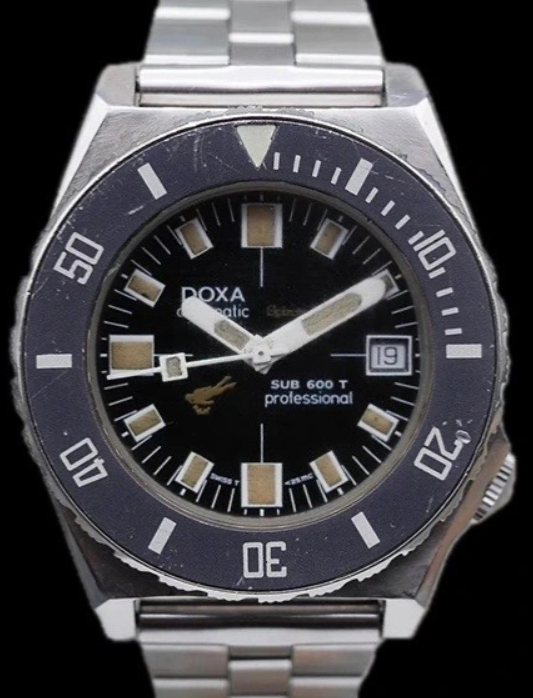
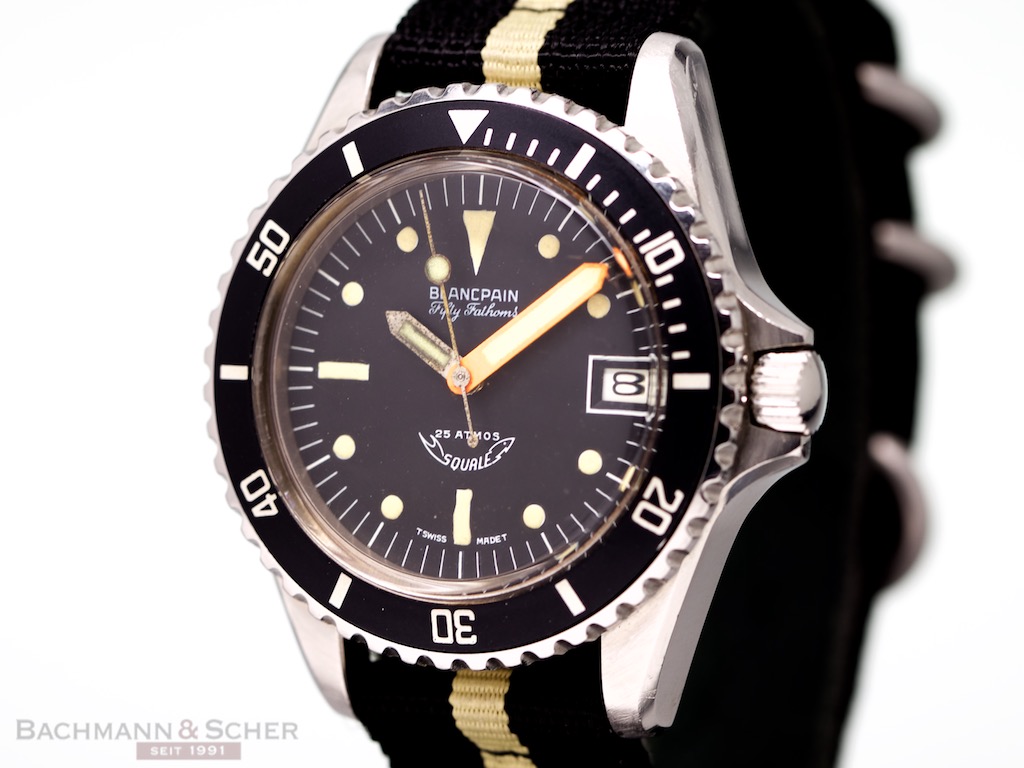
Squale, alongside EPSA, was a dominant force in the 1960s and ’70s, with its 50 Atmos case featuring a distinctive 4:00 crown. This design was embraced by industry giants like Blancpain, Auricoste, DOXA, and (TAG) Heuer well into the 1980s. In fact, when the German military needed a combat-ready dive watch, Blancpain turned to Squale for the case, leading to the legendary “Bund” Fifty Fathoms. The same 50 Atmos case also briefly appeared on the DOXA SUB 600T, though it never quite matched the popularity of DOXA’s original design. Even Heuer, as it transitioned into TAG Heuer, used Squale cases for its 1000-meter Professional divers, sometimes co-branding them with French dive gear company Spirotechnique.



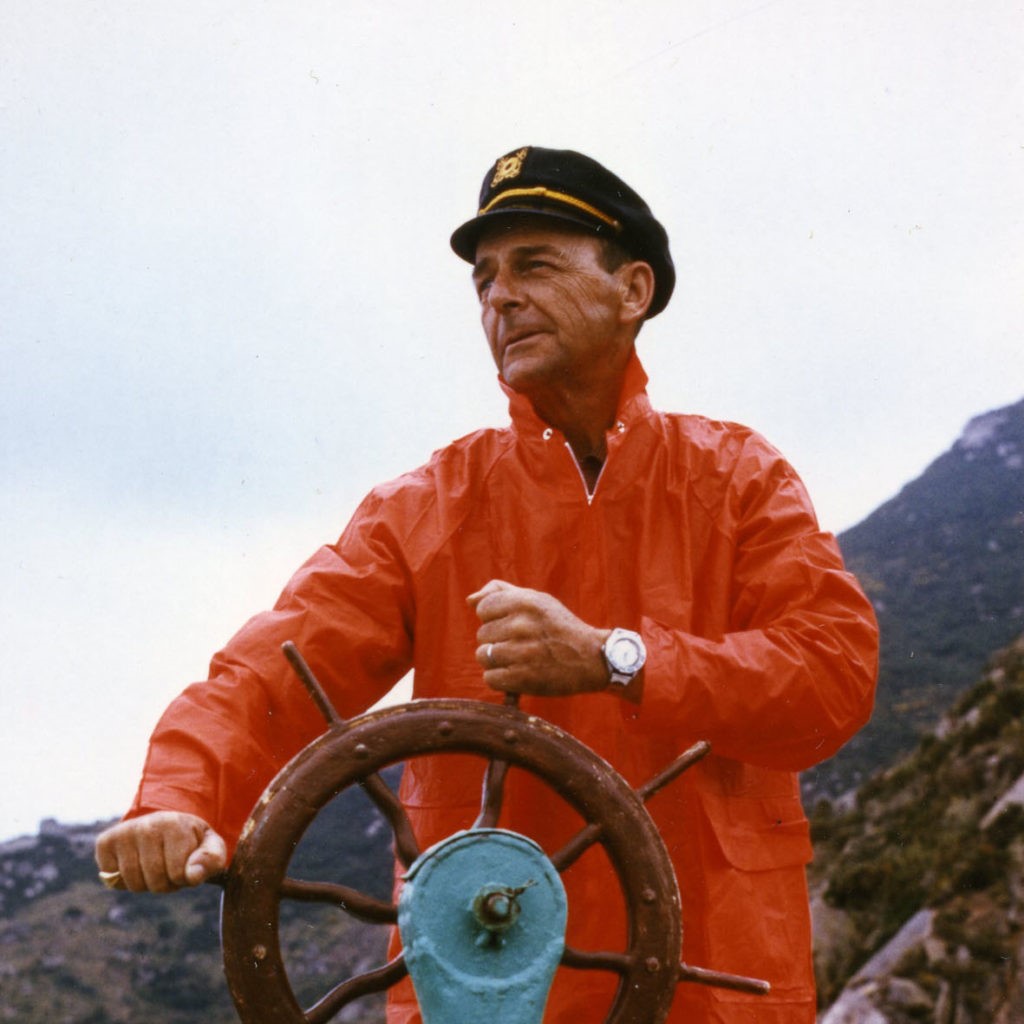
But Squale wasn’t just a supplier—they had their own line of dive watches, which were well-regarded by serious divers. In the late ’60s, Squale watches were awarded as prizes in freediving competitions and worn by record-breaking divers. The brand’s closest thing to a celebrity ambassador was Jacques Mayol, the freediving pioneer who inspired Luc Besson’s film The Big Blue. Mayol set a world record in 1970 while wearing a Squale and was a close friend of the Von Buren family. Old family photos show Charles Von Buren himself diving in the Mediterranean, often wearing nothing but a Speedo, a dive mask, and his trusty Squale.
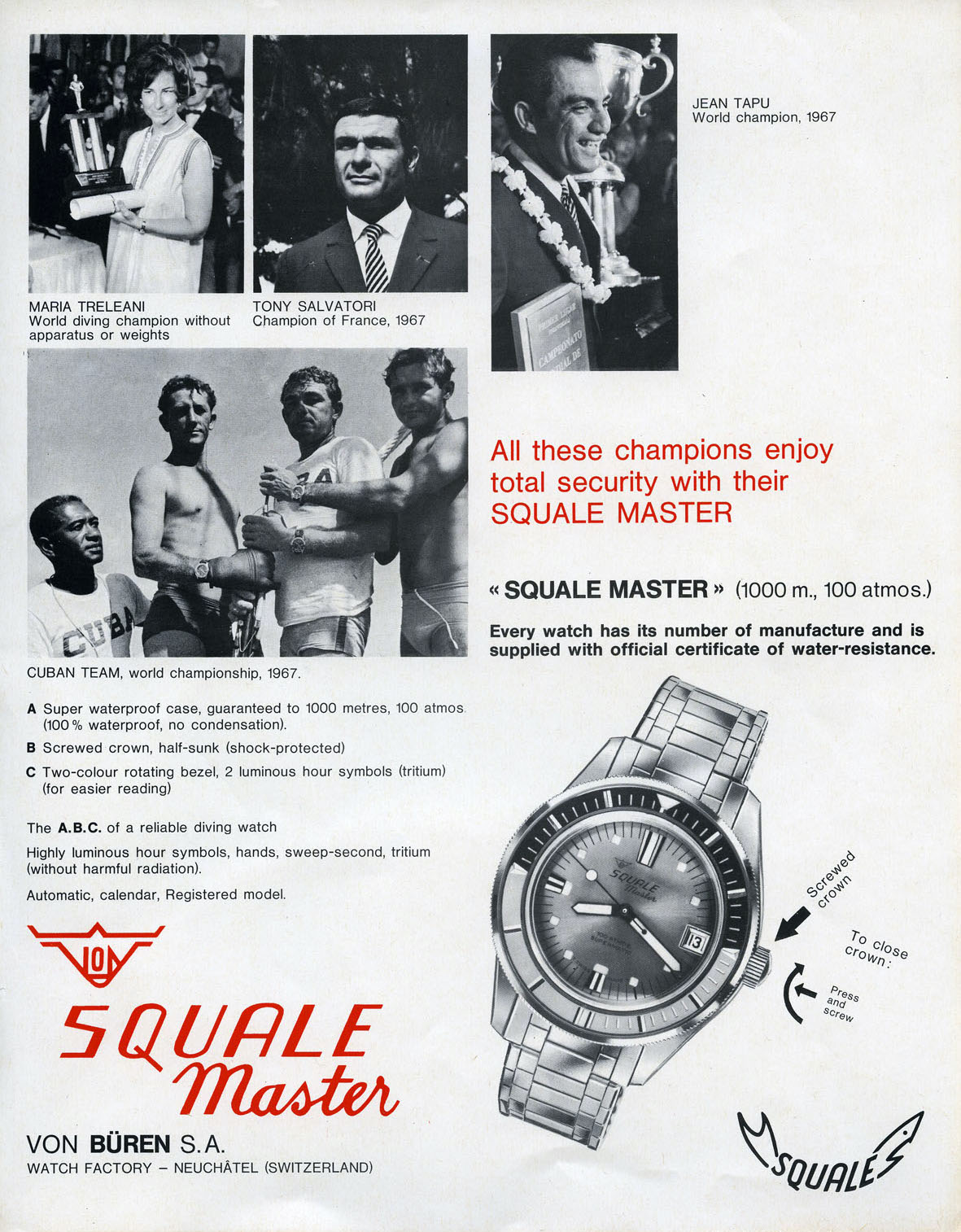
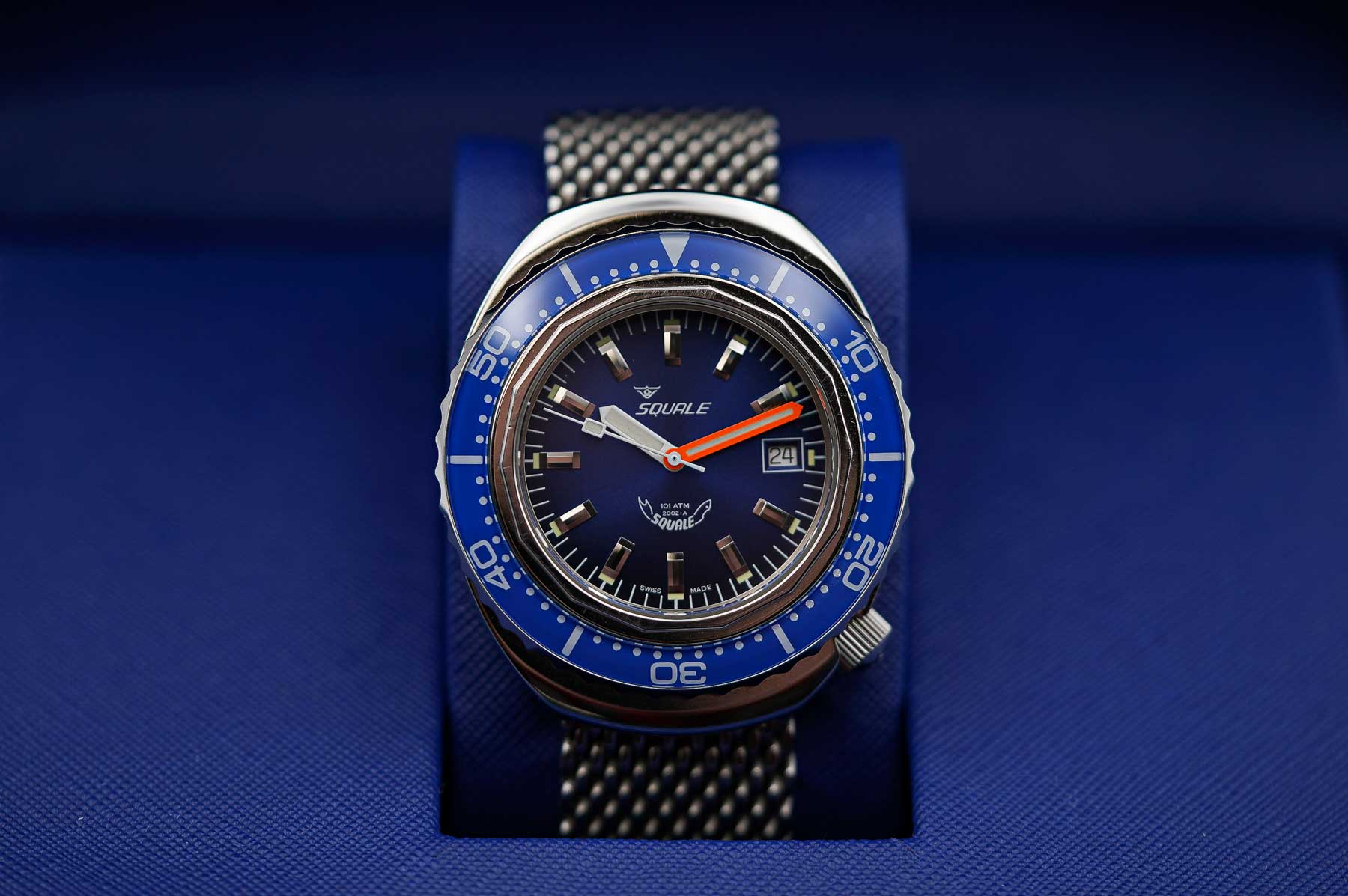
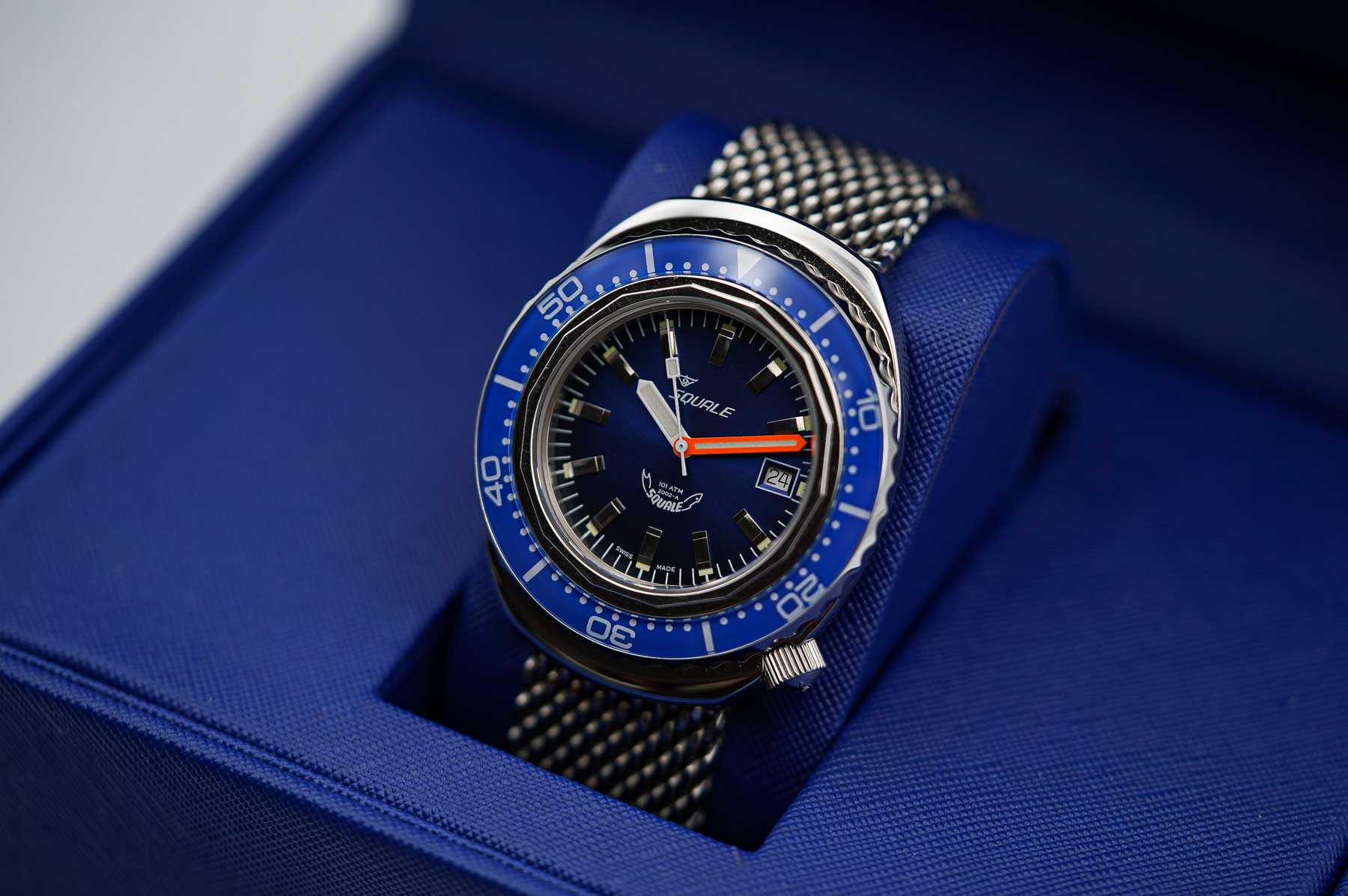
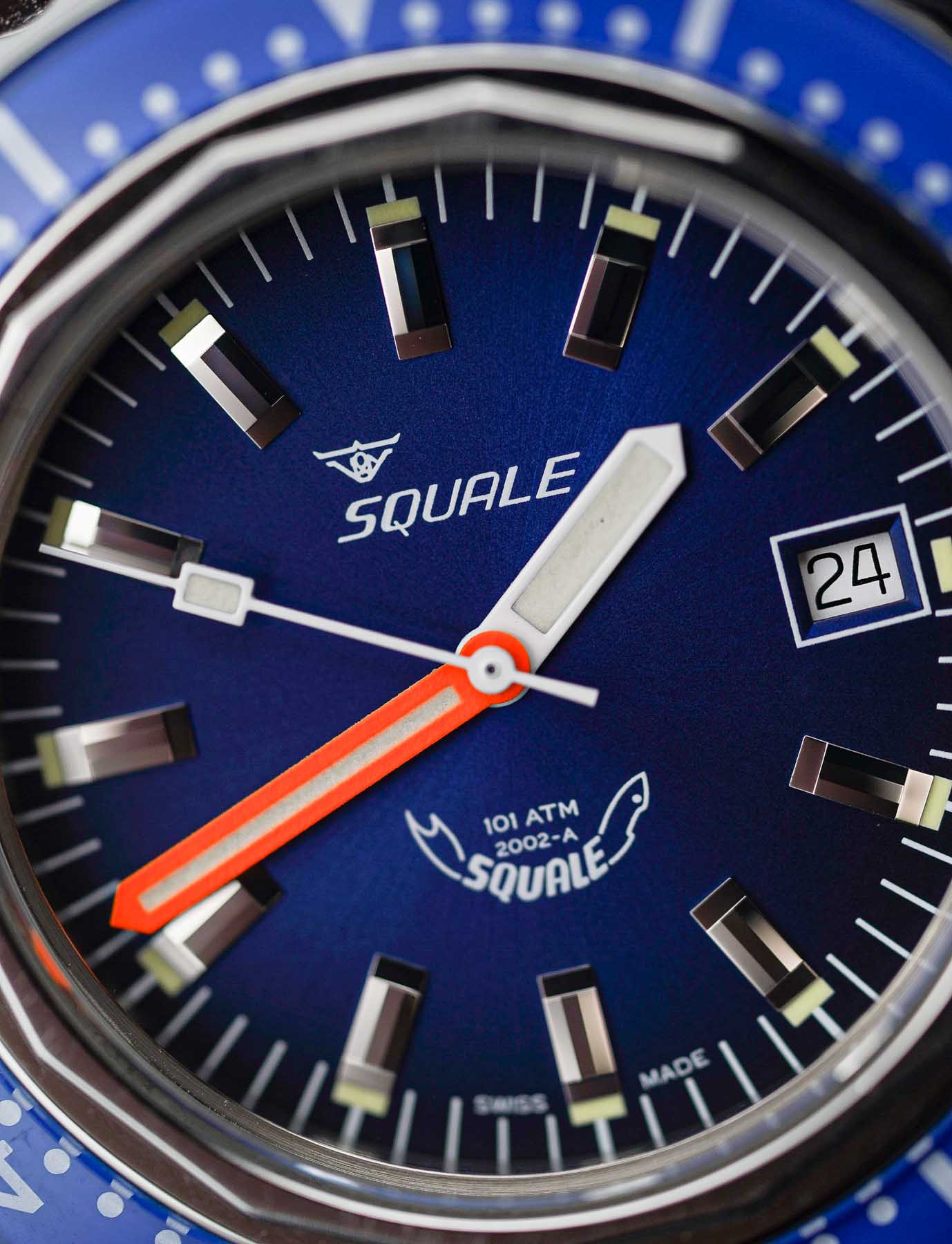
Among Squale’s most famous designs was the 101 ATM, a ’70s classic rated to over 1,000 meters. It featured a distinctive, lug-less case and a unique bakelite bezel, which required pressing down to rotate. Squale also dabbled in creating a “poor man’s Ploprof,” complete with a push-button bezel lock, though it never caught on like its other models.
Despite its rich heritage, Squale today is a shadow of its former self. What was once a renowned case manufacturer is now a brand coasting on nostalgia, hampered by poor marketing and a questionable reputation. While the passion that fueled its early days is still buried in its history, its modern presence remains a divisive topic among watch enthusiasts.
You can read my full review of the Squale 2002 “101 Atmos” here
 KaminskyBlog
One thought on “Squale History – Bull***t or Genuine?”