

Today we’re taking a look at a watch from a company called DIY Watch Club. About six years ago, I reviewed one of their DIY watch kits, and that experience actually played a role in inspiring me to pursue watchmaking—or at least to learn the fundamentals. The concept is simple: you receive a full kit with all the tools and components needed to assemble your own watch. It’s a hands-on, engaging way to learn how a watch comes together, and it makes for a great story once your build is complete.
Back when I reviewed their first kit, the company offered just one model. Fast forward to today, and their catalog has expanded significantly. They now offer everything from simple, classic three-hand watches to GMT-equipped dive watches and even tourbillons. They also sell individual parts, allowing you to create something unique and tailored to your taste. For this build, I went with a vintage-style dive watch—dive watches tend to be my go-to for daily wear.


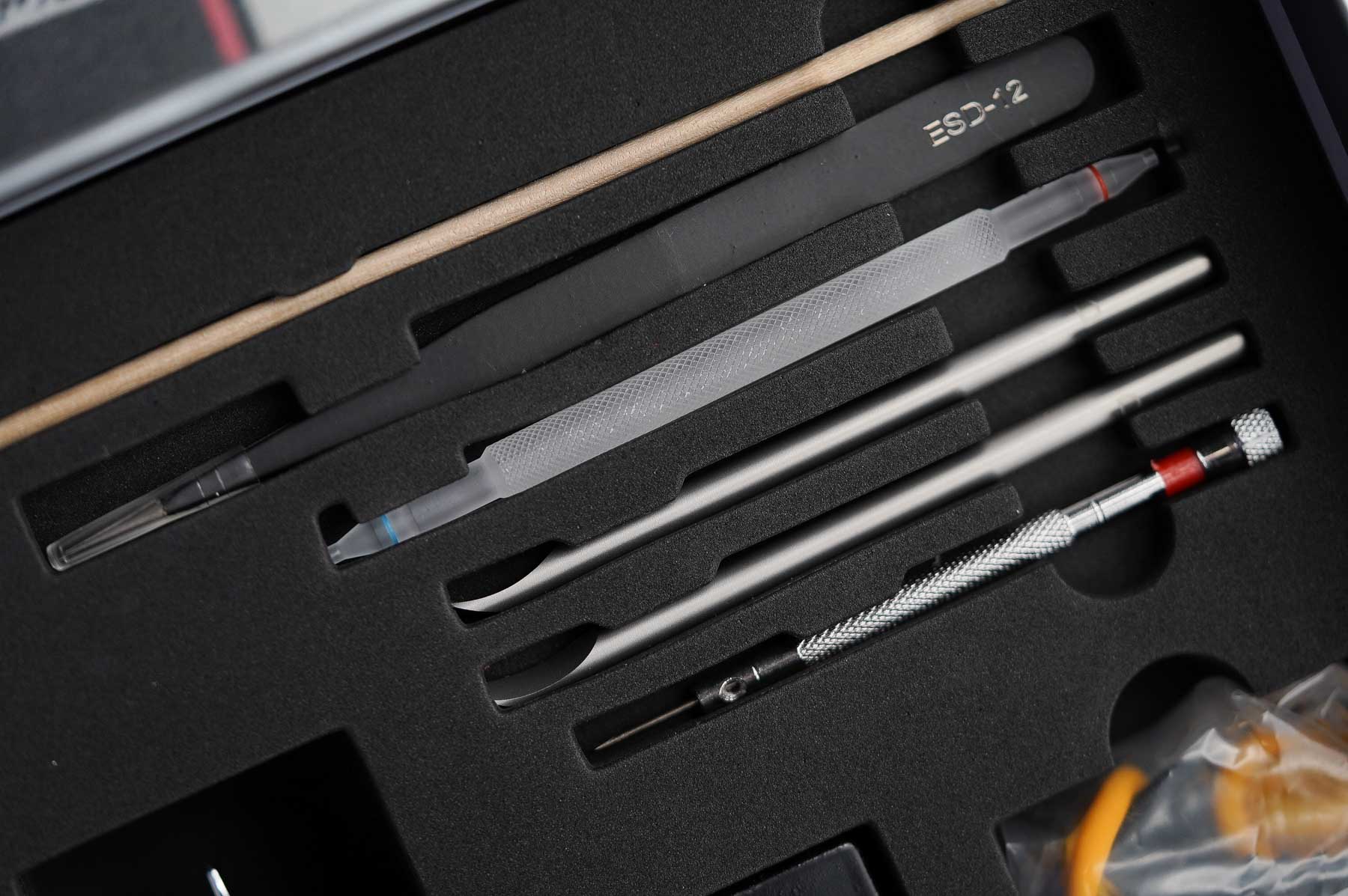
The kit arrived in much-improved packaging compared to my previous experience. Each component was carefully packed in its own compartment, and the tools included have seen a modest upgrade. While they still fall short of professional quality—and I wouldn’t recommend them for serious watchmaking—they’re sufficient for this kind of project. That said, there were a couple of oversights: the kit included a screwdriver that wasn’t needed, and it lacked a bracelet pin remover, which is essential for sizing the bracelet. That omission is a bit disappointing, especially since not everyone has access to one.


I chose not to use the video instructions this time, as I’m already familiar with the tools and assembly process. I also made a point of keeping things realistic by not using my professional watchmaker’s bench or tools—instead, I assembled the watch at my dining table using only what was provided in the kit.


The assembly process was straightforward, at least for someone with my experience. The parts fit well overall, though setting the minute and second hands can be tricky—aligning the second hand precisely can be a bit frustrating. During the build, I noticed two areas where the watch itself could be improved. First, the crown should be a screw-down rather than a push-pull, especially for a diver. Second, the crystal is currently hesalite, but a sapphire upgrade would offer better durability without significantly increasing the cost or complicating the assembly.
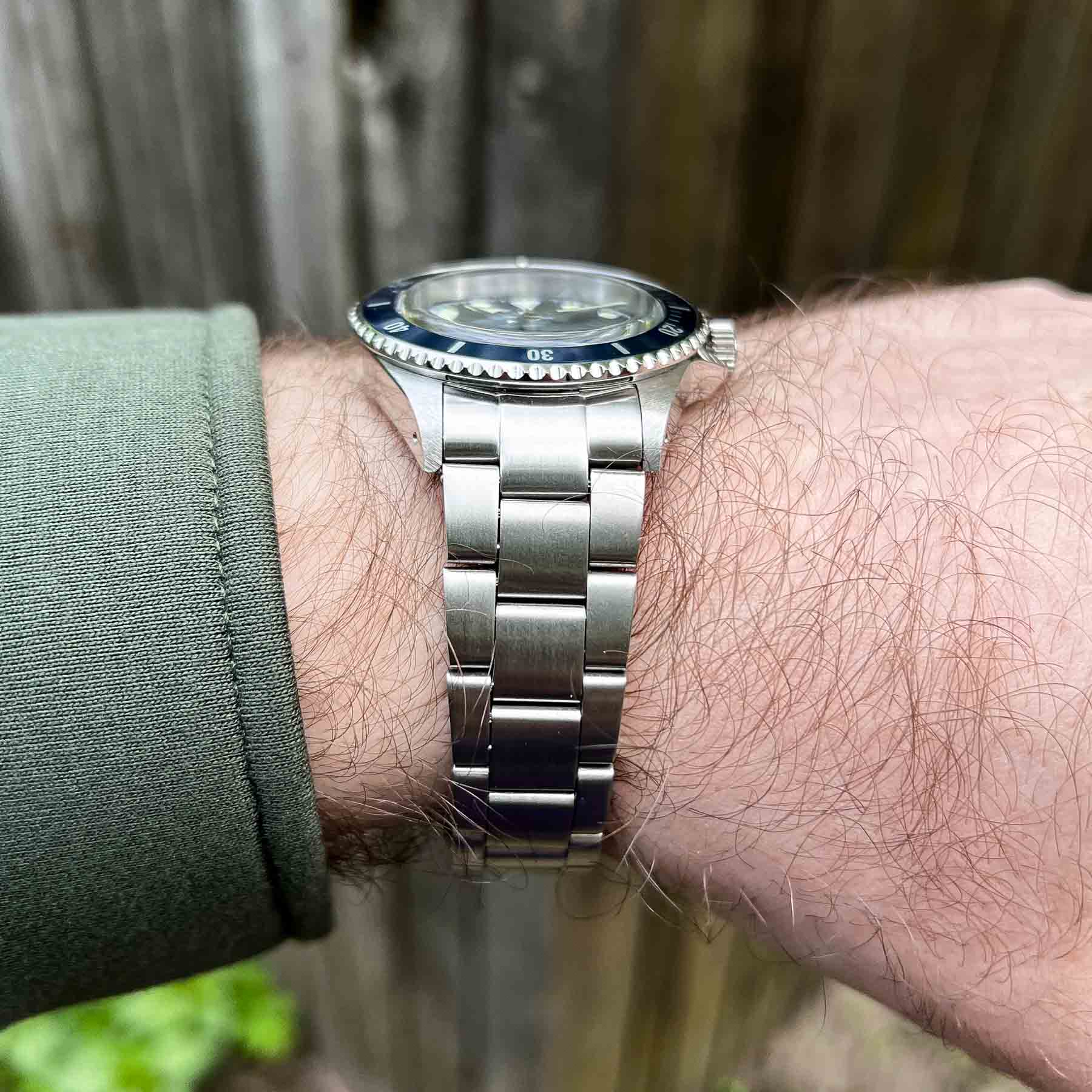
The watch case is crafted from 316L stainless steel and follows the design cues of a vintage Rolex Submariner. It features a brushed finish on the top surface, complemented by polished sides, creating a nice contrast and classic look. The case measures 40mm in diameter, with a lug-to-lug distance of 47.5mm and a total thickness of 13.3mm—including the high-domed hesalite crystal. The drilled lugs are a thoughtful addition, making strap changes much easier.

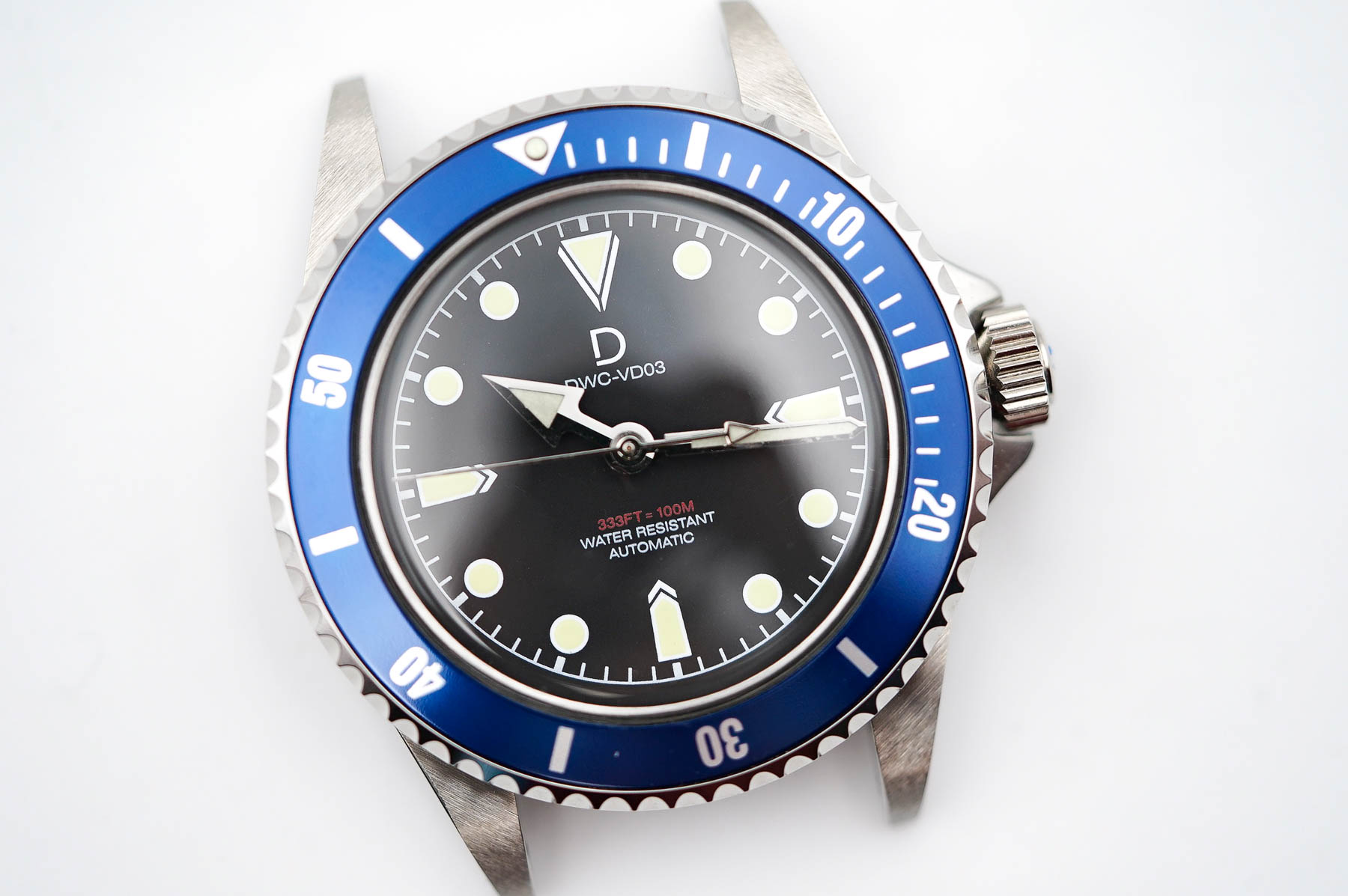

At the 3 o’clock position, you’ll find polished crown guards flanking a signed, polished push-pull crown. As I mentioned earlier, I would have preferred a screw-down crown, especially given this is a dive-style watch—a screw-down crown would improve water resistance and stay more true to the genre. On top, there’s a 60-click unidirectional bezel. While the action is decent, I’d personally prefer a 120-click bezel for more precise alignment. There’s also a bit of play in the bezel, which is likely due to the lower click count. The blue aluminum bezel insert needed to be installed manually using the provided double-sided adhesive—a surprisingly simple and straightforward task.

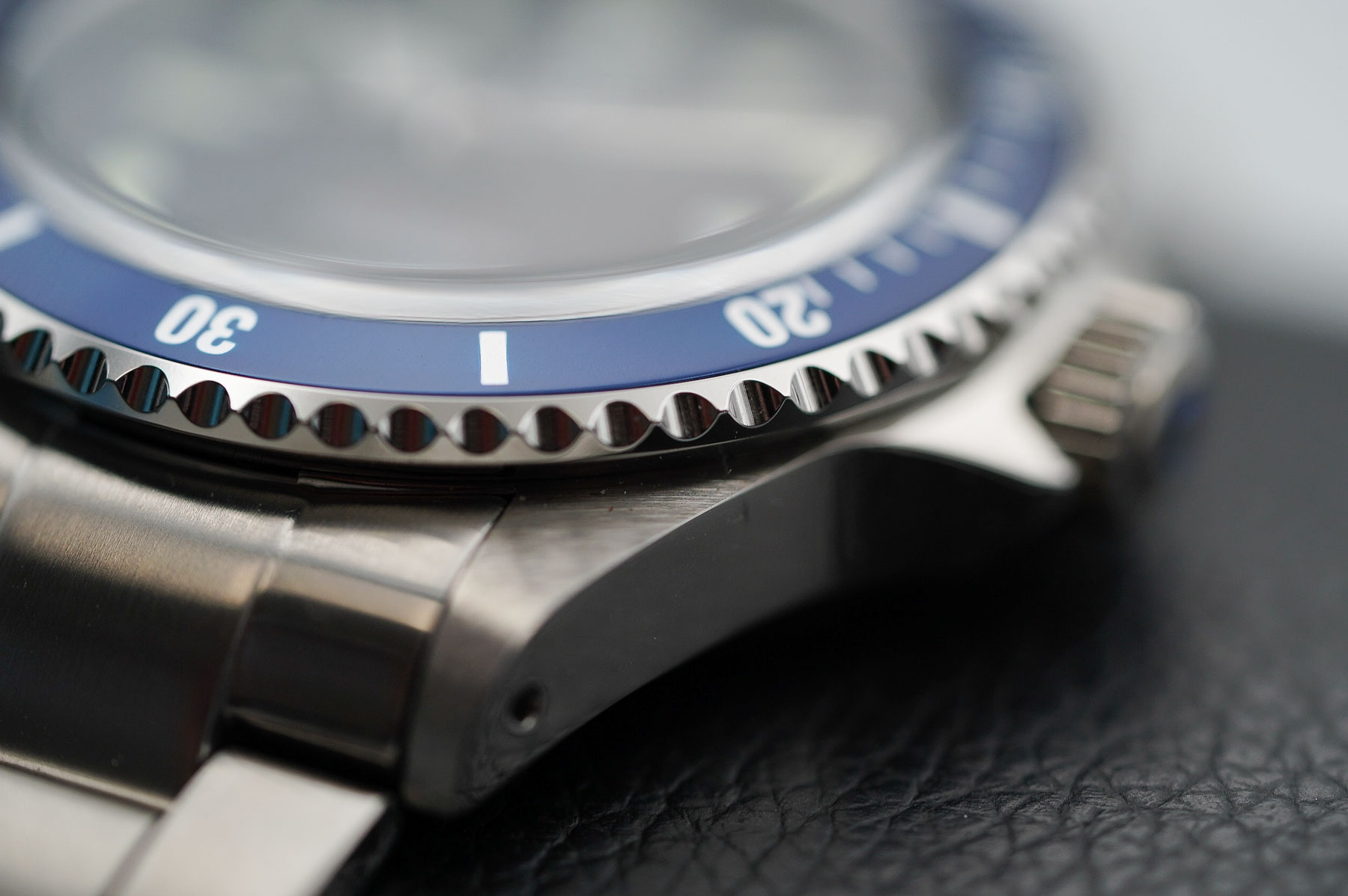
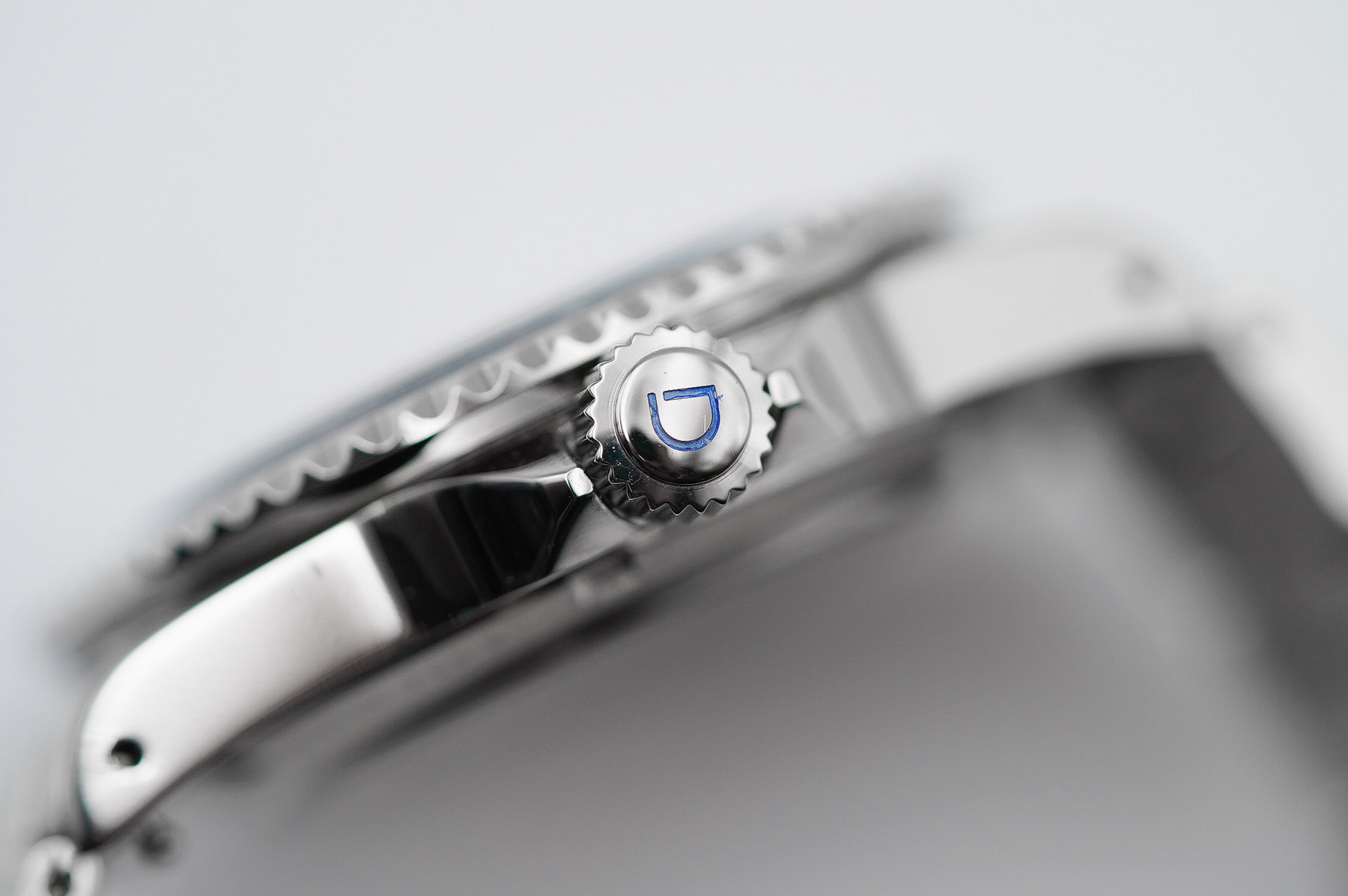


Around the back, the watch features a screw-down exhibition case back fitted with a flat mineral crystal. This contrasts oddly with the front crystal, which is a high-domed hesalite. Ideally, the top crystal should have been upgraded to sapphire—or at the very least mineral—for improved durability, especially on a watch intended to be worn regularly. Overall, the case is well-made and attractively finished, with a vintage character and solid construction. However, there are areas where it could be meaningfully improved. Even if such upgrades resulted in a slightly higher price point, I believe more serious watch enthusiasts would find the trade-off well worth it.
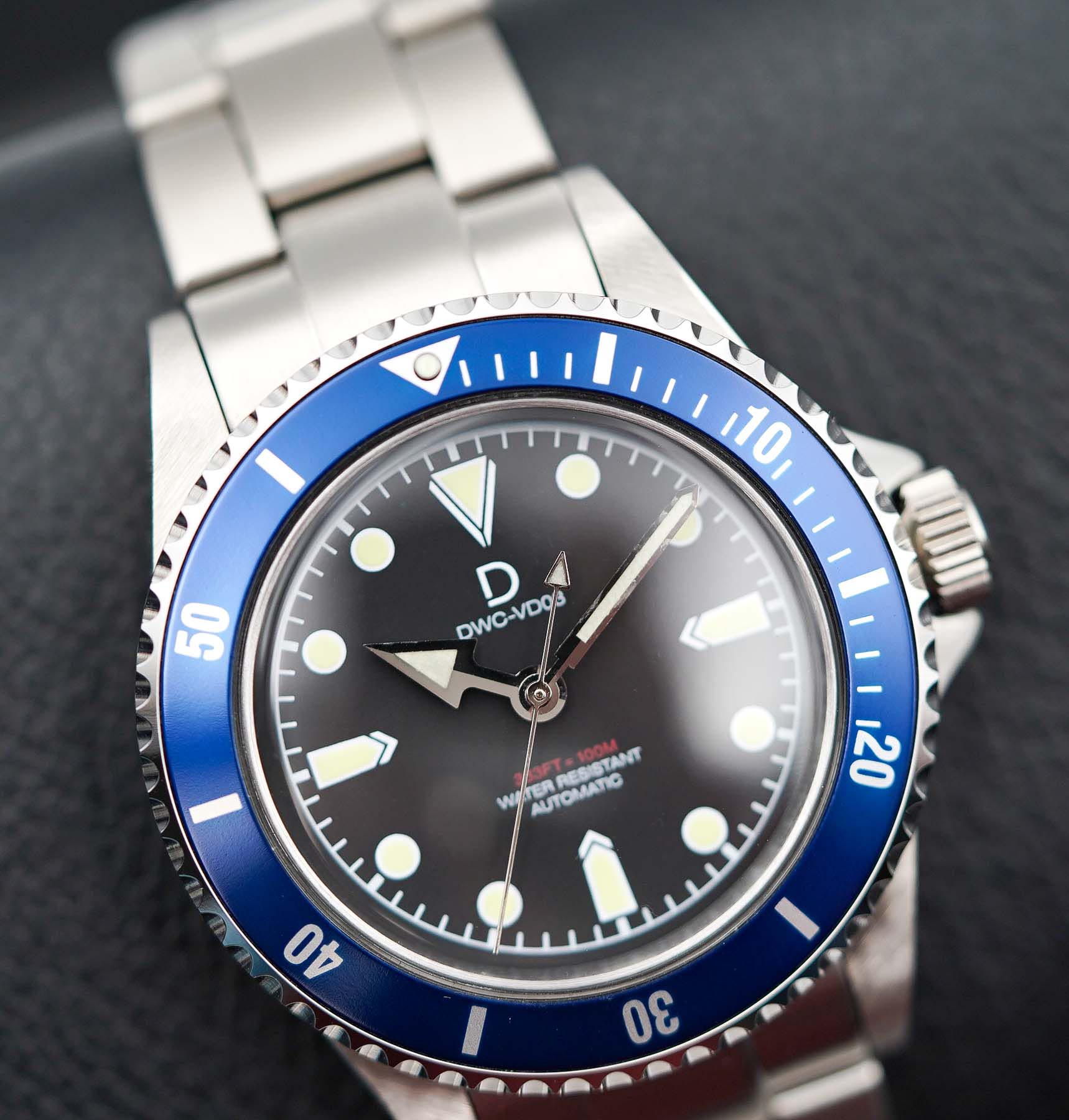
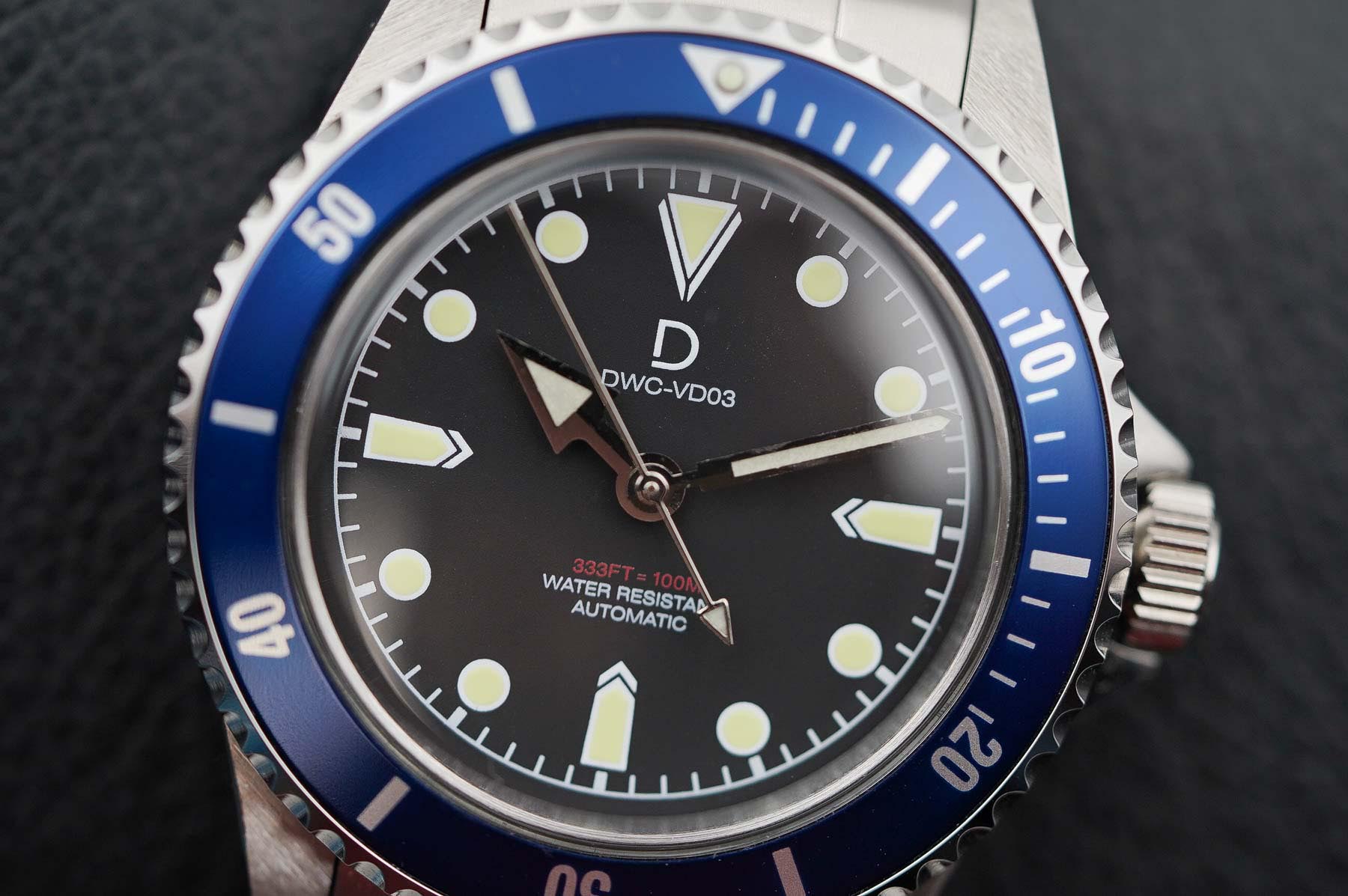

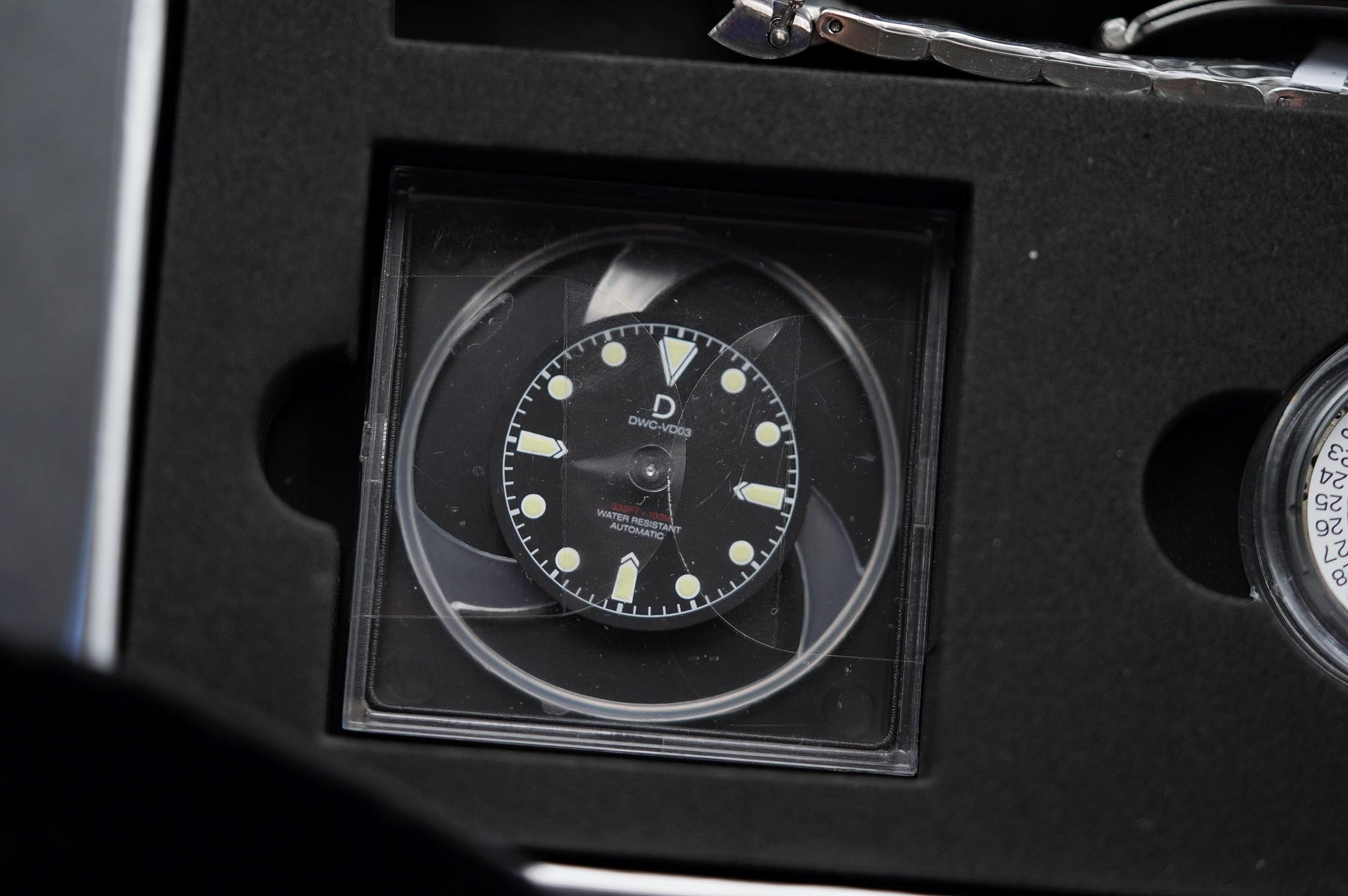
The dial features a clean, matte black finish with white printed hour markers filled with lume for low-light visibility. Its design clearly pays tribute to the classic Rolex Submariner aesthetic, offering a timeless and familiar look. A white printed minute track runs along the outer edge of the dial, enhancing legibility without cluttering the layout. At the 12 o’clock position, the DIY Watch Club logo is prominently displayed, with the model name “DWC-VD03” printed just below it. At 6 o’clock, the text indicates the watch’s water resistance and “Automatic” movement designation, all in simple red/white print that maintains the overall minimalistic approach.
The handset is equally restrained yet functional: the polished hour hand is arrow-shaped, the minute hand features a straight index design, and the slim seconds hand includes an arrow-shaped counterweight. All three hands are also lume-filled, ensuring visibility in the dark and maintaining consistency with the dial’s practical, tool-watch character. Together, these elements contribute to a dial that is straightforward, highly legible, and faithful to the vintage era the watch is designed to homage.
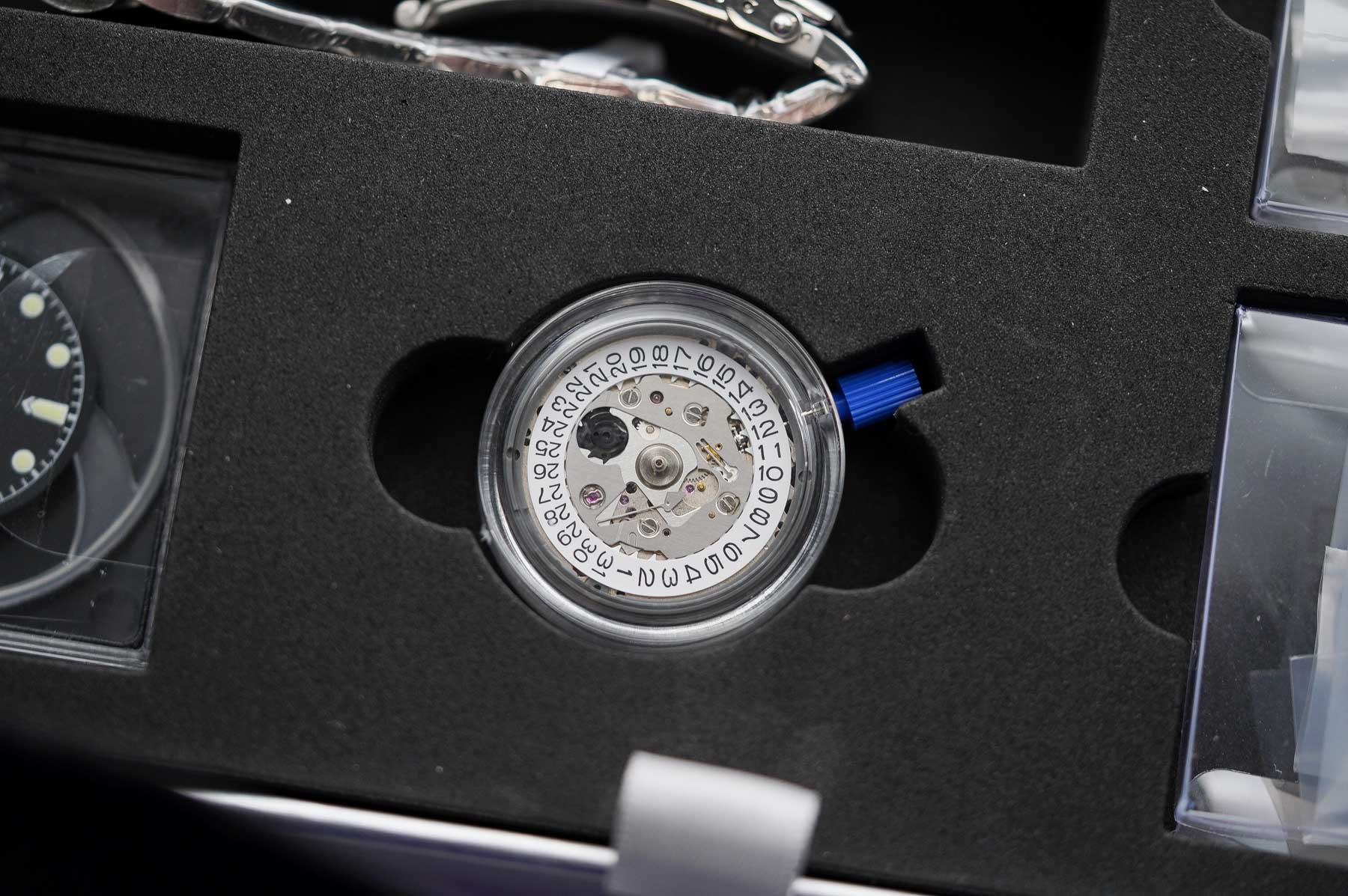
Inside the watch we have the TMI NH35 movement (also known as the Seiko NH35A). Which is one of those movements that just gets the job done—and that’s exactly why so many watchmakers, modders, and enthusiasts love it. Built by Time Module Inc., a Seiko subsidiary, it’s known for being tough, reliable, and incredibly easy to work with. It beats at 21,600 vibrations per hour, has 24 jewels, and gives you around 41 hours of power reserve. You also get modern features like hacking and hand-winding, which make setting and wearing the watch feel more refined. It’s not the most accurate movement out of the box—expect around -20 to +40 seconds per day—but it can be regulated fairly easily if you’re picky about precisionm I actually regulated mine to run at +5 seconds per day.


What really stands out is how forgiving and versatile the NH35 is. It is widely used movement. Whether it’s a dive watch or a casual everyday piece, this movement just keeps ticking. Plus, the availability of parts and compatibility with many case designs make it a go-to for watch modding. In short, the NH35 isn’t fancy—but it’s honest. It’s the kind of movement that makes you appreciate mechanical watches for what they are: tiny machines built to last. For the price, it’s hard to beat.
The bracelet is crafted from 316L stainless steel and styled after the classic Oyster bracelet, featuring three-piece links. It has a satin-brushed finish on the top surfaces with polished sides, giving it a refined, vintage-inspired look. The bracelet includes solid end links, and the links themselves are held together with push pins—though I personally would prefer screw-in links for easier and more secure sizing. The clasp is stamped and signed, offering three micro-adjustments to help dial in a more precise fit. One feature I really appreciate is the inclusion of quick-release spring bars, which make swapping between the bracelet and a strap incredibly easy—no tools needed. On the wrist, the bracelet is very comfortable and doesn’t tug at arm hairs, which is always a plus.


Overall, I genuinely love this watch and it’s definitely staying in my collection. Sure, it has its flaws—it’s not a dive watch I’d trust in deep water—but that’s not really the point. The real value here is in the hands-on experience of building the watch yourself. That process gives you a personal connection to the timepiece that’s hard to replicate with something bought off the shelf. There’s room for improvement—adding a bracelet sizing tool, upgrading to a screw-down crown, and swapping the hesalite for sapphire to boost water resistance to at least 200m—but even as it stands, I’d absolutely recommend this kit. Whether you’re a beginner enthusiast or a seasoned collector, there’s something genuinely rewarding about building your own watch.
 KaminskyBlog