

In the world of horology, few brands carry the enduring legacy and historical depth of Hanhart. Known for their rugged chronographs, signature red pushers, and strong ties to aviation and motorsport, Hanhart has been a pioneer in precision timekeeping for over 140 years. From their modest beginnings in Switzerland to their role in German military aviation, and into modern luxury tool watches, Hanhart’s story is one of relentless innovation, resilience, and craftsmanship.
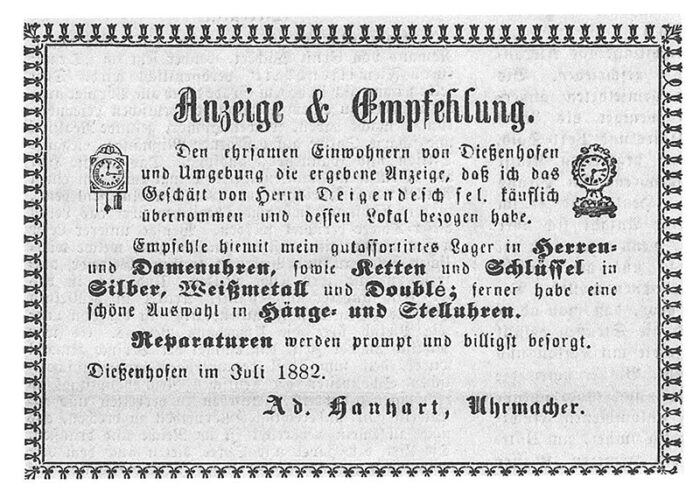

The Hanhart story begins in 1882, in the quiet Swiss town of Diessenhofen near the German border. Johann Adolf Hanhart opened a small watch shop with the goal of creating precise yet affordable timepieces. At a time when precision mechanical watches were still a luxury item, Johann’s vision was unusually inclusive. For the first two decades, the business remained modest in scale, primarily focused on repairing and retailing watches rather than manufacturing.

However, in 1902, Johann made a pivotal decision that would shape the brand’s future: he relocated the company across the border to Schwenningen, Germany. This move placed Hanhart in the heart of Germany’s emerging watch industry, where labor was more affordable and the infrastructure for mass production more advanced. The strategic shift marked the company’s transformation from a local watch shop into a full-fledged manufacturer.

The interwar period was when Hanhart began to emerge as a truly innovative brand. Johann’s son, Wilhelm Julius Hanhart, took over management of the company and steered it in a groundbreaking direction. A passionate sportsman, Wilhelm recognized the need for accurate timing devices in sports. In 1924, Hanhart introduced its first mechanical stopwatch — a product that would become central to the company’s identity for decades.
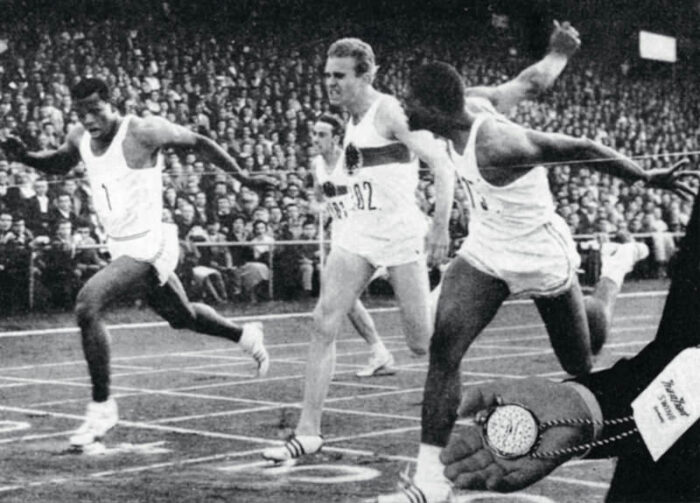
The stopwatch was notable not only for its precision but also for its affordability. Until then, stopwatches were largely confined to professionals in laboratories or wealthy individuals. Hanhart’s model brought this level of timing accuracy to schools, sports clubs, and factories across Europe. The company rapidly expanded its line of stopwatches through the 1920s and 30s, developing both single and split-second variants.
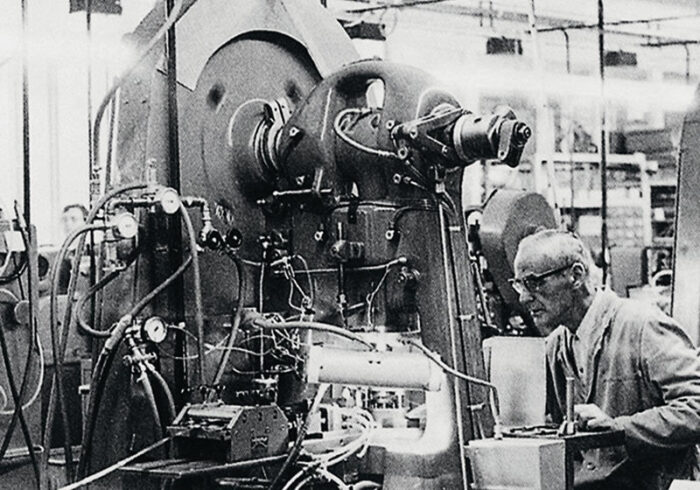

Johann Adolf Hanhart died in 1932. The realignment of the company in the same year, which centered on the discontinuation of the retail business, was a success for the company. In 1932 Hanhart employs 30 people.
In 1938, Hanhart took a major step into the world of chronographs with the launch of the Caliber 40 — a single-pusher column-wheel movement developed entirely in-house. This was followed shortly by dual-pusher models such as the Caliber 41 and the famed TachyTele. These were not merely wristwatches but essential tools for military aviation and artillery.


As tensions in Europe escalated toward World War II, the German Luftwaffe commissioned Hanhart chronographs for its pilots. These watches were robust, legible, and reliable in the harsh conditions of flight. Most notably, they included a red-painted pusher — now an iconic Hanhart design detail. While originally introduced to prevent accidental resets during flight, the red pusher has since become a signature aesthetic element of the brand. These wartime chronographs were manufactured under strict standards, and some featured flyback functionality, allowing pilots to reset the chronograph without stopping it — crucial for aerial navigation.


After World War II, Hanhart faced a series of existential challenges. Under Allied regulations, the company was temporarily banned from producing chronographs due to their military associations. Nevertheless, Hanhart managed to resume production in 1948, shifting focus back to civilian stopwatches and industrial timers. This pivot proved successful. By the early 1950s, Hanhart was producing hundreds of thousands of stopwatches annually. Its models were widely used in sports, science, medicine, and manufacturing. The brand’s mechanical timers became an industry standard in everything from auto racing to educational laboratories.

In the mid-1950s, Hanhart also re-entered the chronograph market with civilian versions of its earlier aviation watches. The most notable of these was the Hanhart 417, which found favor not only among pilots but later among collectors, due in part to a famous wrist: Steve McQueen’s. The Hollywood icon was frequently seen wearing a 417, giving it a cult status that persists today.


Like most traditional watchmakers, Hanhart was not immune to the impact of the quartz crisis of the 1970s and 80s. As inexpensive quartz watches from Japan flooded the global market, many mechanical watch manufacturers either closed their doors or pivoted sharply. Hanhart chose the latter path. Rather than resist quartz technology, the company embraced it. In 1972, Hanhart developed the Caliber 3305 — its own in-house quartz movement. It also established a plastic injection molding facility to manufacture watch components more efficiently. This period saw Hanhart produce millions of quartz stopwatches, ensuring the company’s survival and relevance.




Though mechanical wristwatches were less of a focus during these decades, Hanhart’s industrial division flourished. The company’s timing devices were used in Olympic Games, automotive rallies, and even aerospace engineering. By the late 1990s, the mechanical watch renaissance had begun. Collectors, enthusiasts, and the broader public were rediscovering the beauty and craftsmanship of traditional horology. For Hanhart, this shift presented an opportunity to reintroduce its iconic designs in modern form.




In the early 2000s, Hanhart launched the “Pioneer” collection — a line of mechanical chronographs that paid direct homage to its 1930s and 40s aviation watches. These models featured vintage-inspired dials, cathedral hands, fluted bezels with red indicators, and of course, the signature red pusher. Soon after came the “Primus” collection — a more contemporary, stylized take on the tool chronograph, with bold cases, skeletonized lugs, and high-performance specs. These watches were designed to appeal to a new generation of buyers who valued heritage but demanded modernity.

Today, both collections coexist in Hanhart’s catalog, offering options for both traditionalists and modern adventurers.
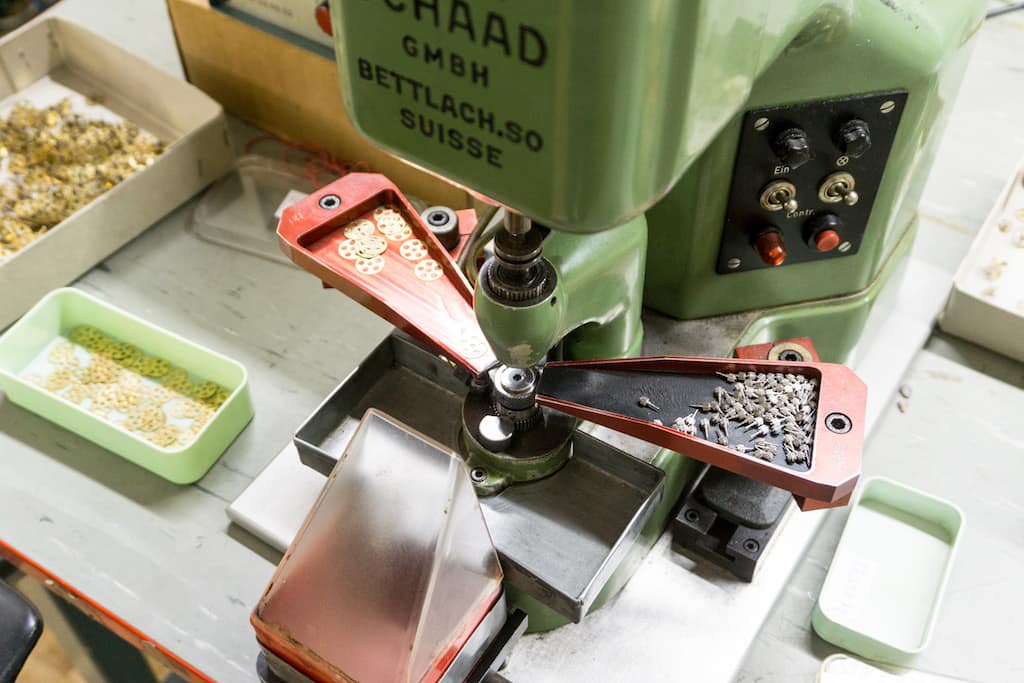
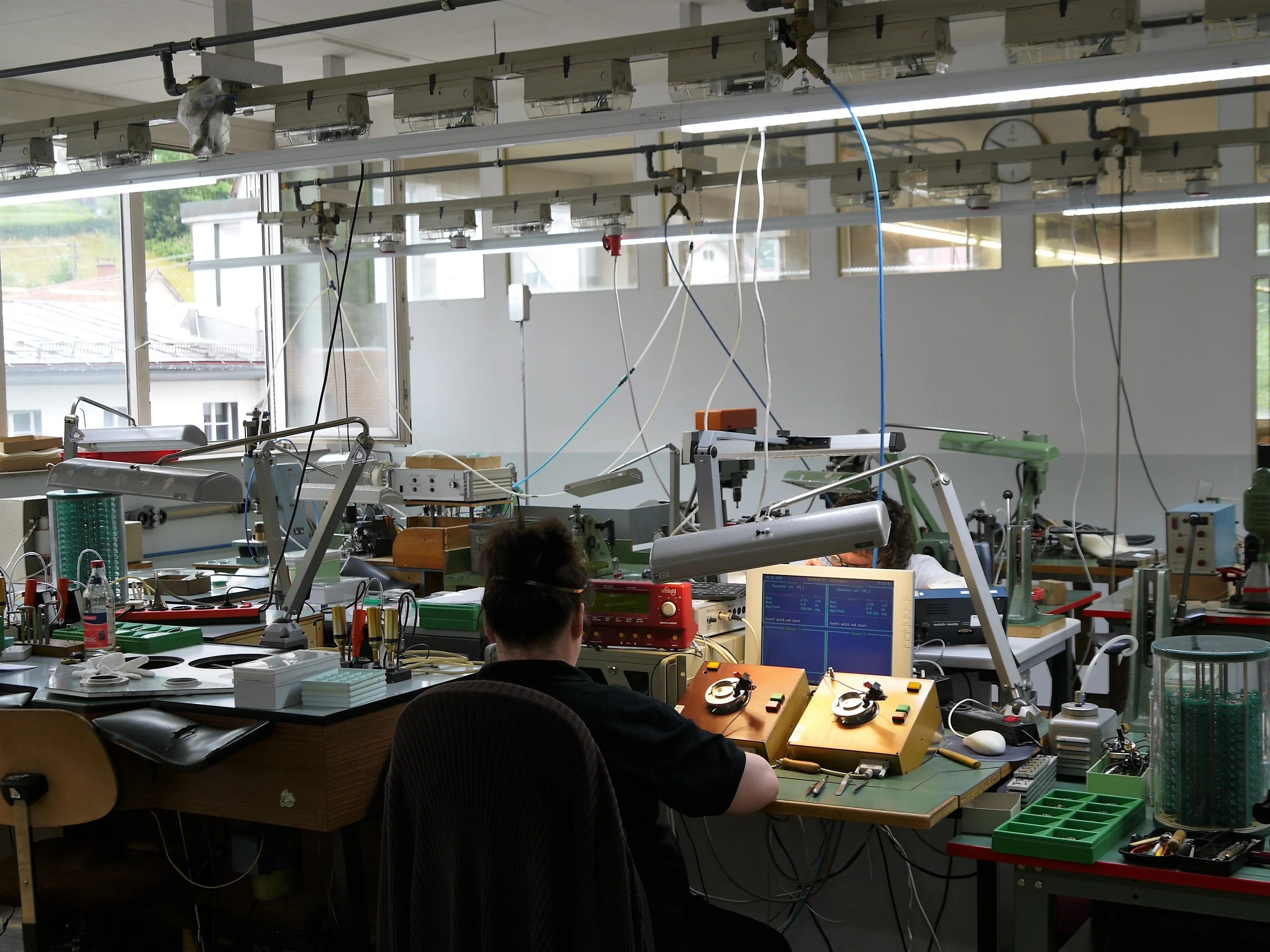
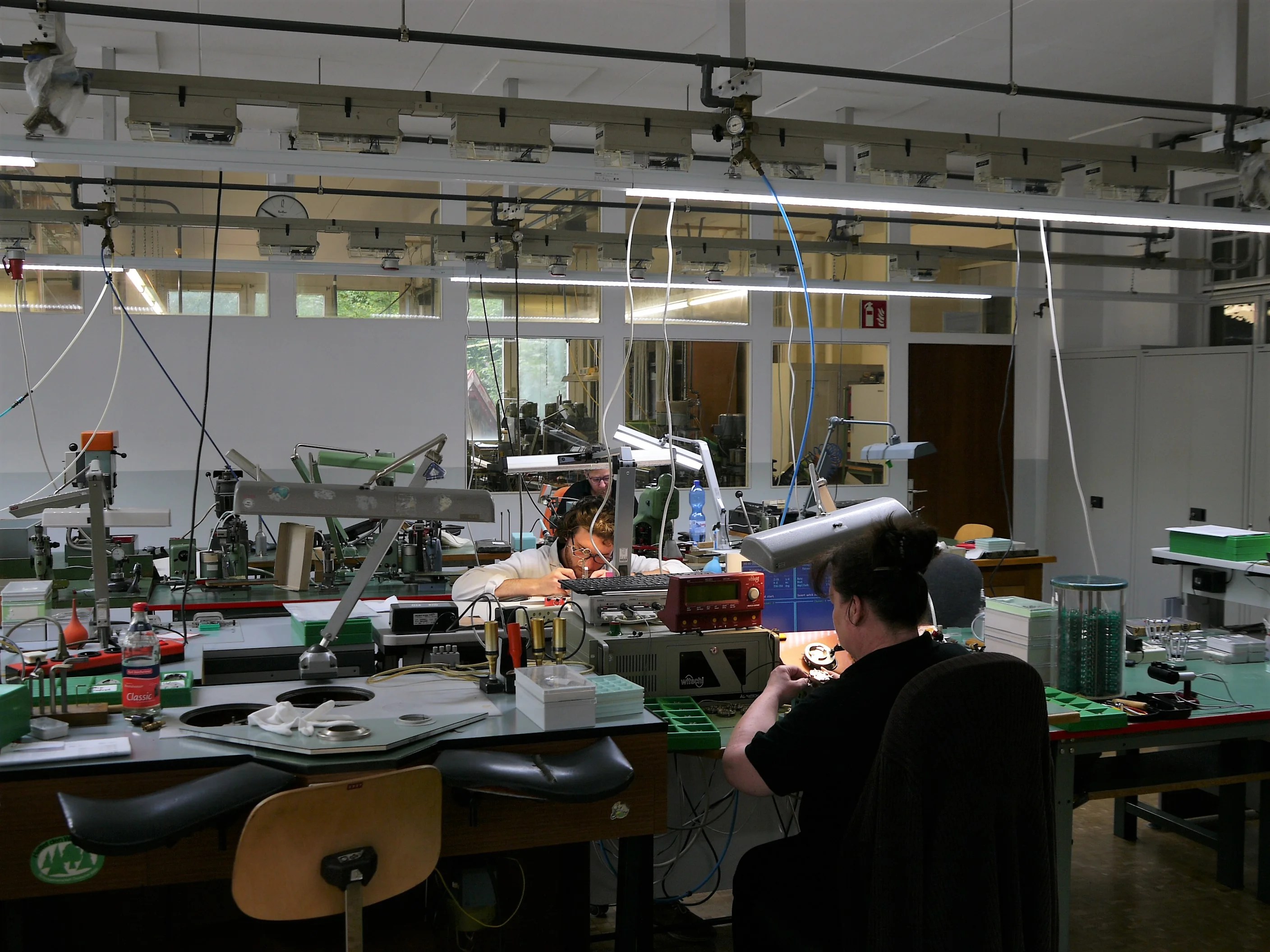
A key part of Hanhart’s appeal is its vertically integrated production. The company continues to operate out of Gütenbach, Germany, in the Black Forest region. This site handles the majority of case production, assembly, and quality control. While Hanhart sources movements from Swiss specialists such as Sellita, many components — including cases, dials, and pushers — are still produced in-house.

This allows for high levels of customization and quality assurance. Limited editions, such as the “Pioneer One” and reissues of the 417, are produced in small batches, with each timepiece undergoing meticulous testing before it leaves the factory.
One cannot discuss Hanhart without mentioning the red chronograph pusher. Originally a practical addition to prevent pilots from accidentally resetting the stopwatch mid-flight, the red pusher has become a symbolic and visual signature. According to company lore, one pilot’s wife even painted the button red herself before her husband left for a mission, reminding him of home. Whether fact or folklore, the story speaks to the emotional connection many wearers have with Hanhart watches. The brand’s other design hallmarks — fluted rotating bezels with red markings, clean Arabic numeral dials, oversized crowns, and legible subdials — are all about function first. These are not watches for the sake of fashion; they are tools designed to perform under pressure.

Beyond technical achievement, Hanhart has also made a mark in popular culture. Steve McQueen’s affection for the Hanhart 417 brought attention to the brand during Hollywood’s golden age. Today, vintage Hanhart chronographs — especially military-issued ones — are highly sought after by collectors. Modern reissues, such as the 417 ES (Edelstahl, or stainless steel), offer all the charm of the original with updated movements and materials. These models consistently sell out, proving that Hanhart’s legacy is not just historical, but very much alive.




Few brands in the watchmaking world can claim a heritage as multifaceted as Hanhart. From military aviation to motorsport, from mechanical stopwatches to modern reissues, Hanhart has remained steadfast in its mission: to create instruments of unmatched precision and reliability. What sets Hanhart apart is its refusal to compromise. Whether it’s a stopwatch used at the Nürburgring or a flyback chronograph strapped to a pilot’s wrist, every Hanhart timepiece is built with purpose, crafted with care, and steeped in history.
For the modern enthusiast, a Hanhart watch is more than a tool or an accessory — it’s a link to a rich tradition of innovation, resilience, and excellence in timekeeping.
 KaminskyBlog
One thought on “Brief History of Hanhart Watches: A Precision-Driven Legacy Through Time”