

In the world of horology, where heritage and craftsmanship define value, few brands embody these ideals as completely and consistently as Stowa. Founded in 1927 by Walter Storz, Stowa (a portmanteau of Storz and Walter) has spent nearly a century quietly perfecting the art of watchmaking. Although the brand has remained modest in both its marketing and footprint compared to Swiss giants, it commands immense respect among collectors and design enthusiasts—particularly those with an appreciation for Bauhaus minimalism and functional elegance. Stowa was born in Pforzheim, Germany—a city that would become synonymous with precision watchmaking and jewelry. The late 1920s were a dynamic era for the German watch industry, as new industrial capabilities met a growing demand for accurate, reliable wristwatches. Walter Storz, the son of a watchmaker, combined entrepreneurial spirit with technical know-how to launch the brand with a focus on quality and durability.

Despite the economic and political turbulence of the 1930s, Stowa began to make its mark. In 1935, the company moved to a new facility in the city of Rheinfelden to continue production. It was during this time that Stowa began crafting watches for both civilians and military clients—a decision that would shape its legacy for decades to come. Stowa’s most iconic historical contribution came during World War II, when it became one of five manufacturers commissioned to produce Flieger watches—robust aviation timepieces for the German Luftwaffe. These so-called B-Uhr watches were designed with oversized 55mm cases, highly legible dials, and hacking seconds for precise synchronization.
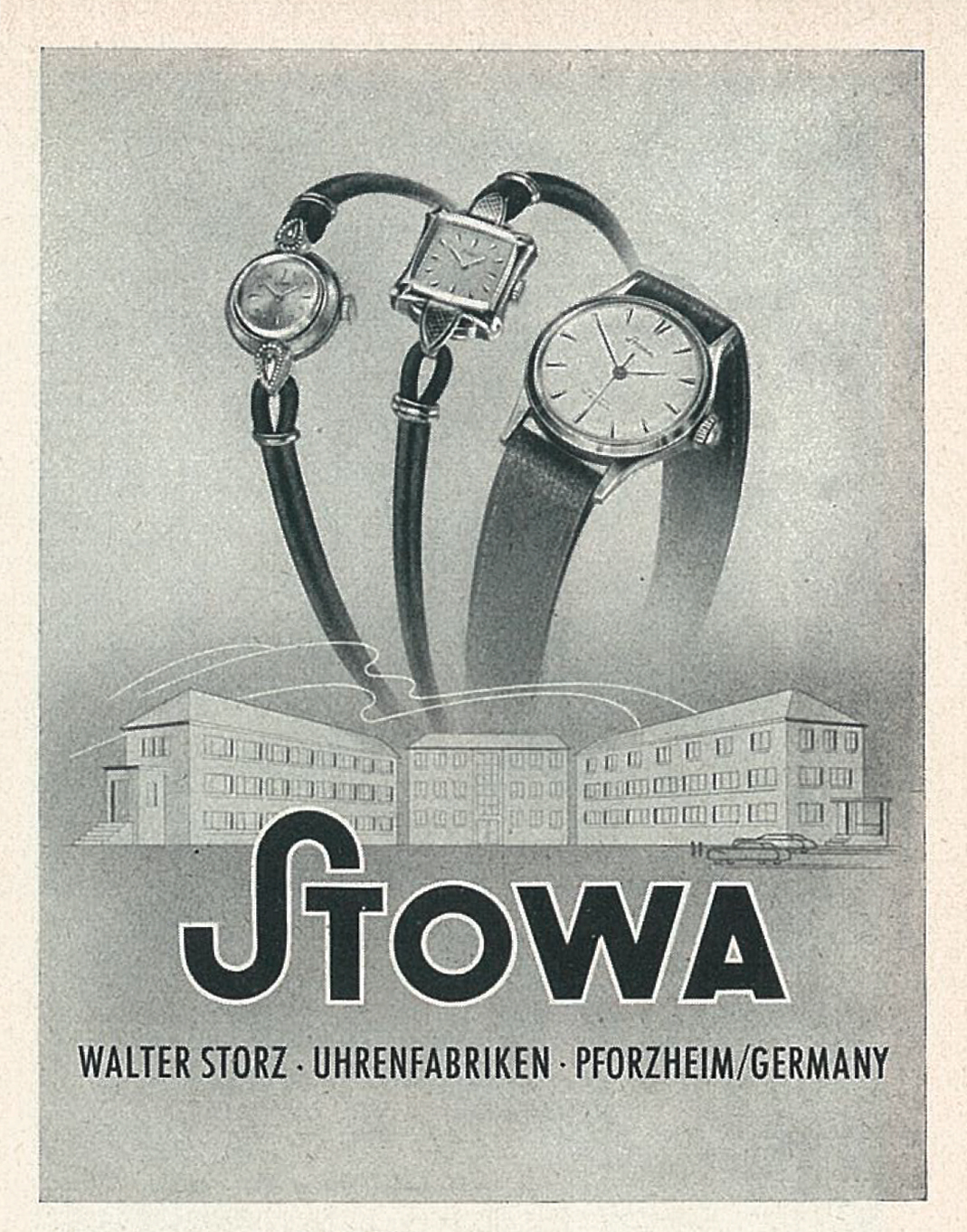
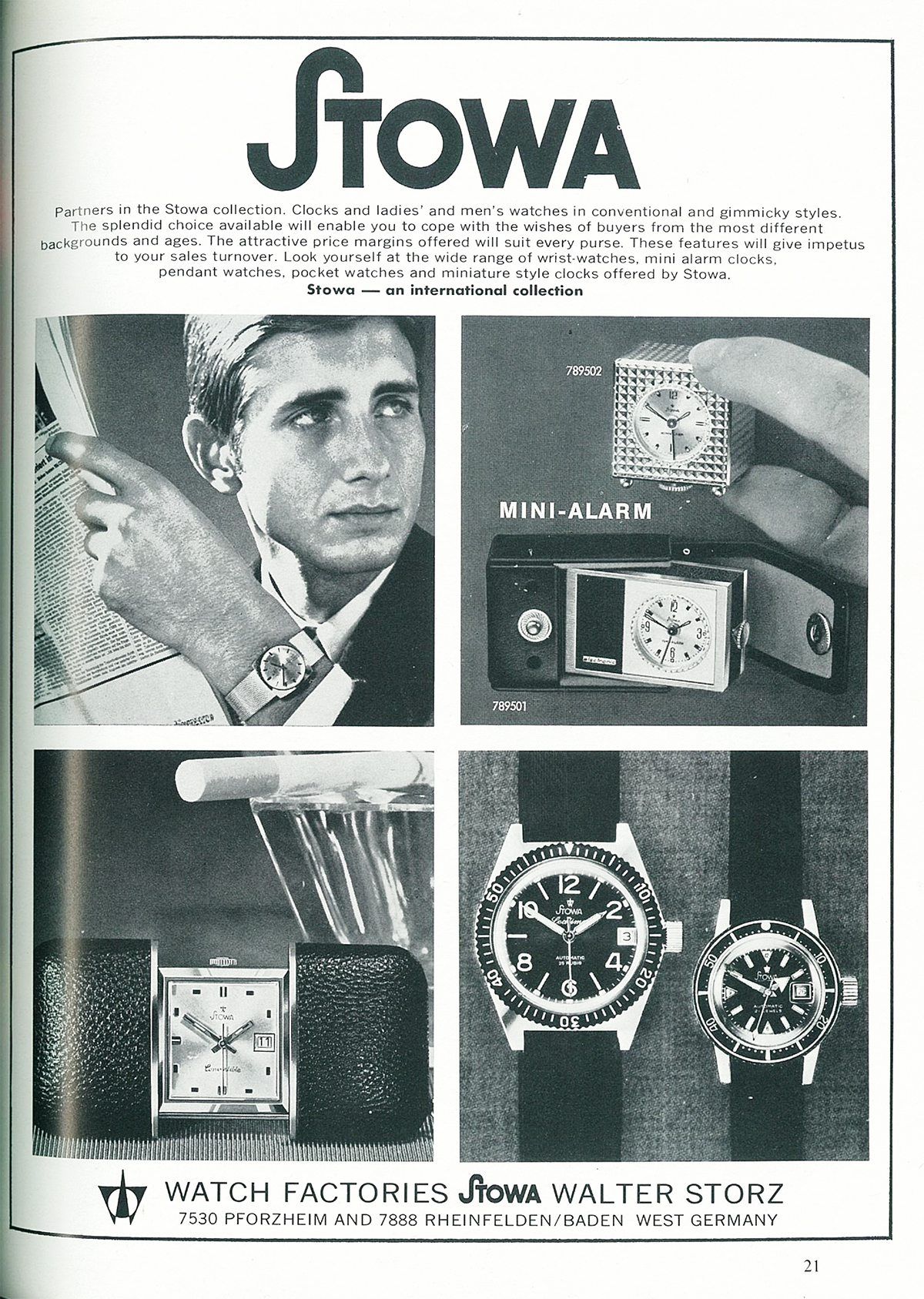

Stowa’s Flieger watches were praised for their reliability under extreme conditions and have since become a cornerstone of the brand’s identity. Today, modern reinterpretations of these timepieces remain some of Stowa’s bestsellers, prized by collectors for their historical significance and utilitarian design. Like much of Germany, Stowa faced immense challenges in the aftermath of the war. Its facilities in Pforzheim were destroyed in a 1945 bombing raid. Yet, remarkably, production resumed within just a few years. In 1951, Stowa introduced a new factory and quickly regained its footing in the German watch market.

The post-war years also saw a shift in design language. The 1950s and 60s marked the rise of sleek, modernist aesthetics—something that resonated deeply in Germany, where the Bauhaus movement had already laid the foundations for minimalist design. Stowa leaned into this heritage, producing elegant wristwatches that prioritized form and function in equal measure. Like many mechanical watchmakers, Stowa faced significant headwinds during the Quartz Crisis of the 1970s and 80s, when inexpensive and highly accurate quartz movements from Japan flooded the market. Many German brands shuttered or shifted focus. Stowa managed to survive—albeit in a reduced capacity—by staying true to its roots and serving a loyal customer base.
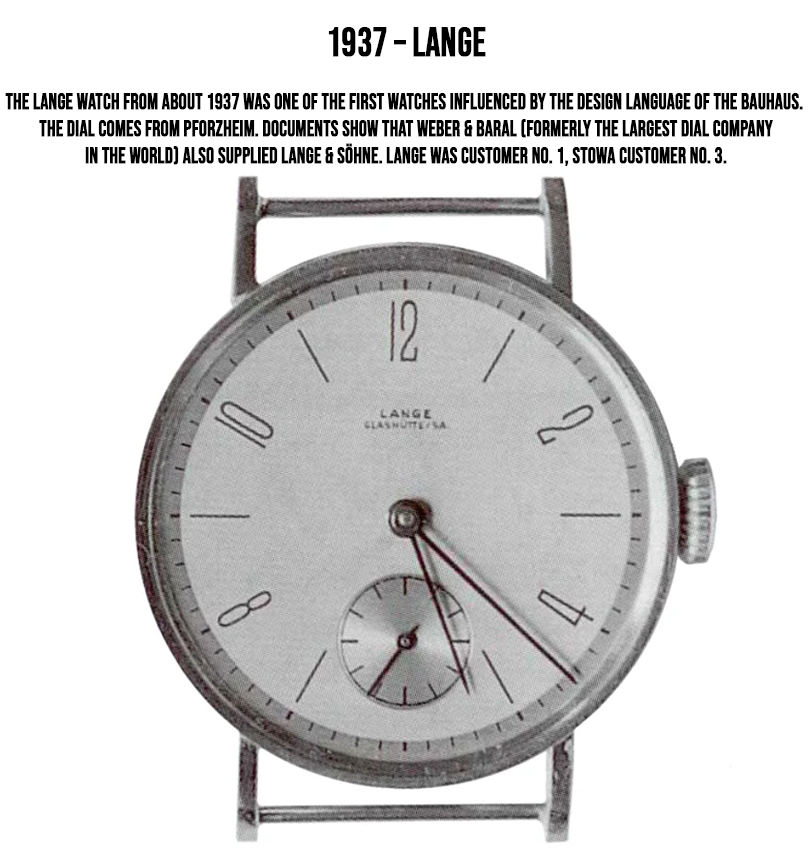
In 1996, a major turning point arrived when Jörg Schauer, a German watchmaker and entrepreneur, acquired the brand. Schauer’s vision was to restore Stowa’s historical prestige while modernizing its production and design philosophy. Under his leadership, the brand revitalized its classic lines, including the Flieger, Marine, and most notably, the Antea collection. The Antea series in particular exemplifies Stowa’s Bauhaus lineage. With its clean lines, balanced proportions, and typographic purity, the Antea became an instant favorite among design purists and watch collectors alike. Originally inspired by a 1930s design from Lange & Söhne, the Antea was reinterpreted by Stowa with updated mechanics and a meticulous eye for detail.
Today, Stowa continues to produce watches from its workshop in Engelsbrand, near Pforzheim. Unlike many modern brands, Stowa maintains a direct-to-consumer model, allowing them to offer high-quality mechanical timepieces at surprisingly accessible prices. Each watch is assembled by hand, and customization options remain a key part of their appeal. Despite its relatively low profile in mainstream media, Stowa enjoys a cult following around the world. The brand is beloved for its transparency, historical integrity, and commitment to craftsmanship. Whether it’s a faithful Flieger, a refined Marine Chronometer, or a minimalist Antea, each Stowa timepiece tells a story rooted in nearly 100 years of German precision and resilience. With this legacy in mind, let’s turn our attention to one of Stowa’s most enduring designs: the Antea Classic 390. A modern tribute to the minimalist tradition, the Antea 390 captures the essence of what makes Stowa exceptional—understated elegance, thoughtful design, and horological substance.

My Antea Classic 390 arrived in a rectangular wooden box, accompanied by a cleaning cloth. As this is a press sample provided for review purposes, it did not include a warranty card, but I assume a retail version would come with one. The box is simple and compact, which makes it easy to store. However, I would have preferred something more functional—like a travel pouch—that could be used for carrying the watch on the go, rather than something that will likely just sit in a closet. First impressions were positive. I recently had the chance to examine the Nomos Tangente, which shares a similar case design and overall aesthetic. In terms of craftsmanship and finishing, the Antea Classic 390 easily holds its own—both are on a comparable level, differing primarily in their movements. This watch is powered by the manually wound Sellita SW210-1, a clone of the ETA 2801. I especially appreciate the 39mm case size—it wears very well on the wrist and feels just right.

The Antea Classic 390 with handwound movement is a striking piece of horological design that blends Bauhaus minimalism with traditional German craftsmanship. As part of Stowa’s long-standing Antea collection, the 390 occupies a sweet spot for those who appreciate clean aesthetics and a classical presence on the wrist without veering into ostentatious territory. While modern watchmaking has embraced increasing complexity and size, the Antea 390 stays true to its roots, offering a refined, understated alternative with a focus on form, proportion, and mechanical purity.


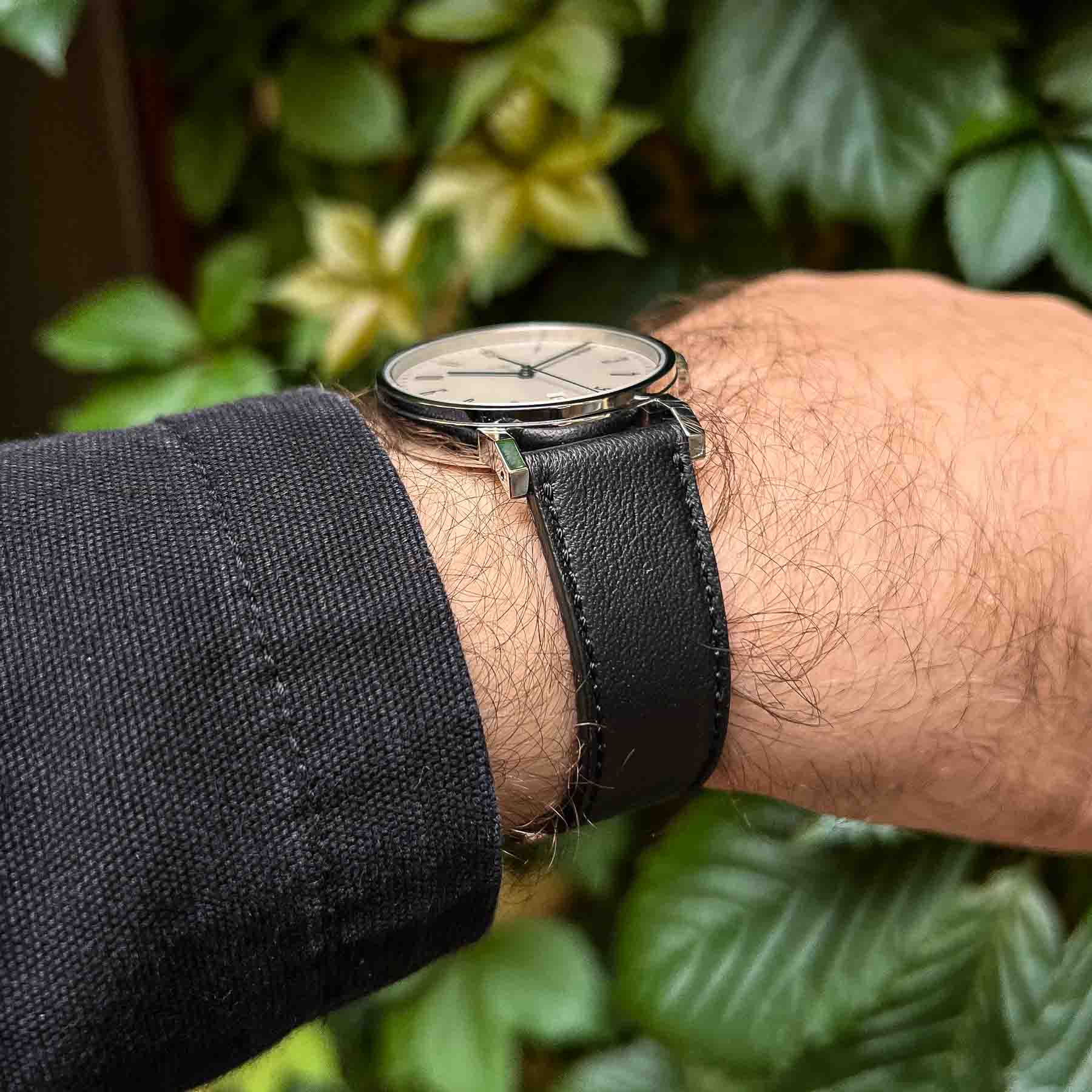
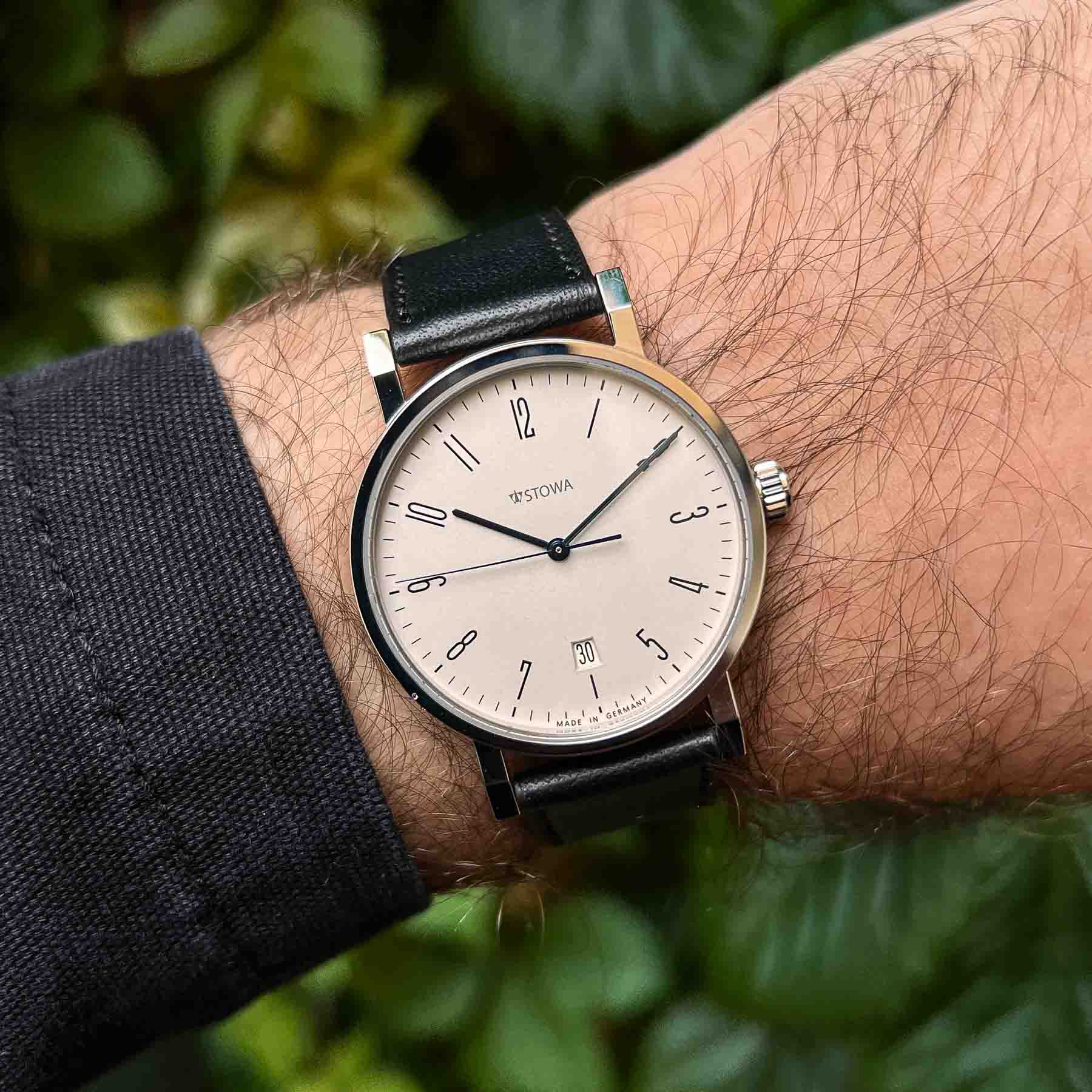
The 316L stainless steel case of the Antea Classic 390 exemplifies the German watchmaker‘s dedication to understated elegance and Bauhaus-inspired simplicity. Measuring 39mm in diameter, the case strikes an ideal balance between presence and wearability, offering a versatile size that suits a wide range of wrists. In my view, the 39mm dimension is perfectly judged—its slim profile and extended lugs give it a refined, streamlined appearance rather than a bulky one. The case is fully polished, with a uniform and meticulous finish that feels sophisticated without veering into flashiness or excess. True to the brand’s minimalist ethos, the case avoids superfluous details: no bevels, no ornamental angles—just clean lines and precise execution.


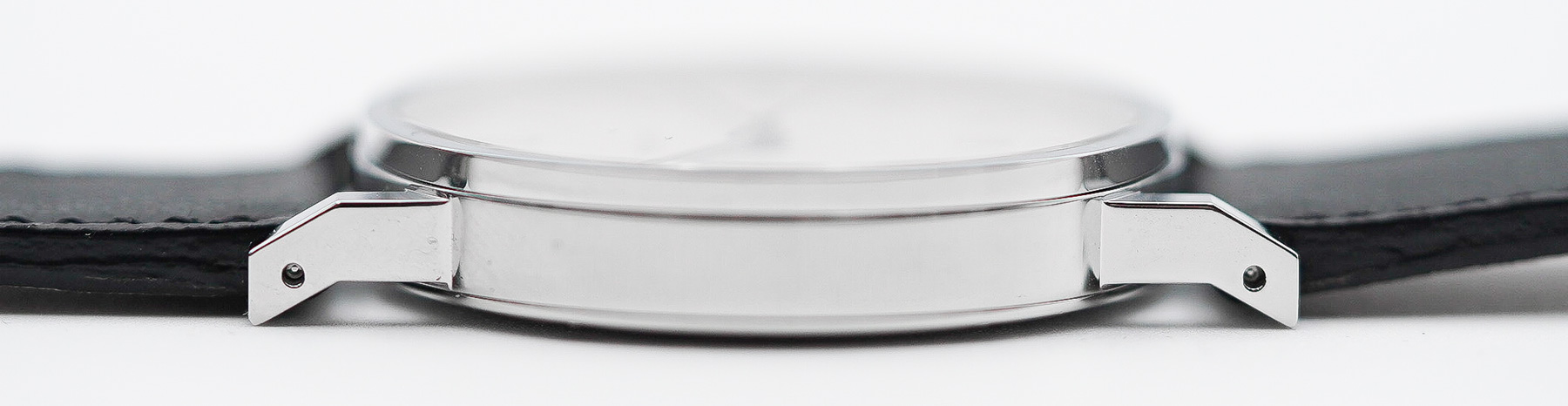
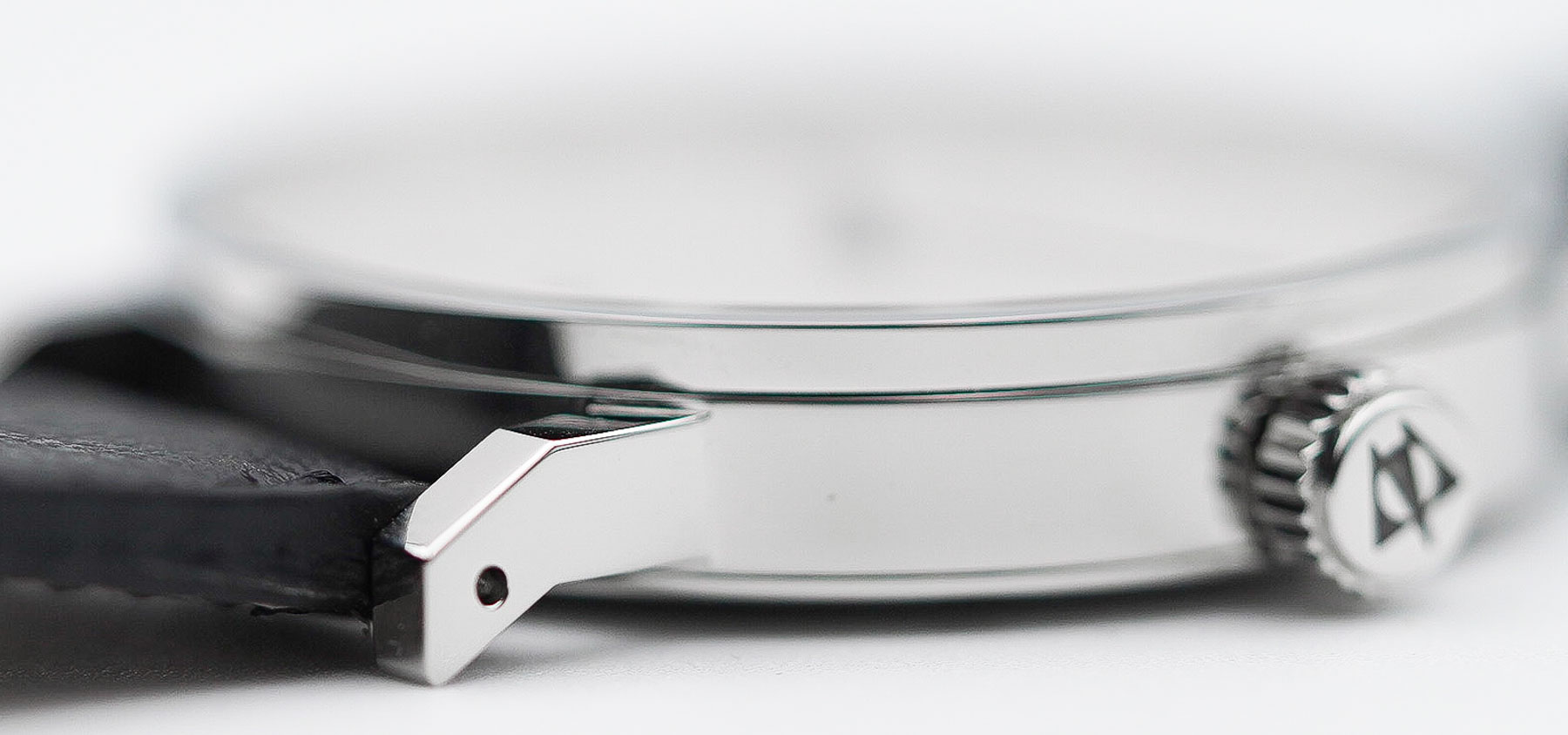

The lugs, however, warrant closer attention. Sharply defined and elongated, they project straight from the case when viewed head-on, yet reveal a subtle downward angle in profile. Measuring 47.8mm from lug to lug, they contribute to the watch’s stable and well-balanced fit on the wrist. Despite their length, the overall proportions remain elegant, thanks to the svelte 9.2mm case thickness. The signed push-pull crown is well-proportioned—neither too large nor too small—and offers a satisfying grip that complements the watch’s overall ergonomic design. Around back, the exhibition caseback with sapphire crystal reveals the mechanical heart of the timepiece, offering a rewarding view for enthusiasts who value traditional watchmaking. The sapphire window is bordered by finely engraved specifications, including the watch’s 50-meter (5 ATM) water resistance—more than adequate for everyday wear, though not intended for swimming or submersion.


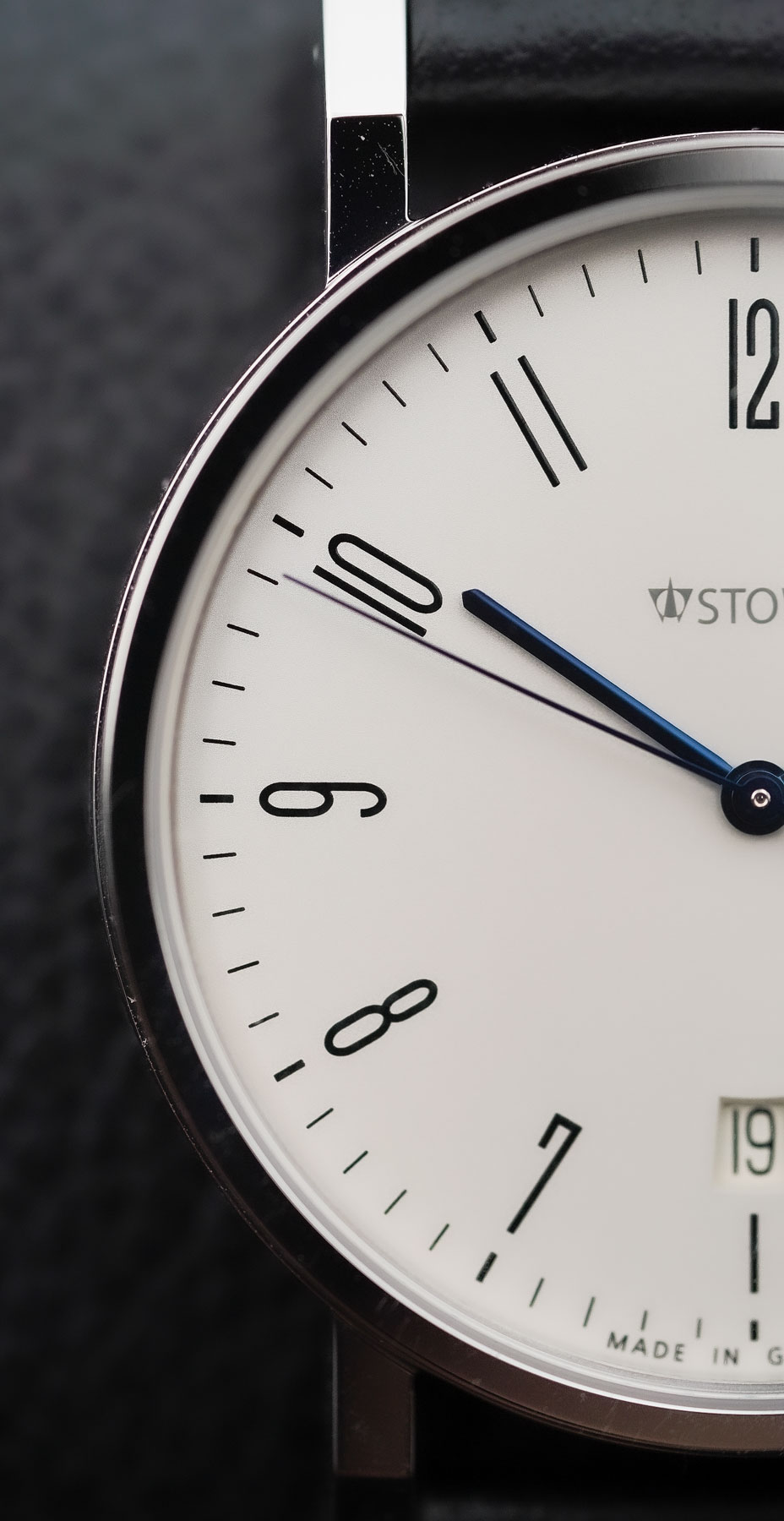
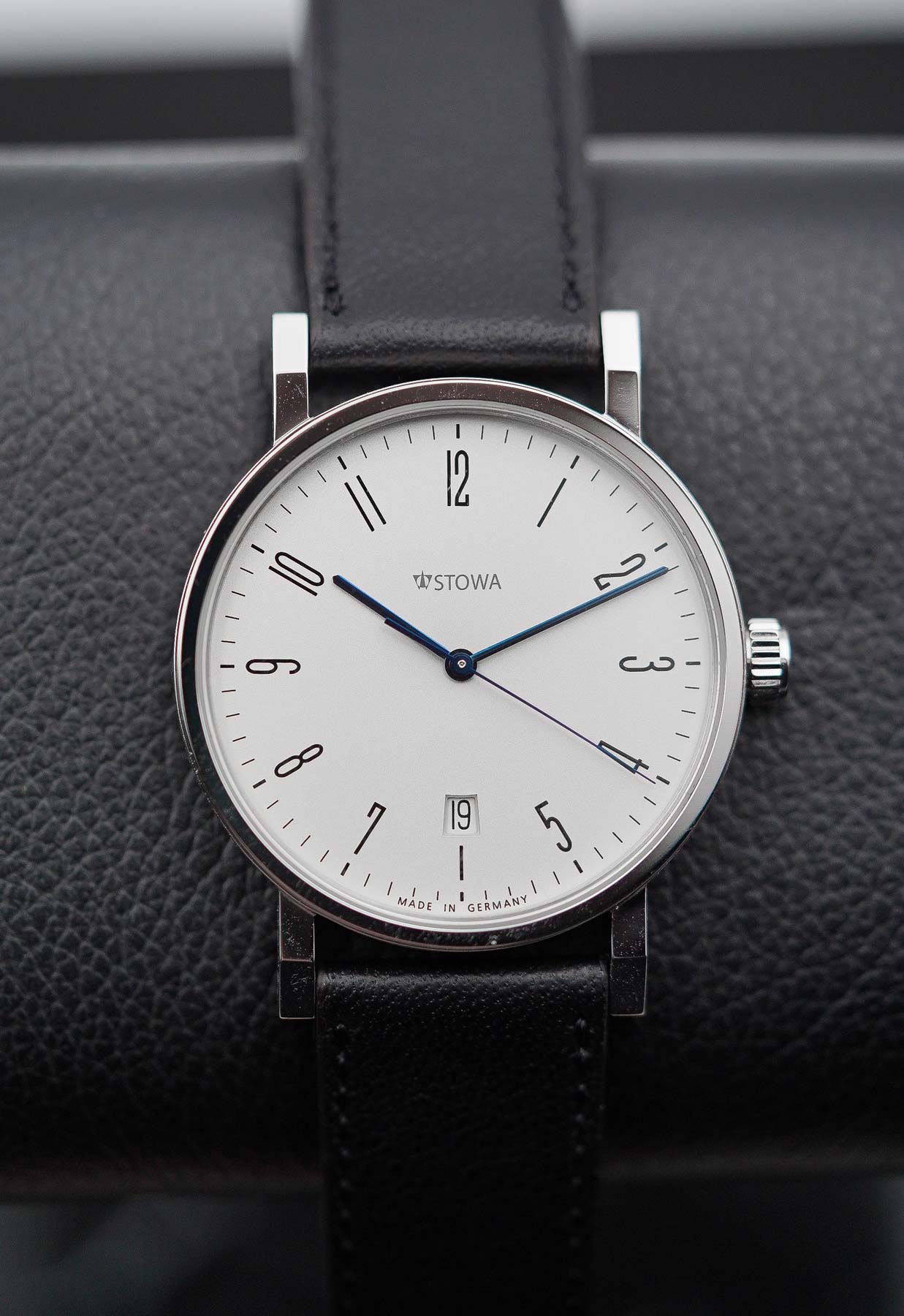
Dial execution on the Antea 390 is arguably where the watch most clearly demonstrates its Bauhaus roots. The dial is a pristine matte silver-white, with no texture or flourish, lending it a serene, paper-like appearance. The printed Arabic numerals are presented in a tall, spindly typeface that is directly inspired by the typography used at the Staatliches Bauhaus school. This unique typeface is not only legible but imbues the dial with a distinctly intellectual personality—precise, unadorned, and quietly confident. The numerals are evenly spaced around the dial, with no truncation or distortion.

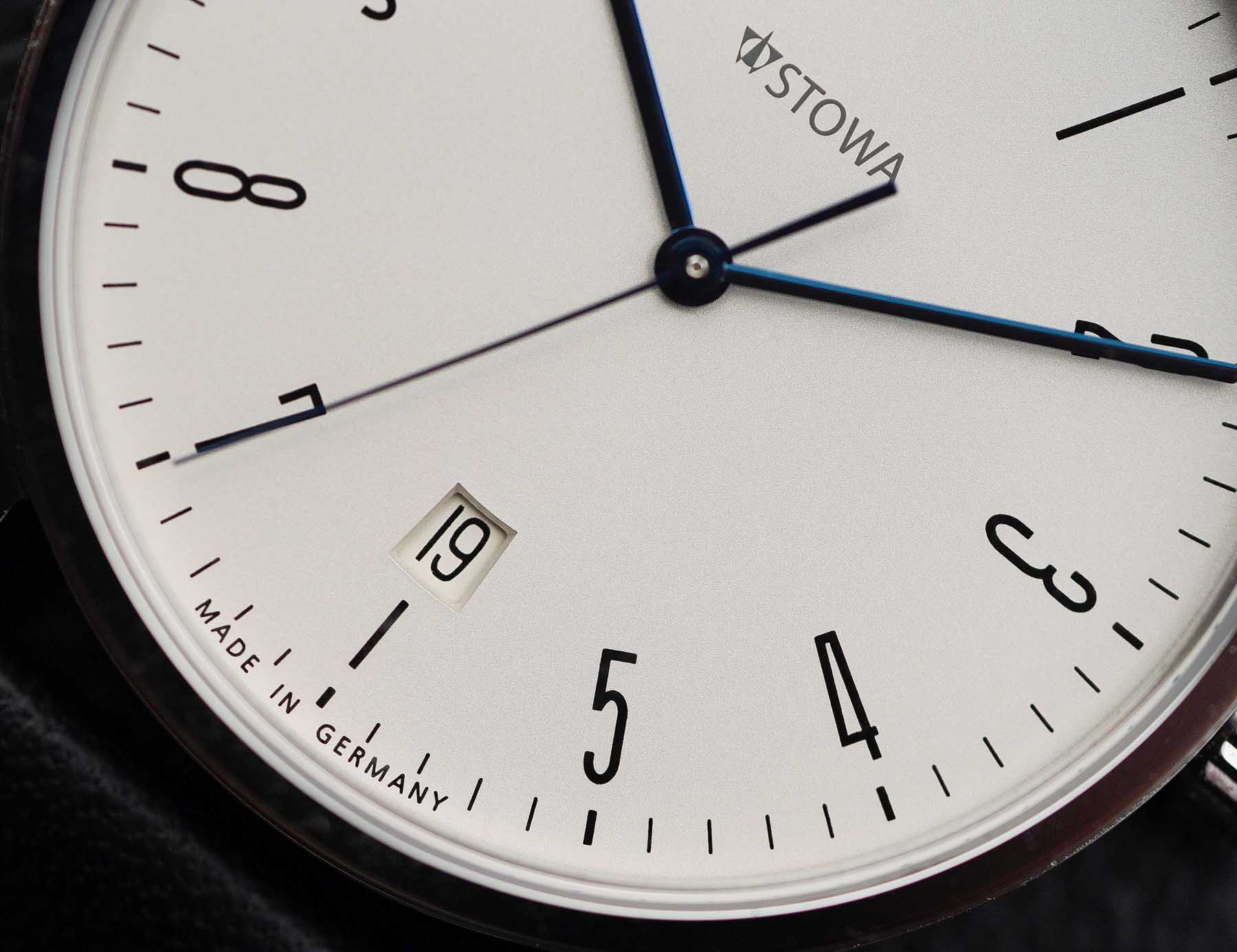

The blued hands are another highlight, stick-style hour, minute and seconds hands feel perfectly matched to the dial’s typography. Their tempering adds a touch of vivid color in certain light, but they remain subtle in most conditions. There are no applied markers or lume, which speaks to the watch’s pure dress watch identity. Even the branding is restrained: a simple “Stowa” at 12 o’clock with no extraneous text, emphasizing that this is a watch about timekeeping, not about marketing. Positioned at 6 o’clock, the date window maintains the dial’s symmetry and minimalist aesthetic. The date wheel is thoughtfully color-matched to the dial, allowing it to blend seamlessly into the overall design without disrupting visual harmony. Just below the date display, nestled at the edge of the dial, the inscription “Made in Germany” subtly reinforces the watch’s provenance and the brand’s commitment to precision craftsmanship.
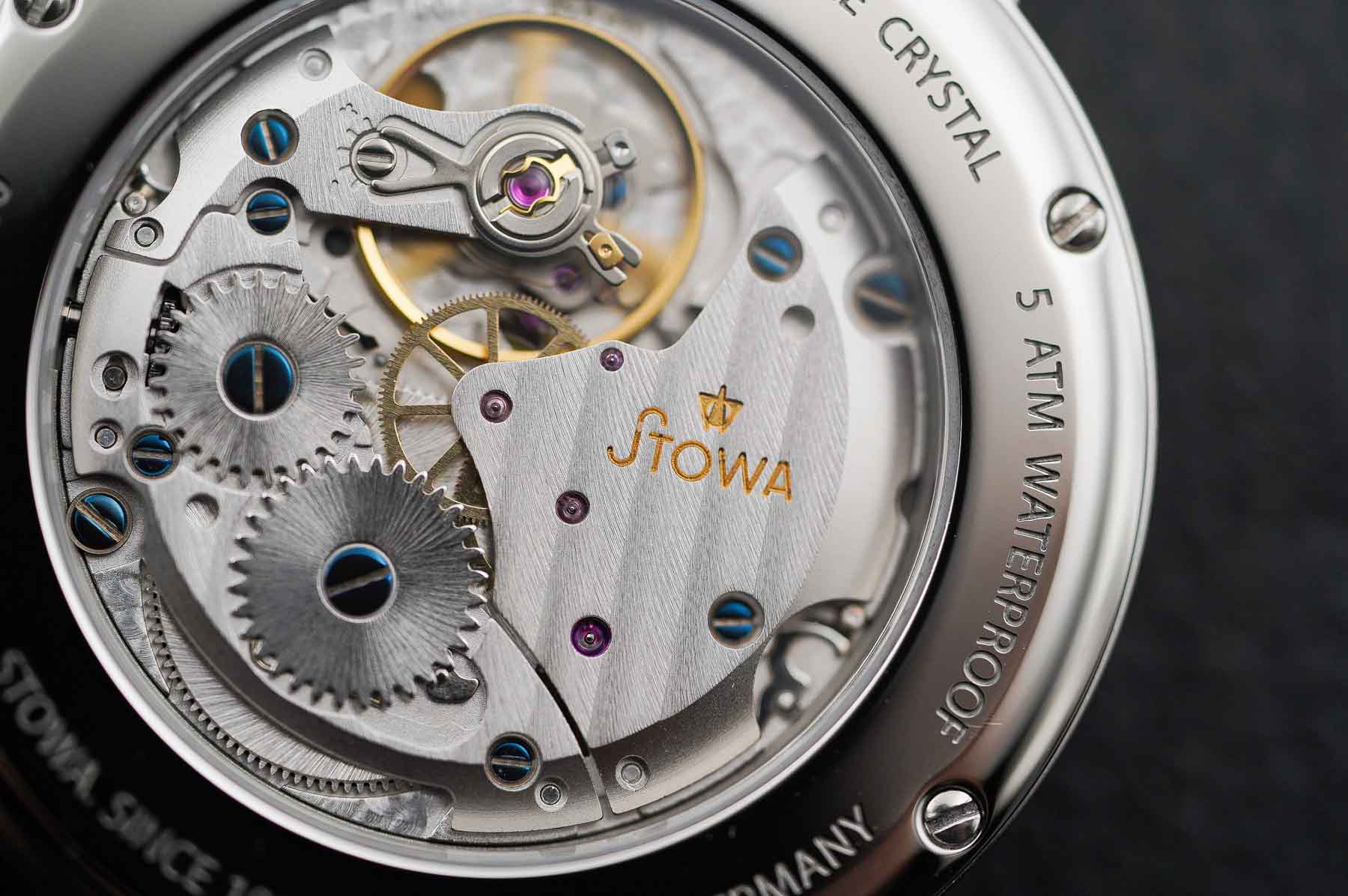
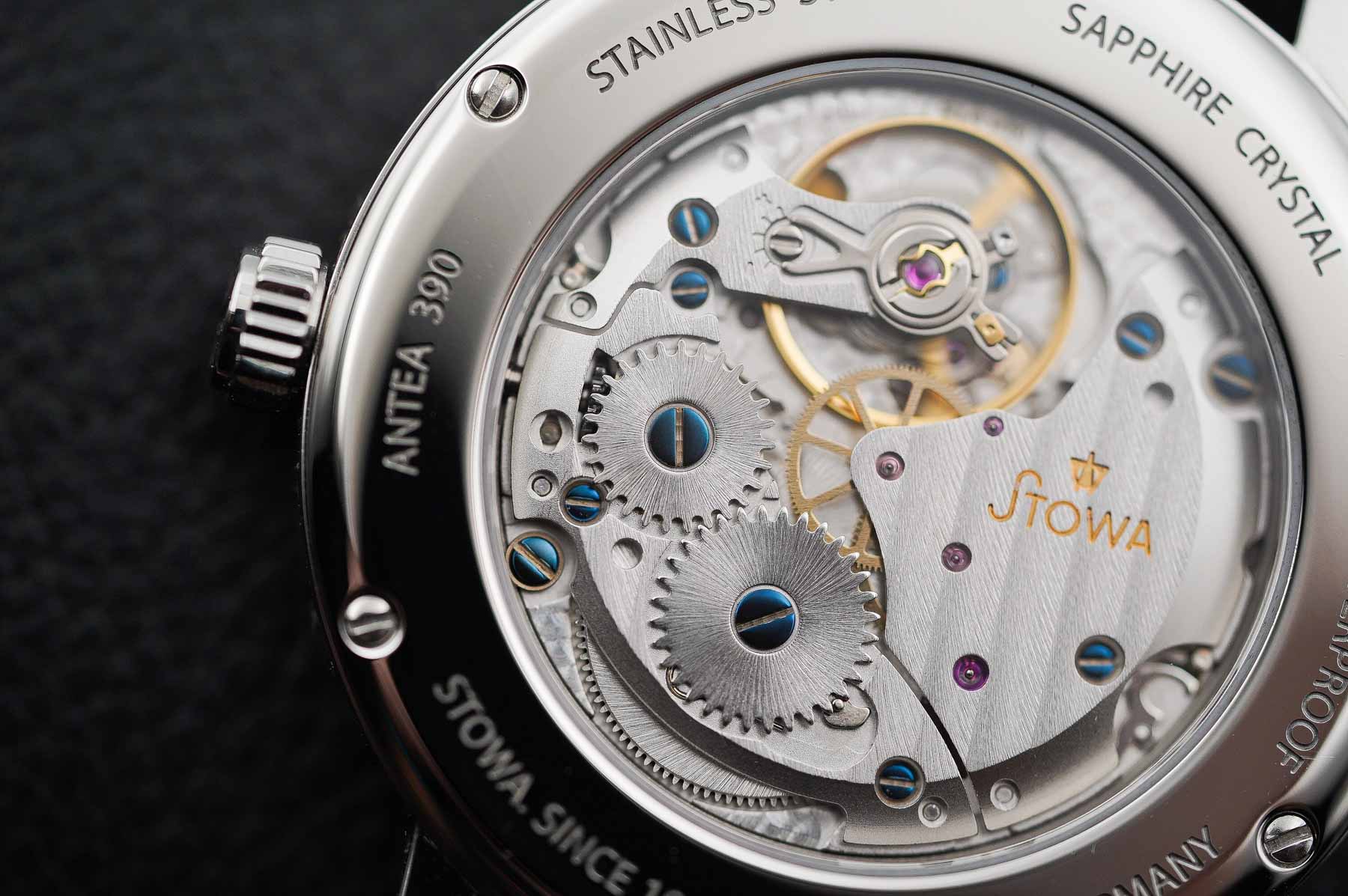
The Sellita SW210-1 Top Grade movement powers the Antea Classic 390, and it perfectly aligns with the watch’s clean, Bauhaus-inspired ethos. This manually wound caliber brings a traditional touch to the piece, enhancing the connection between wearer and watch. In my example, the movement has shown reliable and consistent performance, running at +3 to +4 seconds per day—quietly precise and reassuring in daily wear. Winding the movement is a tactile pleasure, with smooth resistance and a satisfying mechanical feel. The 42-hour power reserve is practical, encouraging daily interaction without being demanding. It adds a personal rhythm to wearing the watch, something automatics can sometimes lack.
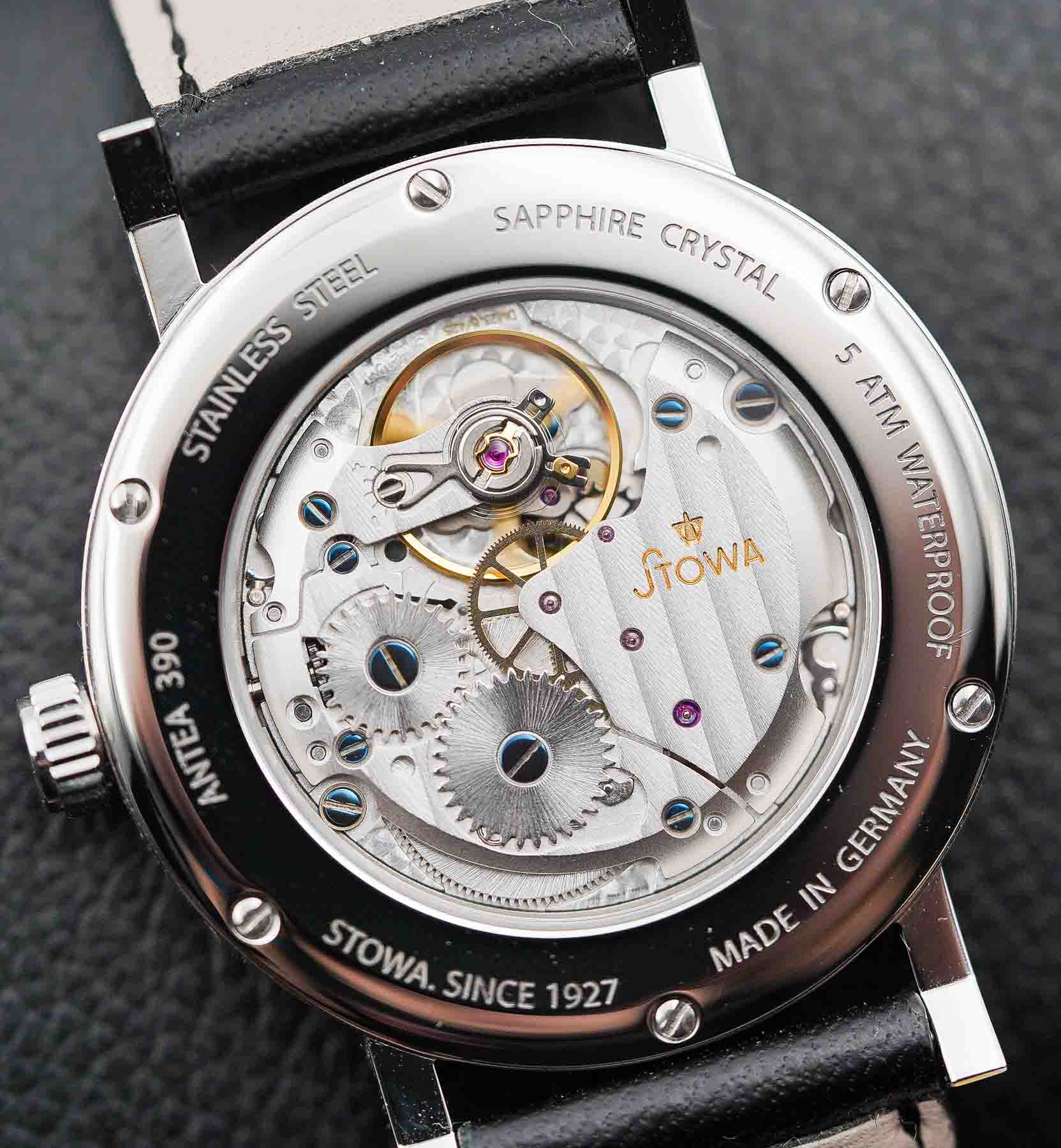
Viewed through the exhibition caseback, the Top Grade finishing is modestly elegant. Geneva stripes and perlage give the movement visual texture, while blued screws add a subtle pop of color. A particularly nice touch is the Stowa logo engraved on one of the bridges—an understated signature that connects the movement to the brand’s identity without disrupting the overall refinement. The SW210-1 is based on the ETA 2801-2 platform, and Sellita has done well to maintain that foundation while offering excellent reliability. Throughout my time with the Antea Classic 390, the movement has performed flawlessly—no erratic behavior, smooth hand-setting, and steady operation. Inside the Antea Classic 390, the SW210-1 feels like more than just a mechanism. It complements the watch’s aesthetic and philosophy, delivering both technical confidence and emotional resonance. It’s not showy or over-engineered—it simply works, beautifully and consistently. For those who value mechanical honesty and refined simplicity, it’s an excellent pairing.
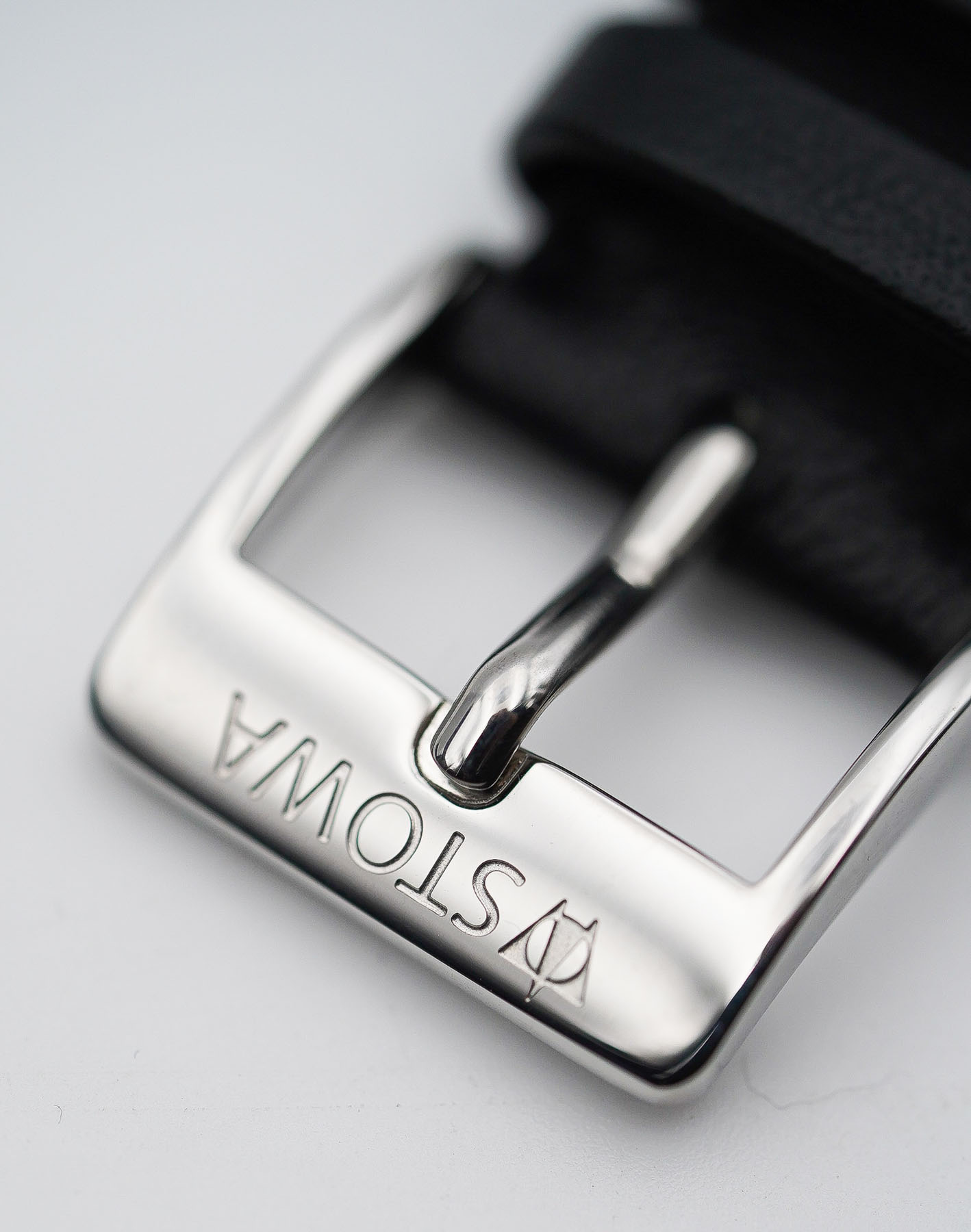
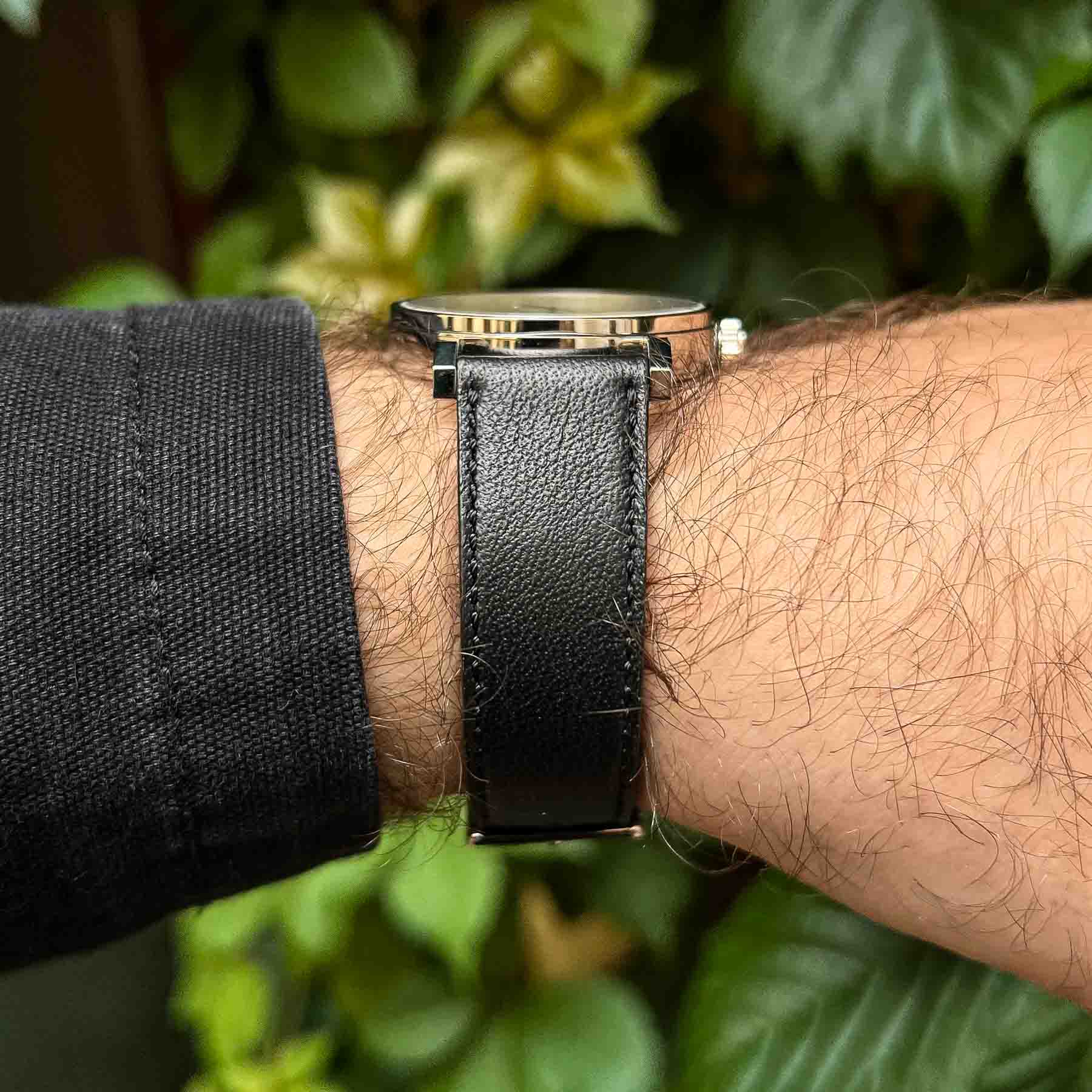
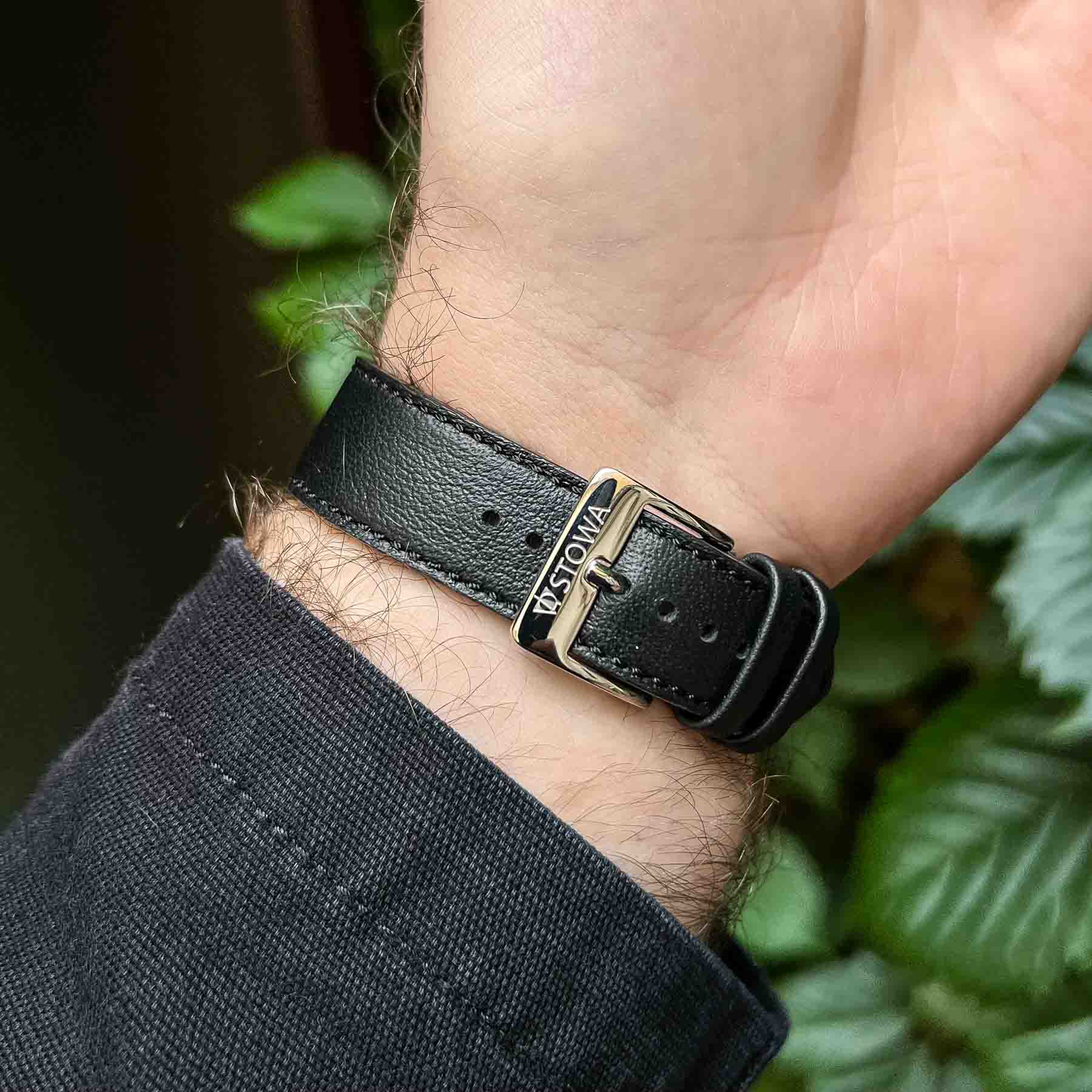
The Antea Classic comes equipped with a high-quality black leather strap, available in three different lengths to ensure a precise fit for a variety of wrist sizes. The strap features a matte finish with a subtle grain texture, and is neatly stitched with matching black thread for a clean, cohesive look. It tapers elegantly from 20mm at the lugs to 18mm at the buckle, enhancing its refined profile. On the underside, the strap is lined with soft, light beige leather for added comfort, and is signed with the Stowa logo. The standard tang buckle is crafted with a polished finish and engraved with the Stowa logo. While functional and minimalist, the buckle design feels somewhat generic—an area where Stowa could elevate the experience. Incorporating the angular geometry of the Antea’s lugs into the buckle design would create a more cohesive aesthetic. Stowa also offers an optional deployant clasp for those who prefer a different fastening mechanism. On a positive note, the strap is impressively supple straight out of the box, contributing to the Antea’s excellent overall wearing comfort.




The Stowa Antea Classic 390 is a masterclass in restraint, elegance, and historical continuity. In a market saturated with complexity for its own sake, this watch stands as a quiet reminder that great design doesn’t need to shout—it just needs to be honest, well-executed, and true to its purpose. From its meticulously proportioned case to its dial steeped in Bauhaus tradition, the Antea 390 offers a compelling package for anyone who values clarity, craftsmanship, and timeless aesthetics. The manually wound Sellita SW210-1 movement reinforces the watch’s tactile and mechanical charm, inviting daily engagement without unnecessary complication. It’s a watch that doesn’t just sit on the wrist—it becomes part of your routine, part of your rhythm.

While there are a few areas for refinement—most notably the somewhat generic tang buckle—the overall experience is overwhelmingly positive. The strap comfort, movement reliability, and exceptional finishing are all worthy of praise, especially given the price point and the brand’s direct-to-consumer model. More than just a timepiece, the Antea Classic 390 is a distillation of Stowa’s nearly 100-year legacy—a legacy rooted in German precision, Bauhaus clarity, and an unwavering commitment to making watches that matter. For design purists, minimalism enthusiasts, or anyone seeking a thoughtfully made mechanical watch with authentic heritage, the Antea 390 is not just a good choice—it’s a standout!
 KaminskyBlog