
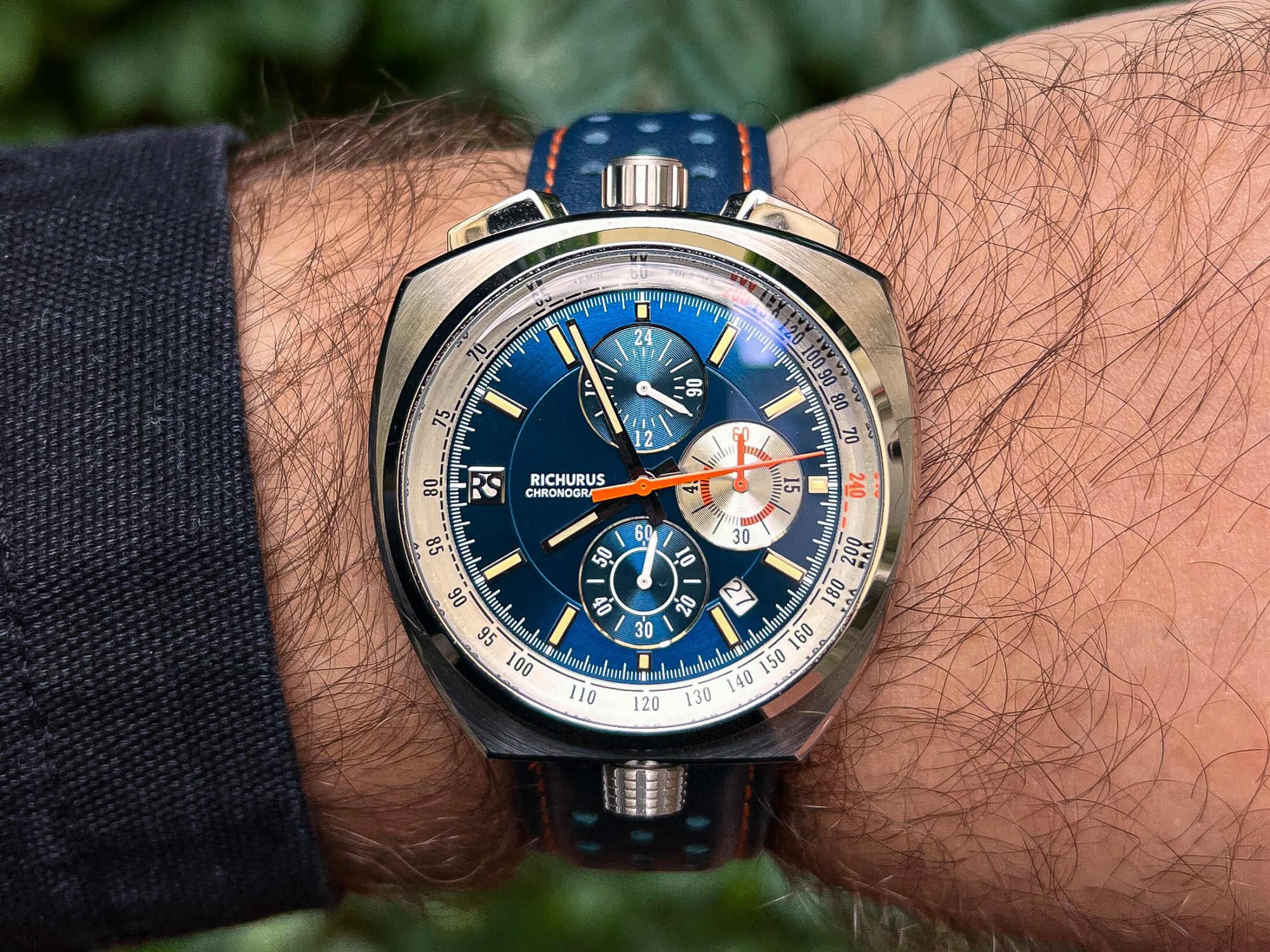
When it comes to watches, I’ve always been drawn to the unconventional—the bold, the eccentric, the downright weird. Sure, I have a deep appreciation for classic designs like the Rolex Submariner or the Nomos Tangente, but it’s those watches that challenge convention—especially vintage bullheads—that really capture my attention. Among modern reinterpretations, one of my favorites is the Omega Seamaster Bullhead, a brilliant nod to a quirky classic. So when I came across a bullhead homage from a brand called Richurus on Instagram, I was immediately intrigued. After reaching out to the company, they were kind enough to send me a sample for review. What initially caught my eye was the price point: just 172 euros. That’s incredibly affordable for a watch with such a distinctive layout, even if it is powered by a quartz movement. Based on photos, the watch looked surprisingly well-finished—solid case design, attractive dial, and that unmistakable bullhead silhouette.


When the package arrived, I was taken aback by the size of the box. It’s unnecessarily large—honestly, something like the compact leather pouch used by Retrovivo would have made much more sense. Most watch enthusiasts I know have more boxes than they know what to do with, and this one will likely end up gathering dust in storage. Inside, you’ll find the watch, warranty card, cleaning cloth and instructions—minimal, but fair for the price point. As for the watch itself, my first impressions were mostly positive—until I looked closely at the dial layout. And here’s where things get odd. Instead of the central chronograph seconds hand you’d expect in a bullhead chronograph, the running seconds are placed dead center, while the chronograph seconds are relegated to a subdial at 3 o’clock. This decision feels baffling to me. It’s counterintuitive, not just in terms of traditional chronograph design language, but also from a user-experience standpoint. There are many affordable movement options that would’ve provided a more conventional and arguably better chronograph layout—even something like the Seagull ST19 mechanical chronograph would’ve been a more compelling choice, even if it meant a slightly higher price. The movement decision here, in my opinion, was a missed opportunity.


The case of the Richurus Bullhead Chronograph is crafted from 316L stainless steel and immediately stands out with its classic bullhead silhouette — a design that pushes the crown and pushers to the top of the case, giving the watch both a distinctive profile and a strong presence on the wrist. This shape, historically linked with racing chronographs of the 1970s, is a welcome throwback for collectors who appreciate motorsport-inspired design. At a retail price of only €173, the execution is surprisingly well done. The case shows careful attention to geometry, with crisp transitions between surfaces and angular lugs that give the watch a robust, purposeful look.
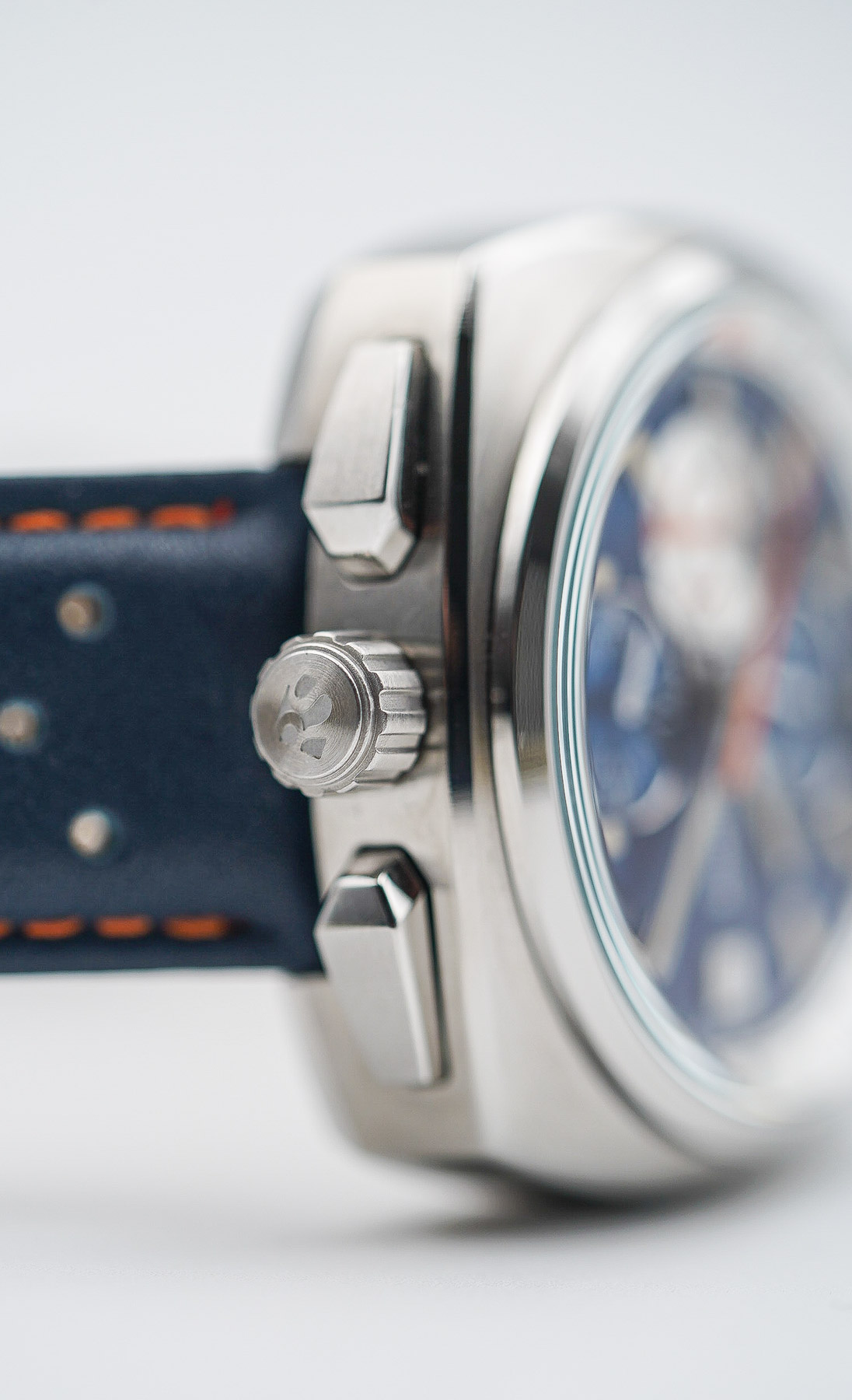

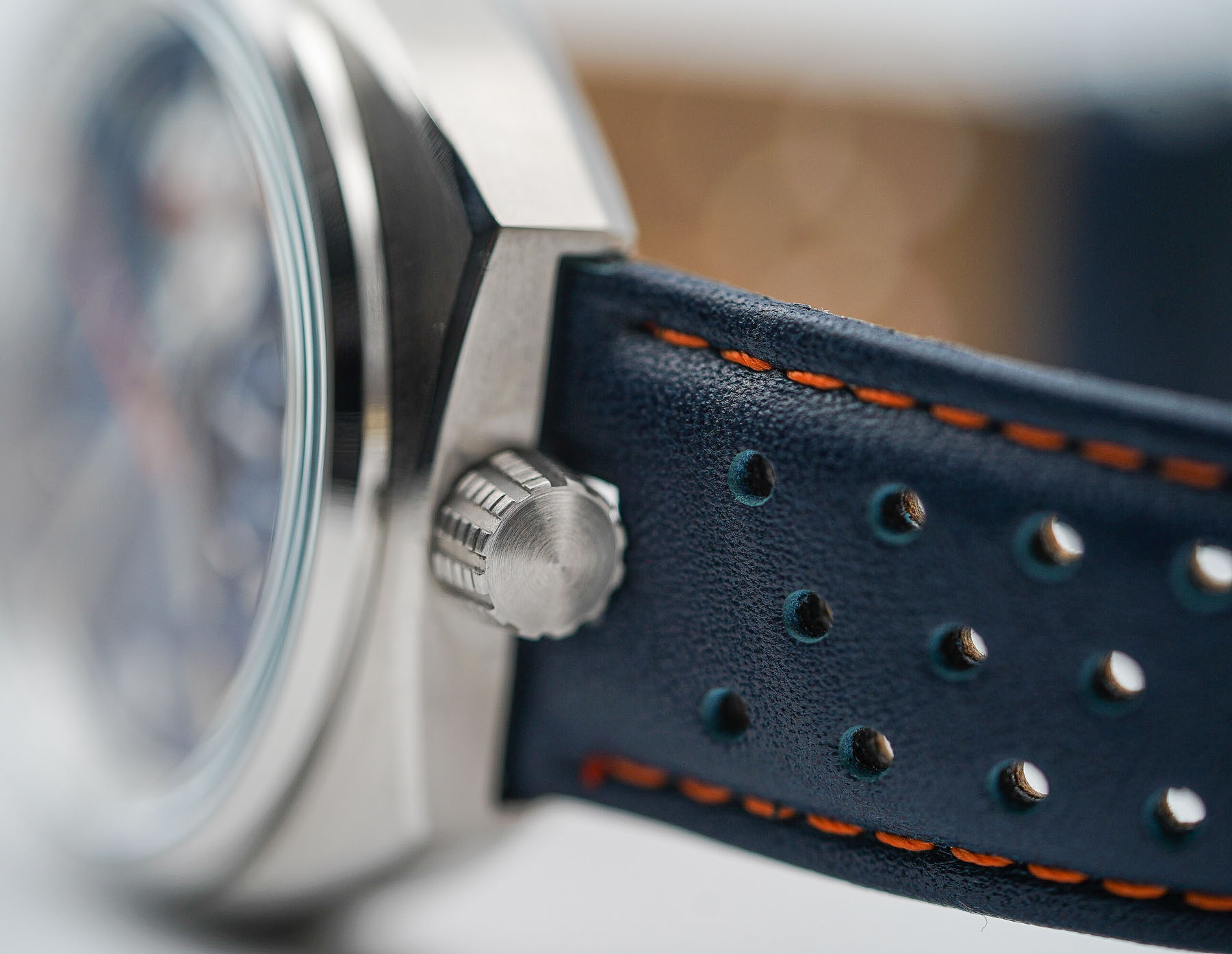

The finishing is primarily brushed, which emphasizes the tool-watch character, but it’s complemented by polished accents on the edges and the bezel. This interplay of surfaces adds depth and visual interest, and at this price point, it’s frankly impressive — comparable to pieces costing four or five times more. Dimensions come in at 43.5 mm in diameter and 13.5 mm thick, with a compact lug-to-lug of 43 mm (extending to 52 mm if you include both crowns). On the wrist, it wears as expected: bold, with noticeable heft, yet surprisingly balanced thanks to the short lug span. The thickness may feel on the higher side for a quartz watch.

At 12 o’clock sits a large, signed push-pull crown, while oversized pushers occupy the 11 and 2 o’clock positions. While the visual impact is strong, the tactile experience leaves something to be desired: the pushers feel a bit loose and don’t provide the satisfying “click” one expects, sometimes leaving the wearer uncertain whether the chronograph has actually engaged. At 6 o’clock is a screw-down crown for the internal tachymeter bezel — a curious design decision, since it doesn’t make sense for a chronograph, atleast it is a bit weird design choice. Above the case rests a slightly domed sapphire crystal, a very welcome inclusion at this price point, offering both durability and good legibility. On the back, a screw-down caseback is decorated with the Richurus logo, reference number, and specifications, neatly engraved around the edge. Water resistance is rated at 5 ATM (50 meters), more than sufficient for daily wear, light splashes, or occasional swimming.


The dial of the Bullhead Chronograph is easily one of its highlights colour wise. Rendered in a deep sunburst blue, it captures the light beautifully, shifting tones between bright cobalt and darker navy depending on the angle. This richness in color, combined with the metallic sheen of the sunburst finish, lends the watch a much more premium feel than its price tag suggests. Surrounding the dial is a silver-toned internal rotating bezel printed with a tachymeter scale. While visually attractive and as mentioned before, it is a weird design choice. Applied polished indices mark the hours, each filled with lume. At 9 o’clock sits the applied Richurus logo, also polished, adding a touch of detail to balance the symmetry of the dial. The subdials are positioned at 12, 3, and 6 o’clock. At 12 is a 24-hour indicator, which functions essentially as a day/night display. At 3 o’clock is the chronograph seconds subdial — an unusual and, frankly, frustrating choice, since the central seconds hand is reserved for running time. Finally, at 6 o’clock is the 60-minute counter for the chronograph. This layout sacrifices some of the intuitive usability of a traditional chronograph, where the central hand usually performs timing duties, and it diminishes the drama of a sweeping orange chrono seconds hand racing around the dial. Instead, the central orange hand is relegated to running time, a missed opportunity in terms of both functionality and aesthetics.

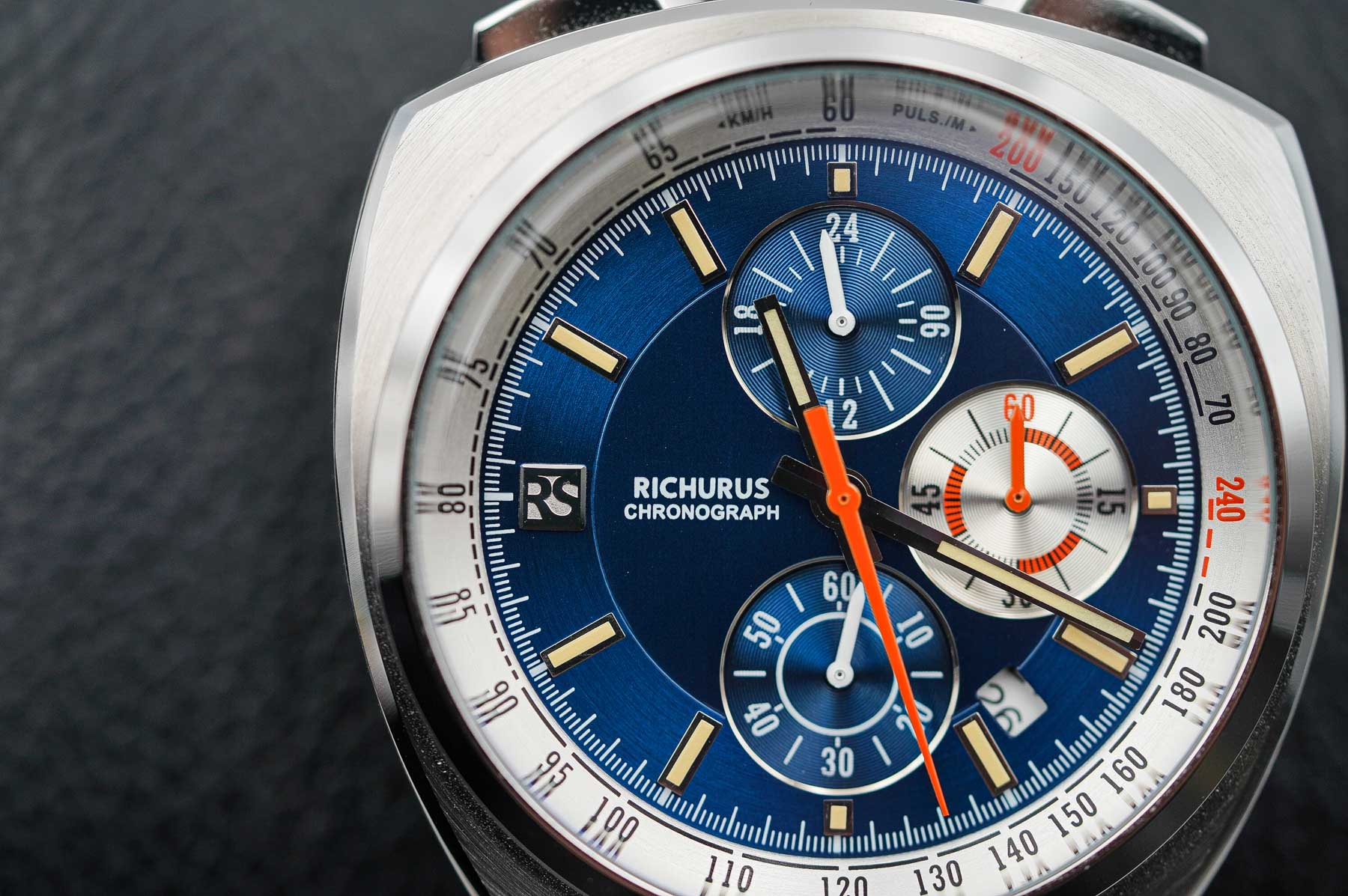


The main hands are polished baton-style for the hours and minutes, paired with that bright orange central seconds. Legibility is generally good, though the chronograph layout requires a moment’s thought when reading elapsed times. A date window is placed between 4 and 5 o’clock with a white background; while functional, its positioning slightly disrupts the symmetry of the dial. Lume performance is modest: both indices and hands glow briefly but fade within five minutes, making it more decorative than practical.


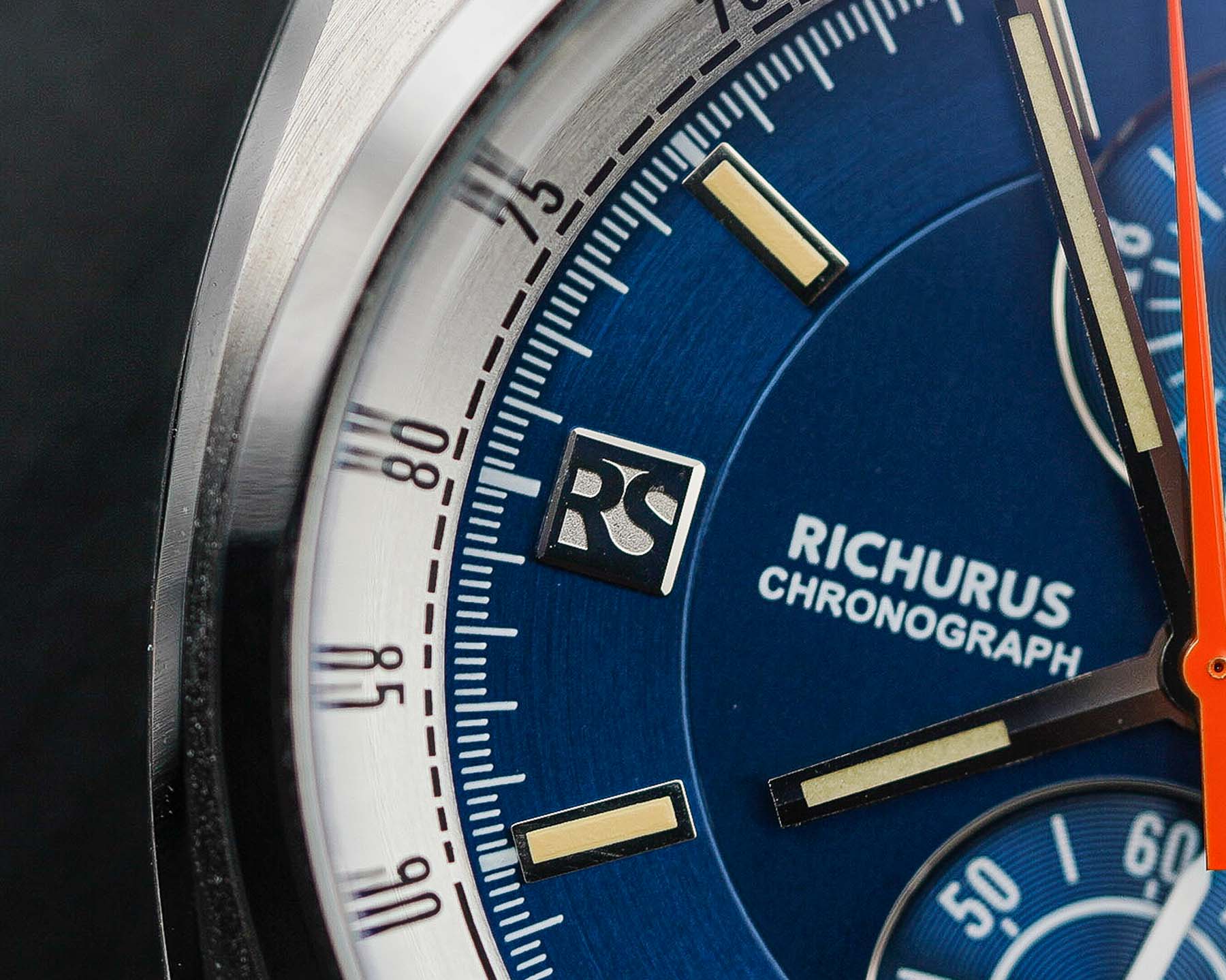
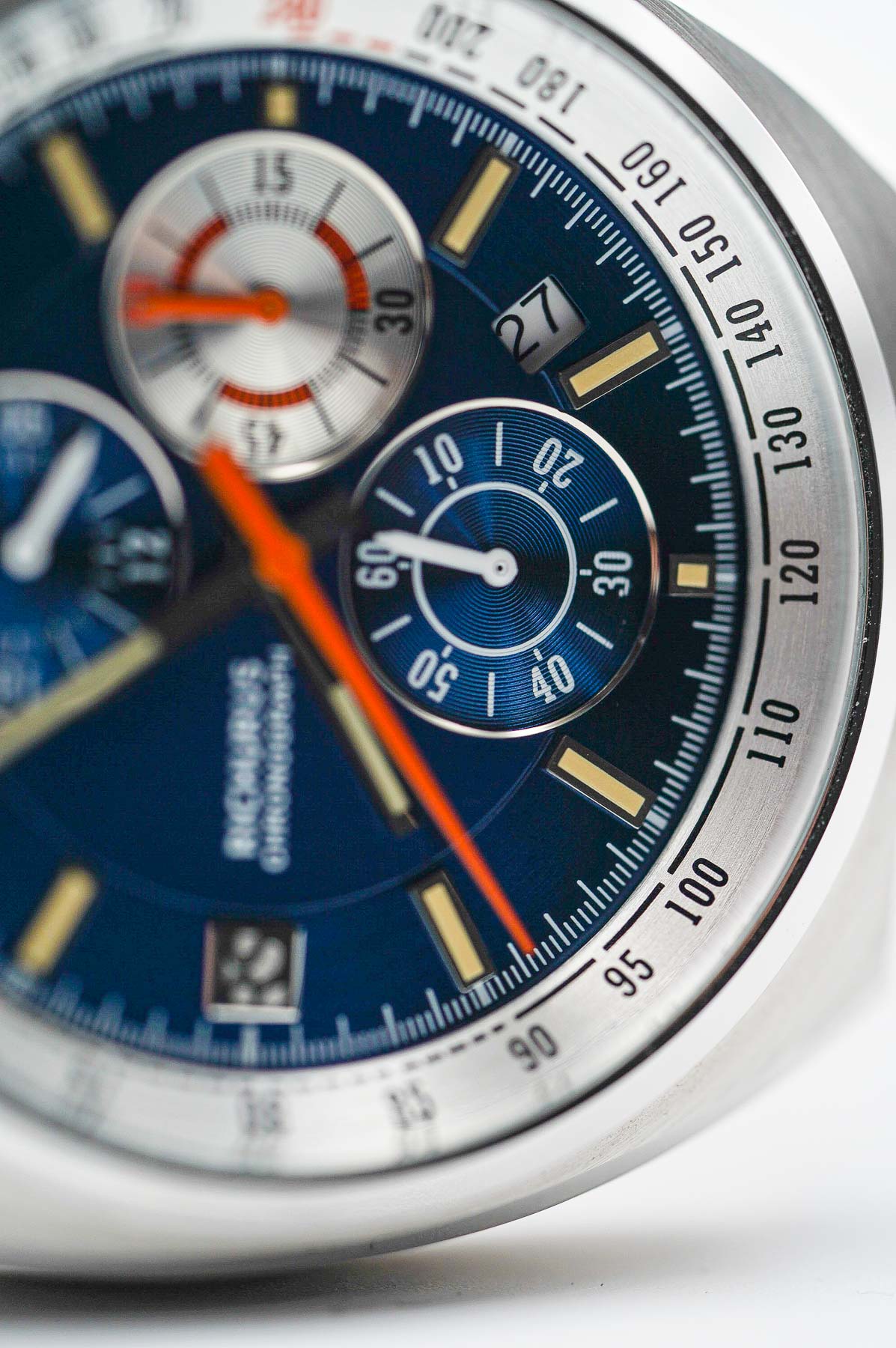
At the heart of the Richurus Bullhead Chronograph is the Seiko VD53, a quartz chronograph movement designed for reliability and ease of ownership. The VD53 powers three subdials: a 60-minute counter, 24-hour display, and running seconds. In terms of accuracy, it performs exactly as one would expect from a modern quartz movement — generally within ±20 seconds per month. Battery life is rated at roughly three years, depending on chronograph usage, and replacements are inexpensive and widely available.
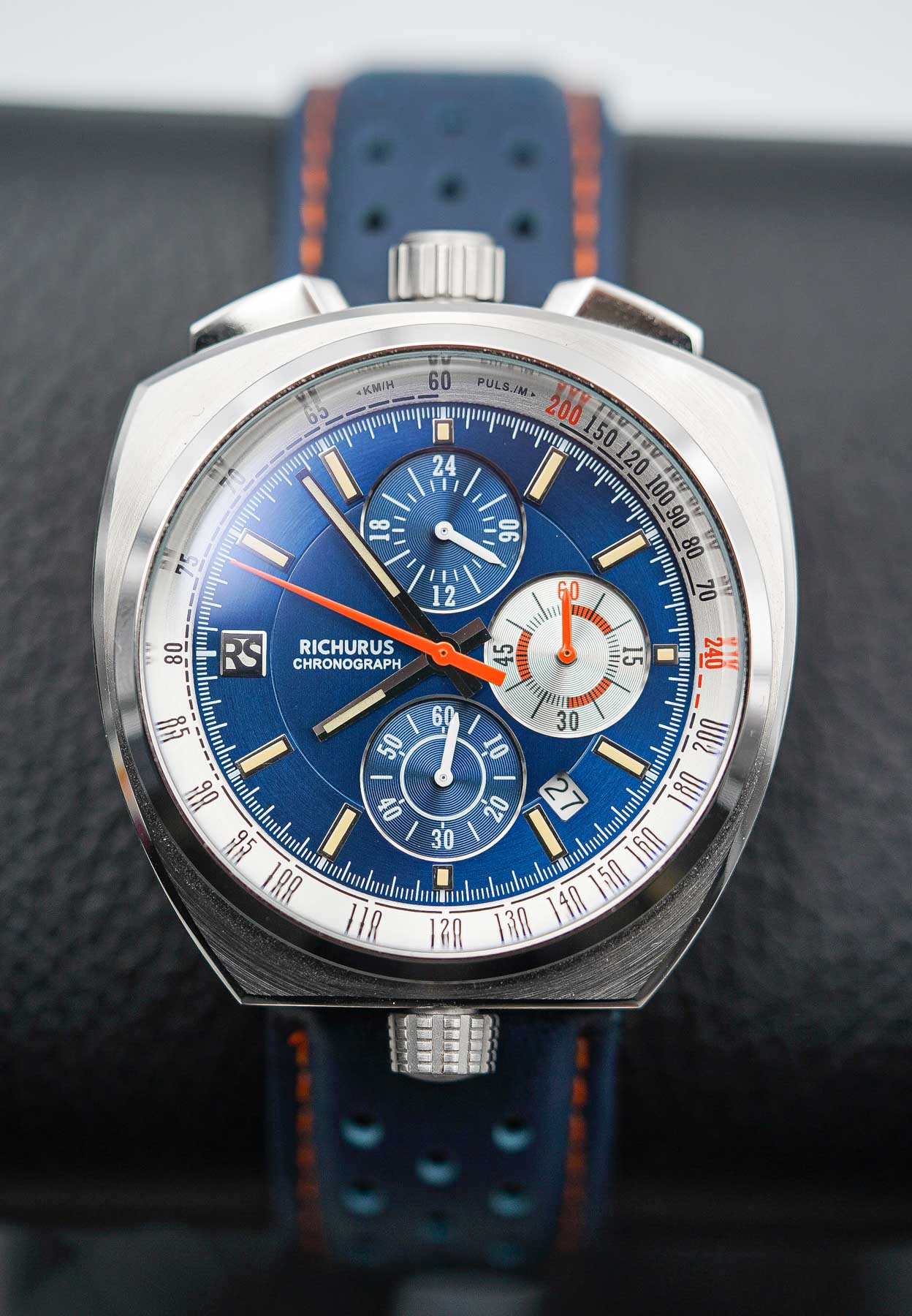
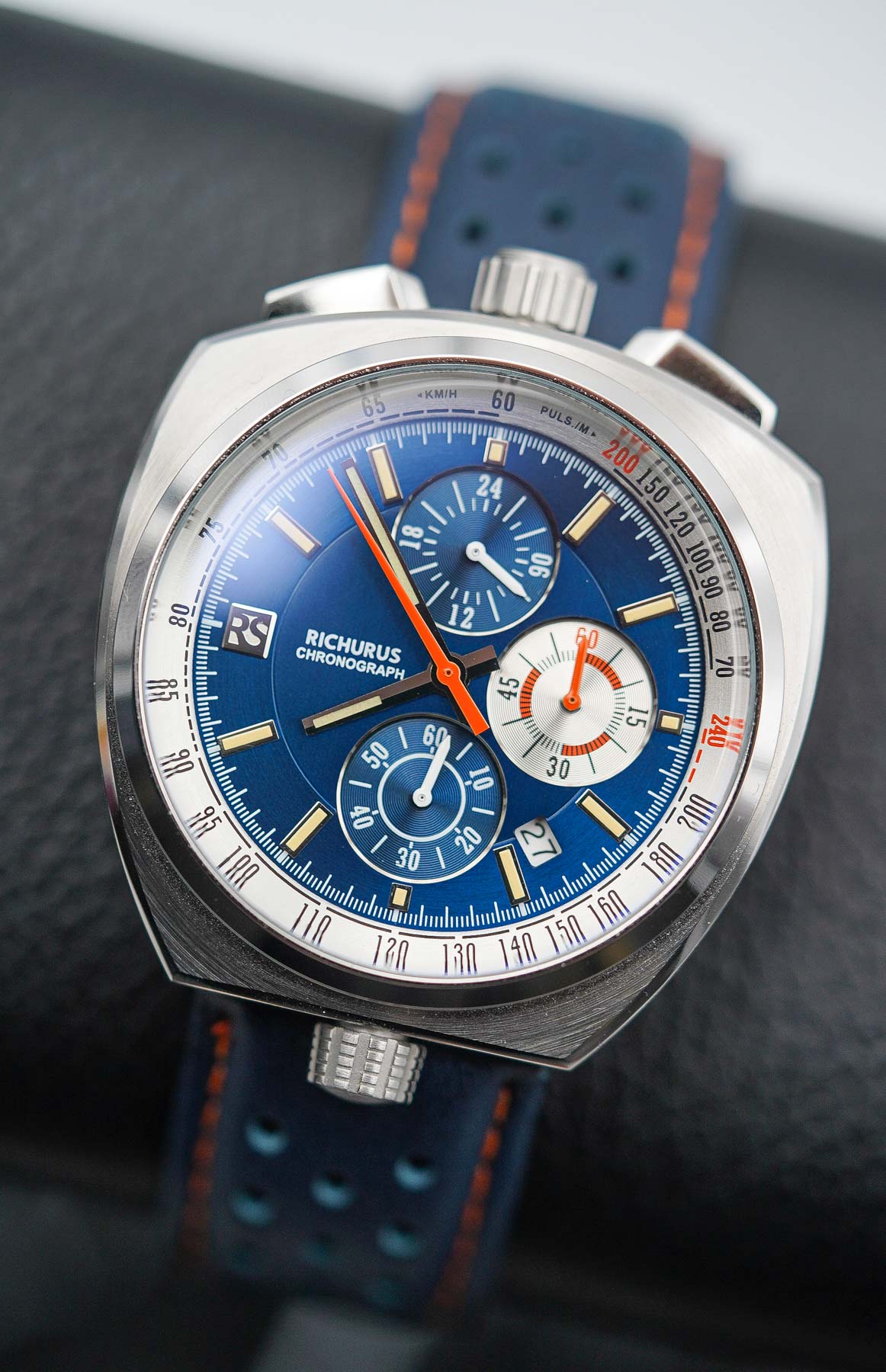
While the movement ensures consistency and durability, its implementation here reveals a few weaknesses. The pushers, already loose-feeling from the case side, translate that vagueness directly into the chronograph operation. There is no crisp tactile feedback, and often you’re left guessing whether you’ve actually engaged the chronograph. Furthermore, the choice to use the central seconds hand as the running seconds rather than for the chronograph significantly limits the appeal of timing events. For a bullhead chronograph — a case style historically associated with motorsport and stopwatch-like legibility — this is a disappointing design decision. A Seiko meca-quartz caliber, with its smoother sweep and central chronograph seconds, would have been a far stronger fit. As it stands, the VD53 is rugged and dependable, but it feels mismatched with the ambitions of the Bullhead case.


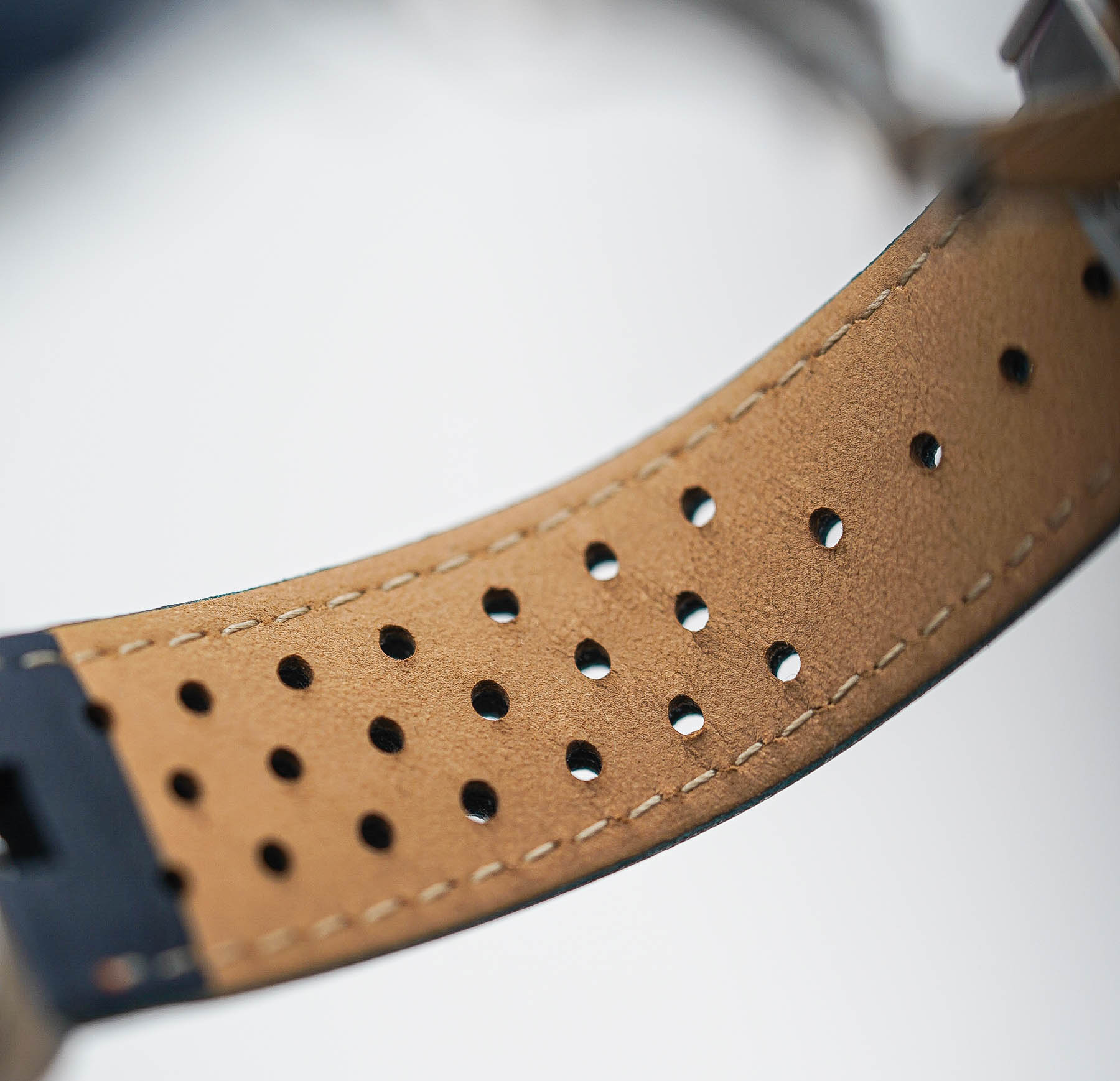

The watch comes paired with a perforated racing-style leather strap, another nod to its motorsport inspiration. The strap is finished in a vibrant blue to match the dial, with contrasting orange stitching that echoes the chronograph hand. The leather itself feels better than average for a watch in this price range — soft, pliable, and comfortable from the first wear, without the usual stiffness of entry-level straps. The underside is lined with a beige suede-like material that adds comfort against the wrist and prevents irritation during long wear.


The strap is unsigned, which is not surprising at this price, but the overall quality is a pleasant surprise. Unlike many budget watches where the strap is the first thing owners want to replace, here the included strap is actually enjoyable to wear. There are, however, a couple of caveats. First, the lug width is 21 mm — an uncommon size that makes finding aftermarket replacements more challenging. Second, at 6 o’clock, the strap has a cutout to accommodate the additional crown, which somewhat limits strap-swapping unless you modify other straps yourself. The butterfly clasp is stainless steel, signed with the Richurus logo. While not elaborate, it works as intended and provides a secure closure. On the wrist, thanks to the supple strap, the watch wears comfortably and feels cohesive, making it a piece you can wear right out of the box without upgrades.

At first glance, the Richurus Bullhead Chronograph offers some promise — a striking case shape, solid strap, and an attractive dial color. But once you look closer, the flaws begin to overshadow the positives. The chronograph layout is baffling, with the central seconds hand wasted on running time and the actual chronograph seconds hidden away on a small subdial. This destroys both the usability and the spirit of a bullhead design, which traditionally thrives on bold, central timing hands. The movement choice only amplifies the problem: the Seiko VD53 is dependable, but the execution here feels mismatched and uninspired. Loose, vague pushers further erode the chronograph experience, leaving you uncertain whether you’ve even engaged the function.
Other elements, like the oversized packaging, inner rotating bezel and the forgettable lume, only add to the sense that this watch wasn’t fully thought through. While the strap and case finishing are genuinely better than expected, they aren’t enough to redeem the core weaknesses in design and function. At 173€, I simply can’t recommend this watch, atleast not at this price point. Despite the decent case work and comfortable strap, the fundamental missteps in movement choice, chronograph layout, and execution mean the watch should be priced lower to make sense. As it stands, it feels more like a curiosity than a serious purchase. I wouldn’t buy it at this price — and I suspect many enthusiasts, once the novelty wears off, will feel the same.
 KaminskyBlog