
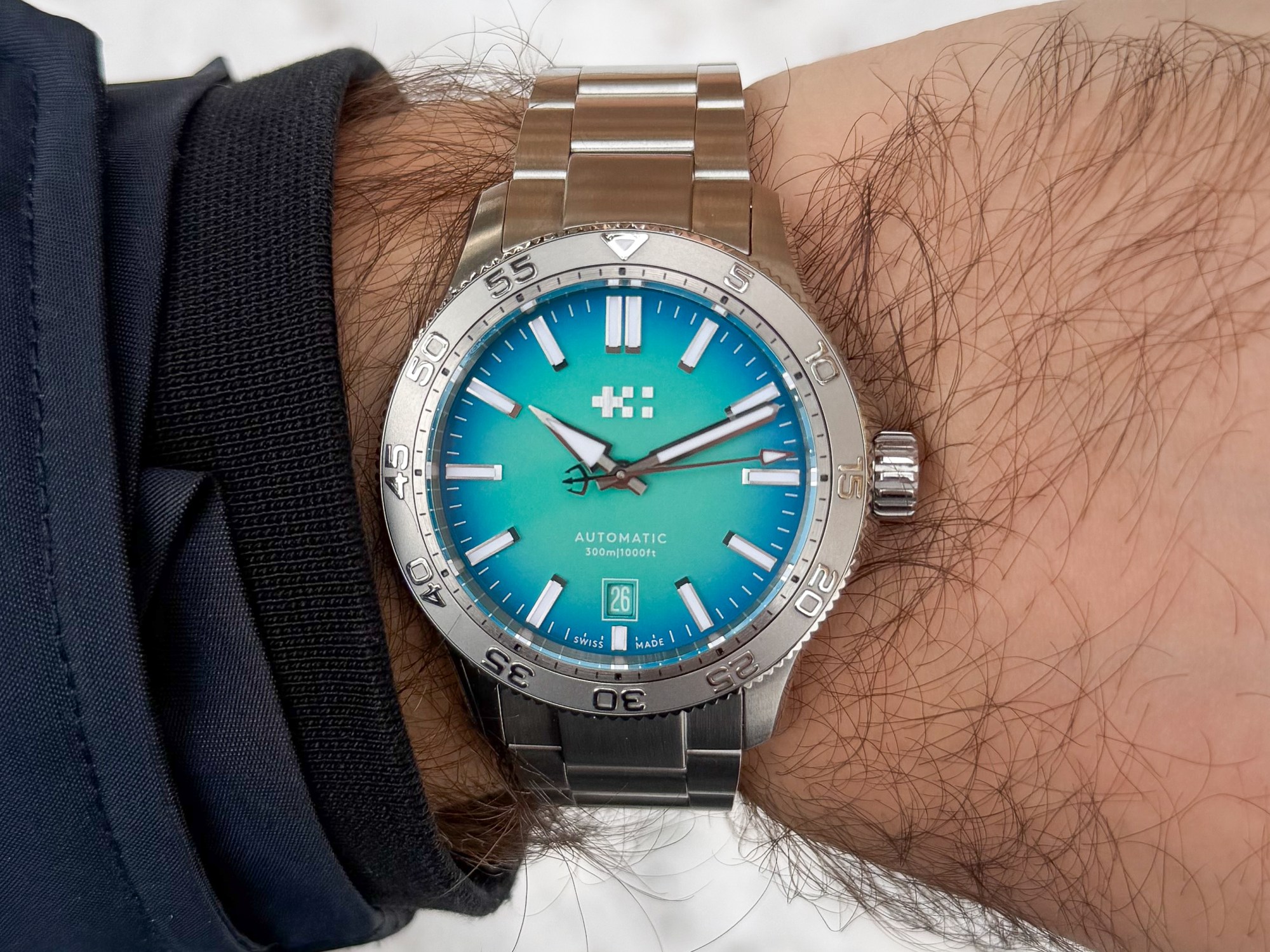
Christopher Ward’s C60 Atoll 300 feels like the brand taking everything people already liked about the C60 Trident Pro 300 and giving it a proper summer personality boost — without messing with the fundamentals. You still get a serious 300m-rated diver with a slim, wearable profile and robust everyday specs, but this version is all about vibe: a more relaxed, more modern, more “I’m going to wear this on a boat and also to dinner” energy. Christopher Ward provided me with the Reef Blue dial variant. It’s the kind of colorway that can singlehandedly justify the model’s existence. Not because it turns the C60 into something revolutionary, but because it makes a very good dive watch feel fresh, confident, and distinctly Christopher Ward in 2025’s crowded sub-€1,000 segment.

The unboxing experience is consistent with my previous Christopher Ward reviews. The watch arrives in a compact leather-and-wood presentation box that also includes the warranty card, instruction manual, and a cleaning cloth. Personally, I prefer this packaging over the brand’s earlier oversized boxes — it feels more refined and practical. That said, I would have appreciated an even more functional solution, such as a travel pouch or a watch roll, which would take up less space and be genuinely useful beyond the initial unboxing. First impressions of the watch itself were very positive. I’ve handled a fair number of C60 and C65 models, and they consistently impress me with just how slim the cases feel on the wrist. The Atoll builds on that strength, pairing the refined profile with a dial whose vivid blue-green tones deliver real presence without sacrificing legibility.
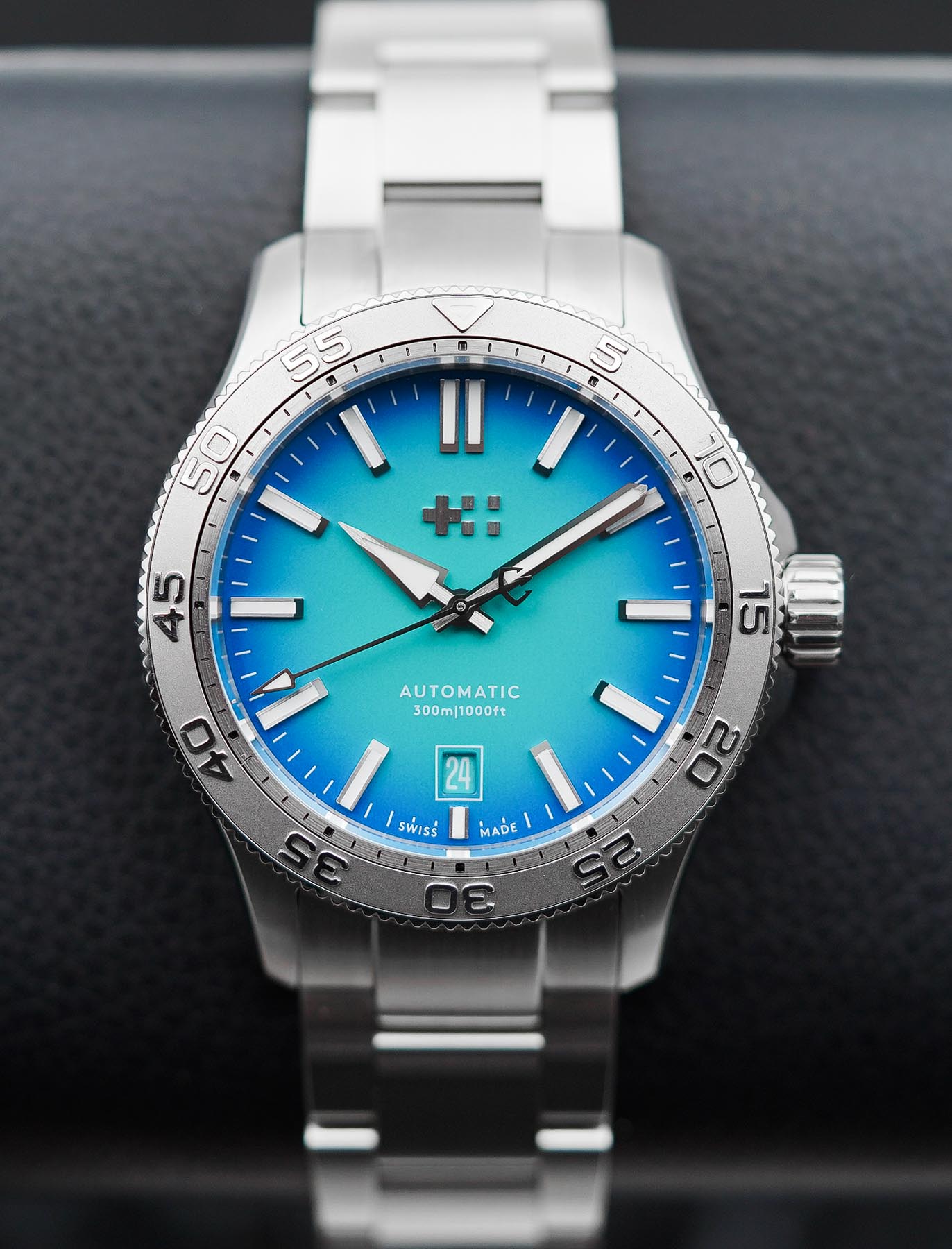
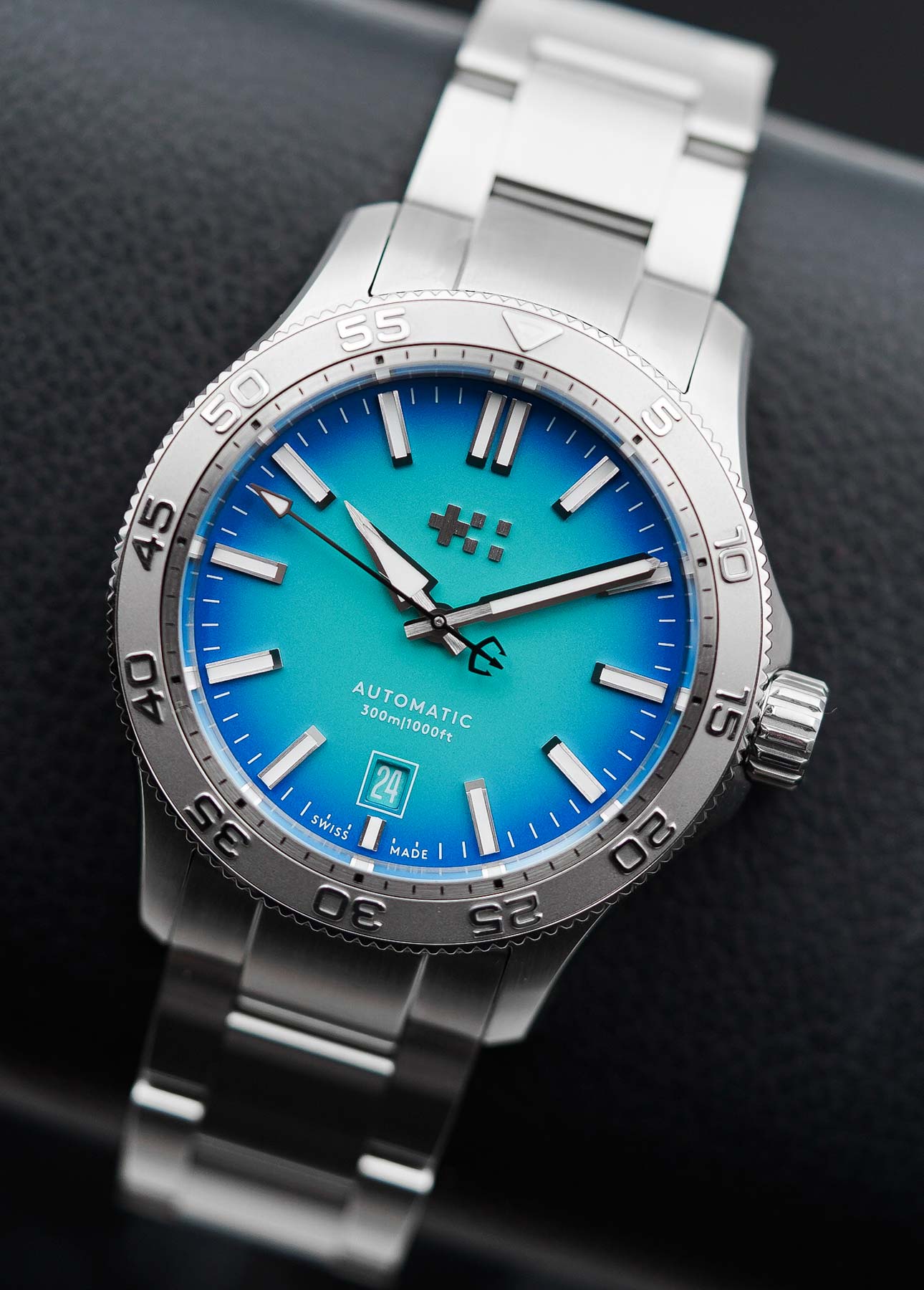
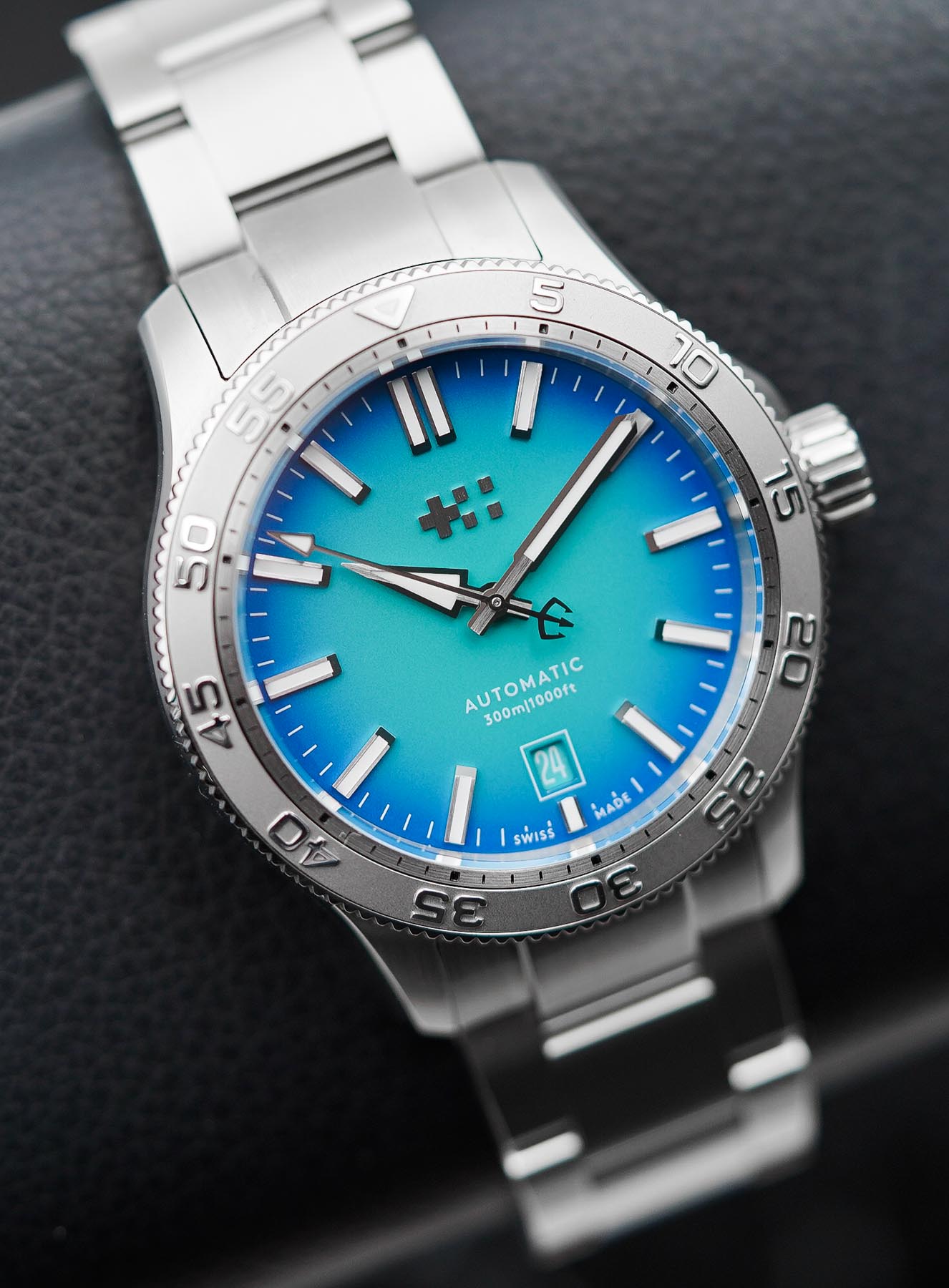
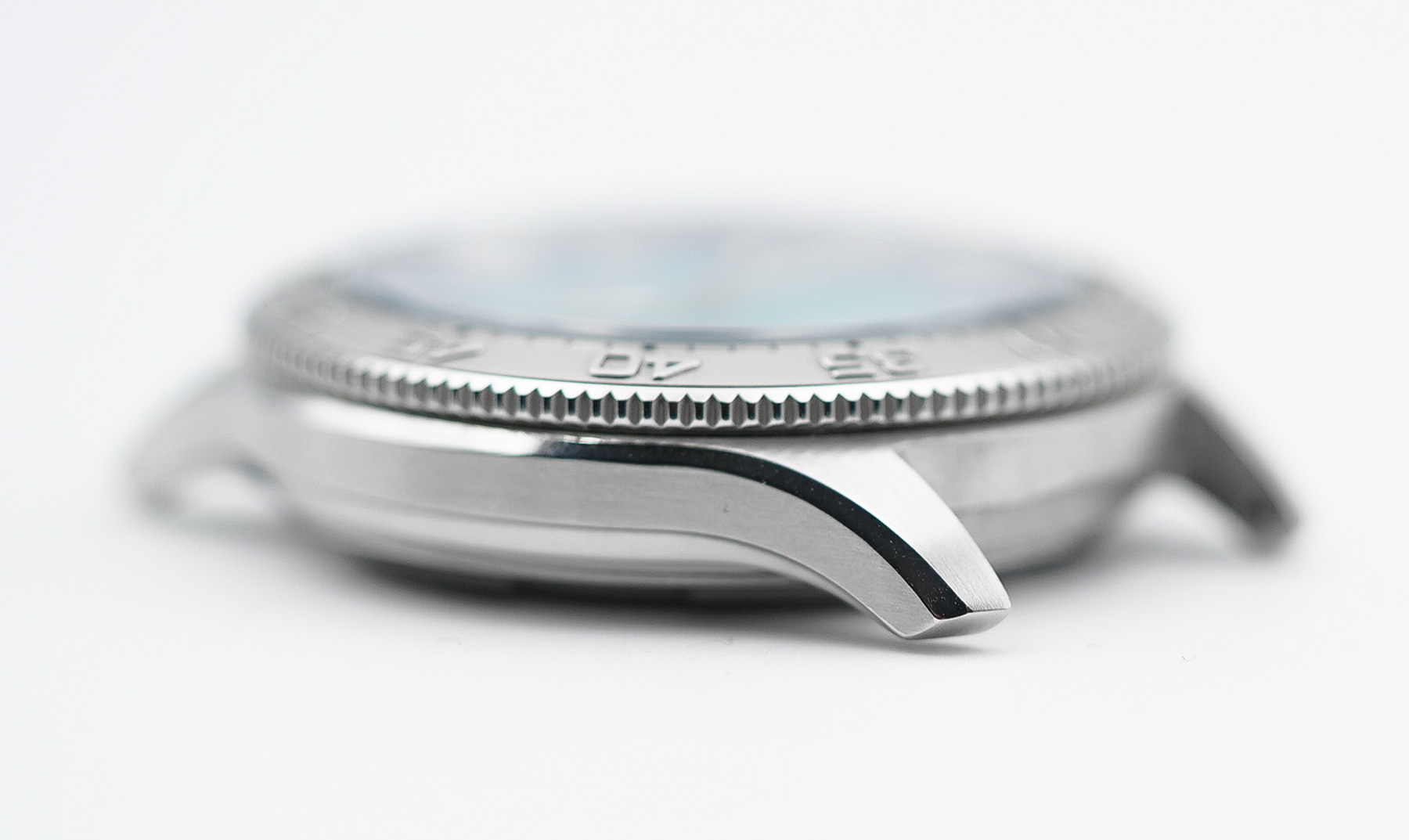
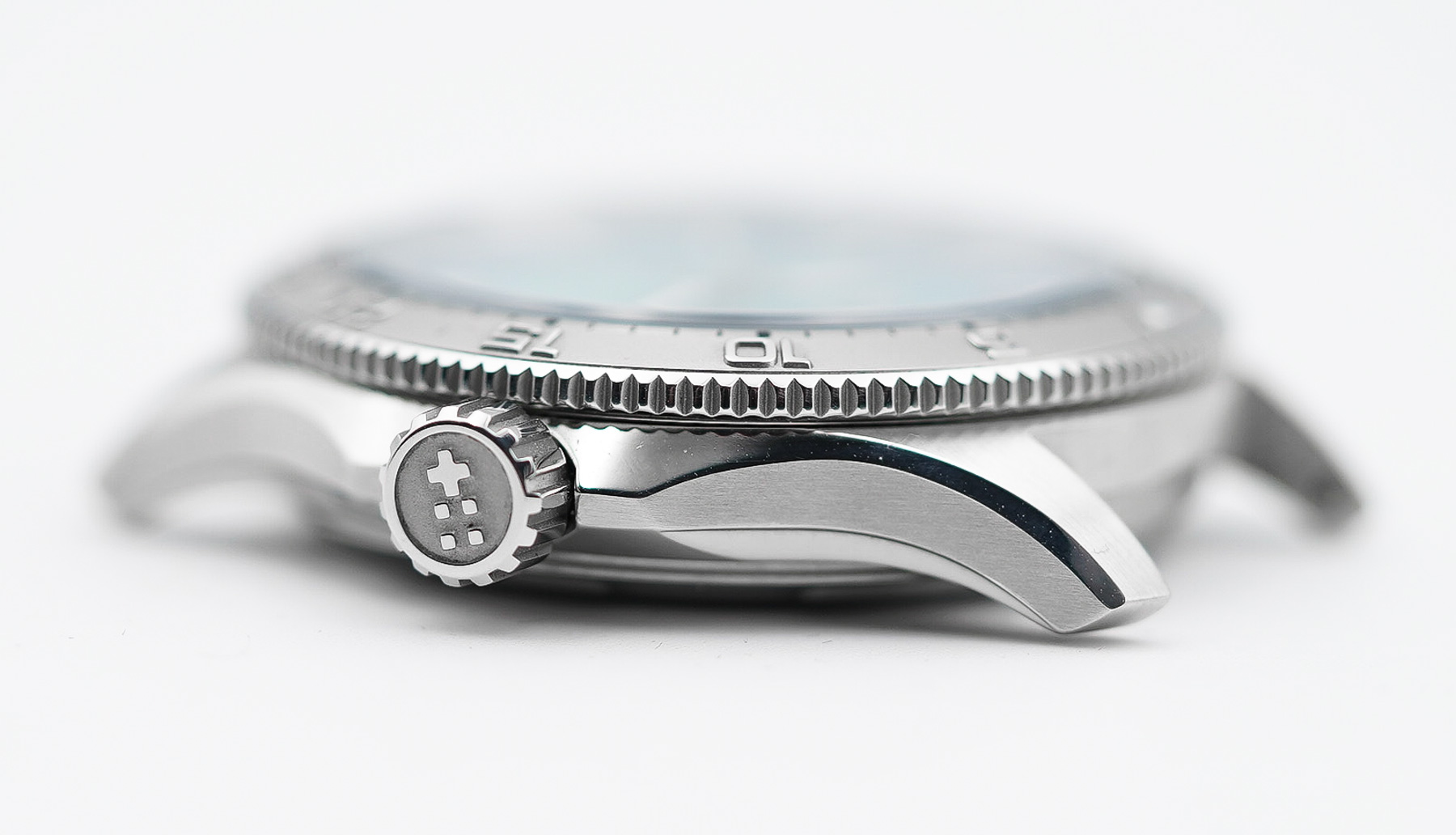
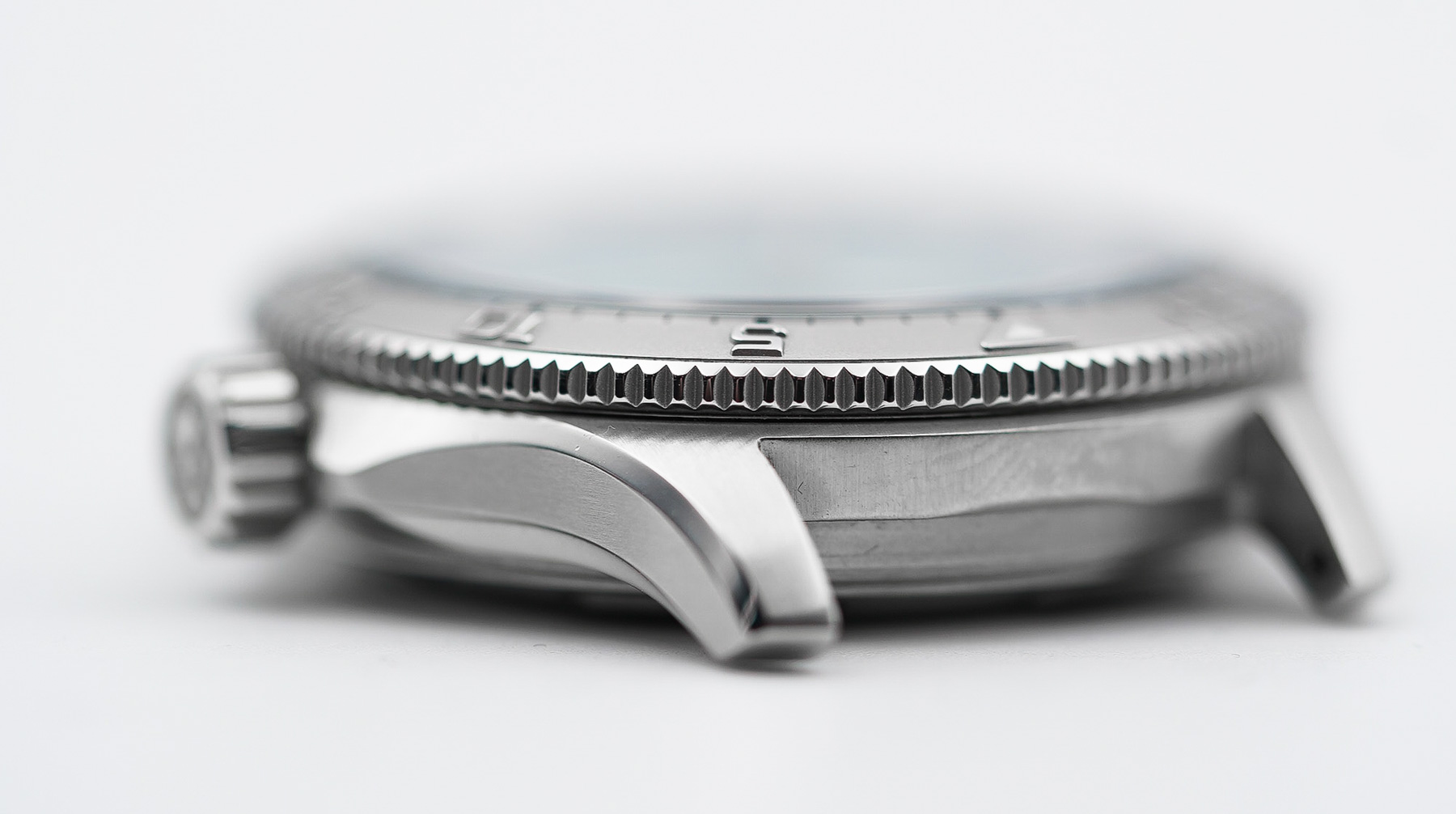
The Atoll 300 uses the familiar Christopher Ward Lightcatcher case design, and it’s still one of the most underrated strengths of the brand. This case isn’t just nicely finished; it’s shaped to show off its finishing. You get crisp transitions, alternating brushed and polished surfaces, and a modern silhouette that avoids the slab-sided tool-watch feel some competitors still lean into. Size-wise, it’s extremely well judged. 40mm in diameter, roughly 47.4mm lug-to-lug, and 11.3mm thick is a sweet spot for the “one diver that can do most things” crowd. That thickness is especially impressive given the 300m water resistance and a properly capable dive setup. On wrist, it wears flatter and slimmer than you’d expect from a watch with this spec sheet.
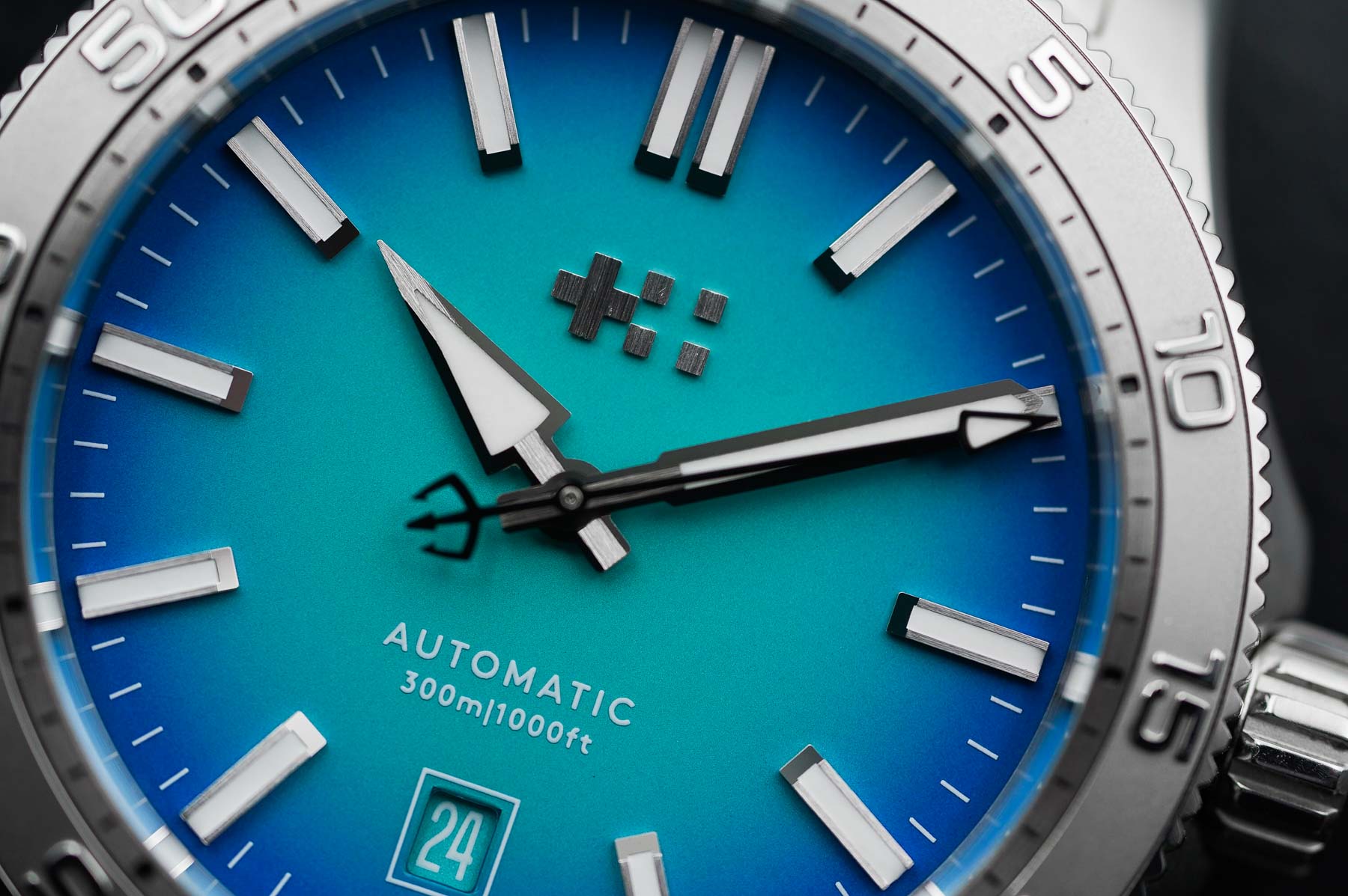
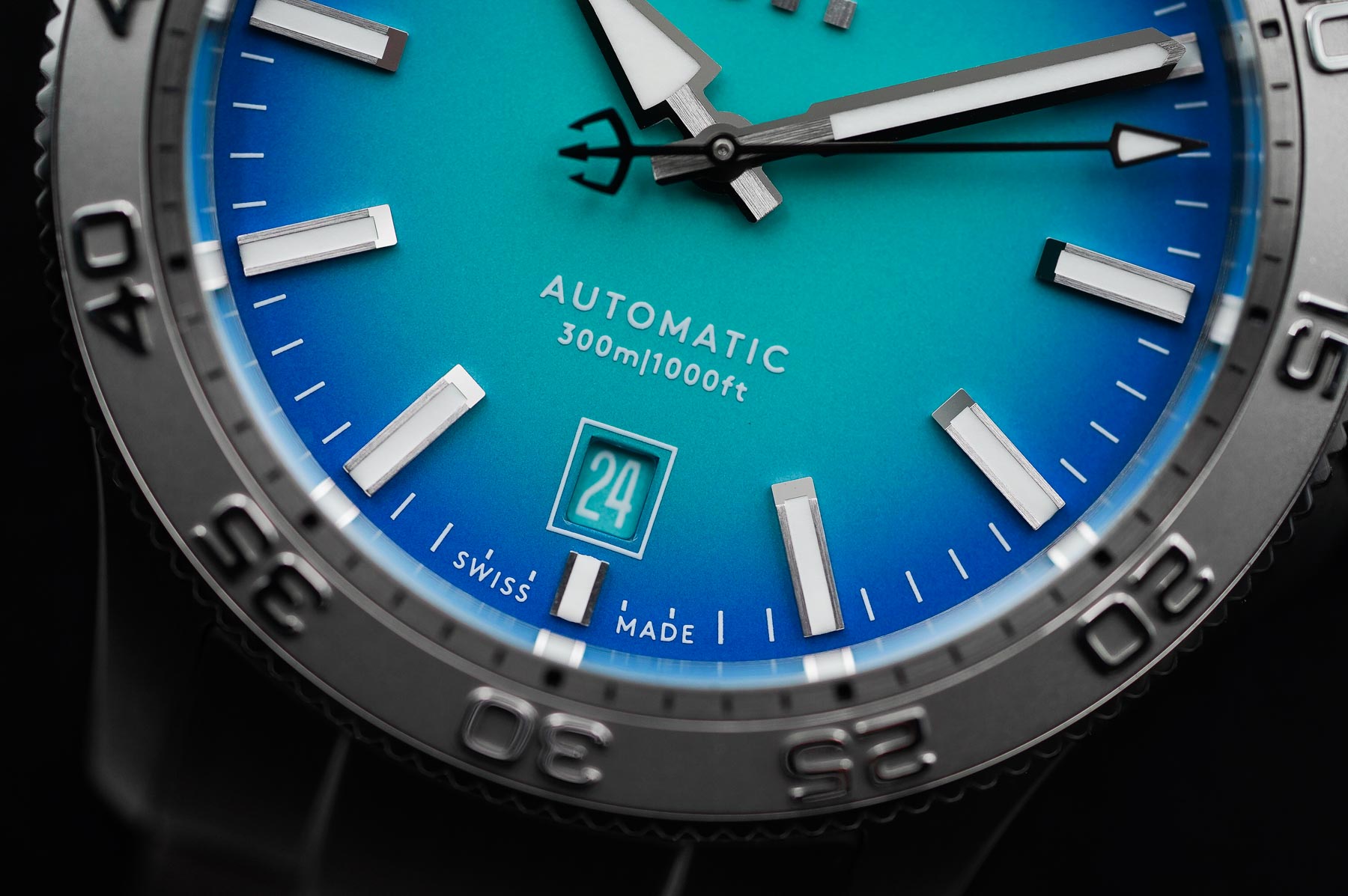
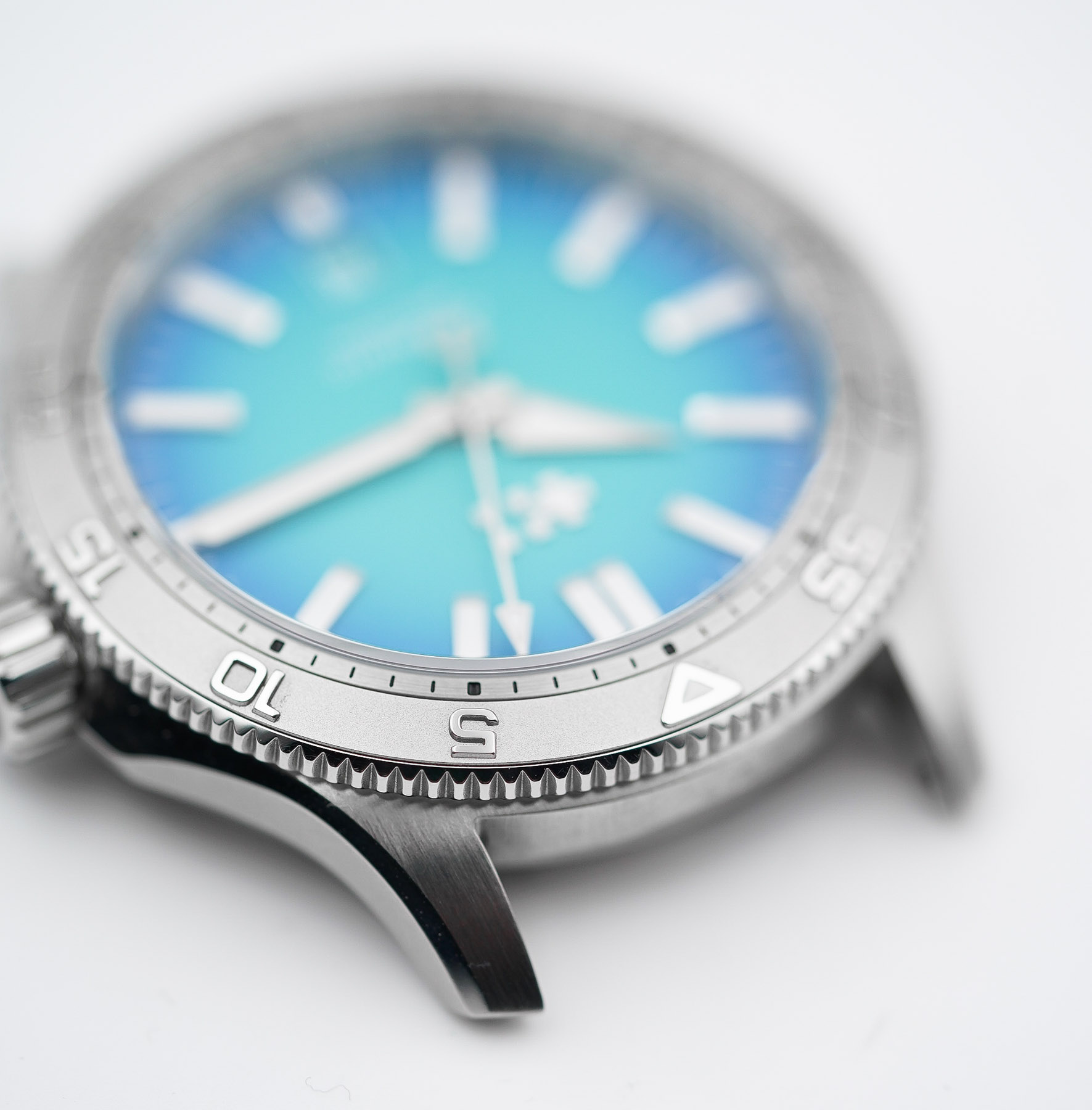
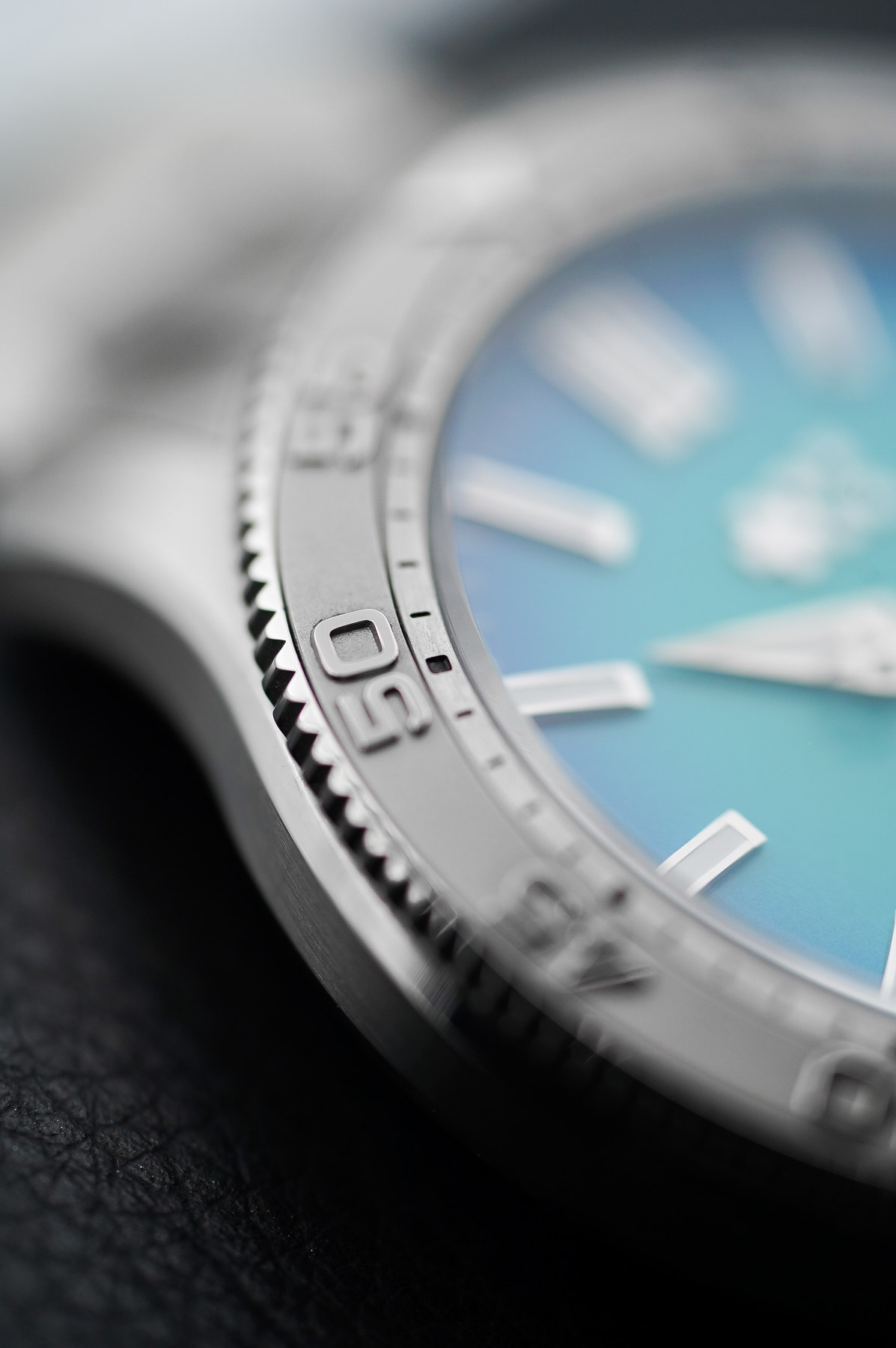
The crown is screw-down, reassuringly grippy, and easy to operate without feeling oversized. The overall ergonomics are classic Christopher Ward: compact where it matters, nicely balanced, and comfortable over long stretches of wear. This is the kind of case that disappears when you want it to — but still looks sharp when you catch it in the light. What really separates the Atoll’s personality from the more orthodox Trident feel is the steel dive bezel treatment. The 120-click bezel here is sandblasted for a matte, utilitarian look, with raised polished numerals that add dimension and a subtle flash. It’s a smart design choice: you get a tougher, more toolish surface finish, but it doesn’t read dull or flat because those polished raised markers give it just enough visual drama. Functionally, it’s what you want — firm action, clear alignment, and a modern aesthetic that nods very lightly to that “luxury sports diver” space without looking like it’s trying too hard.
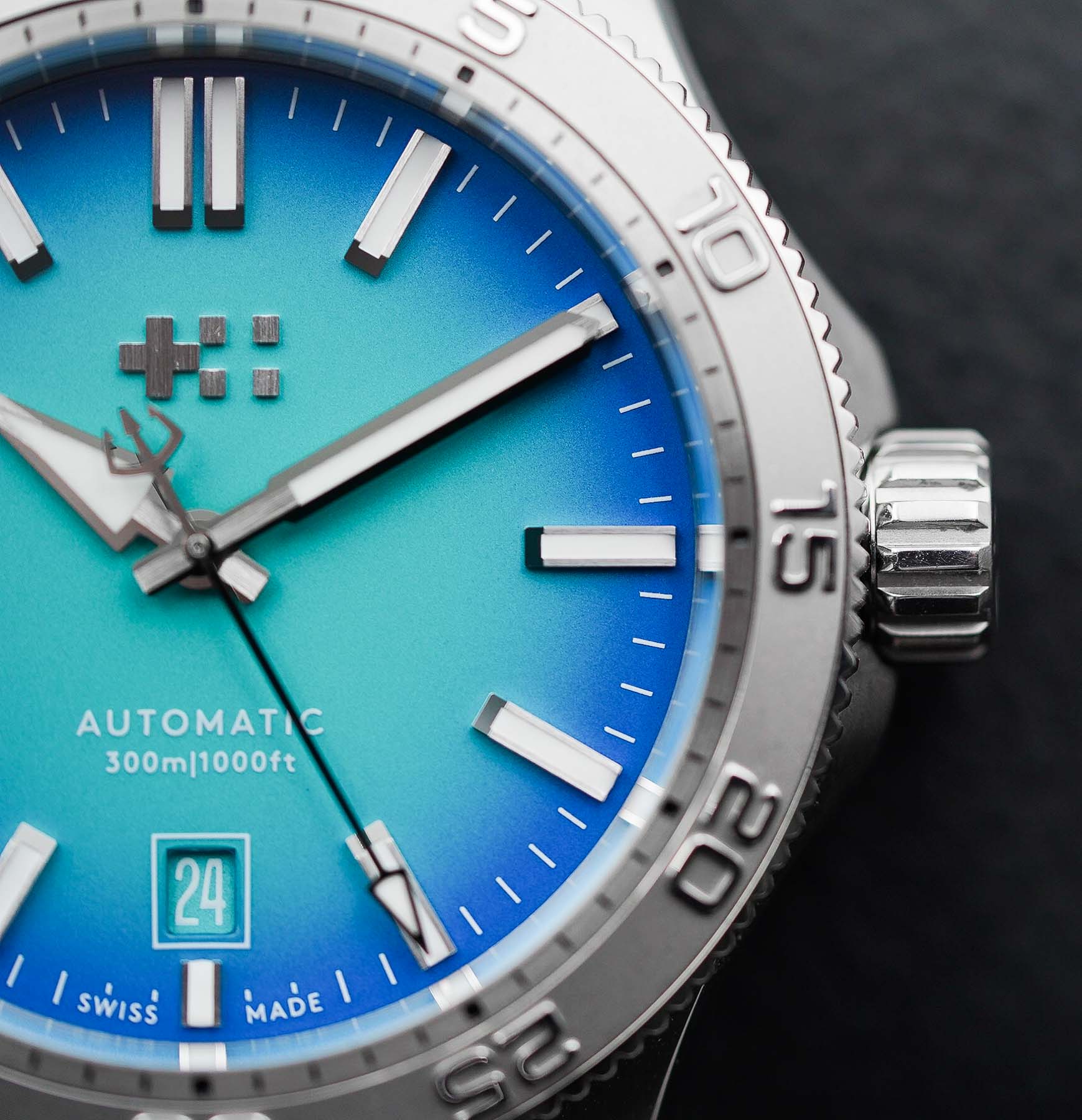
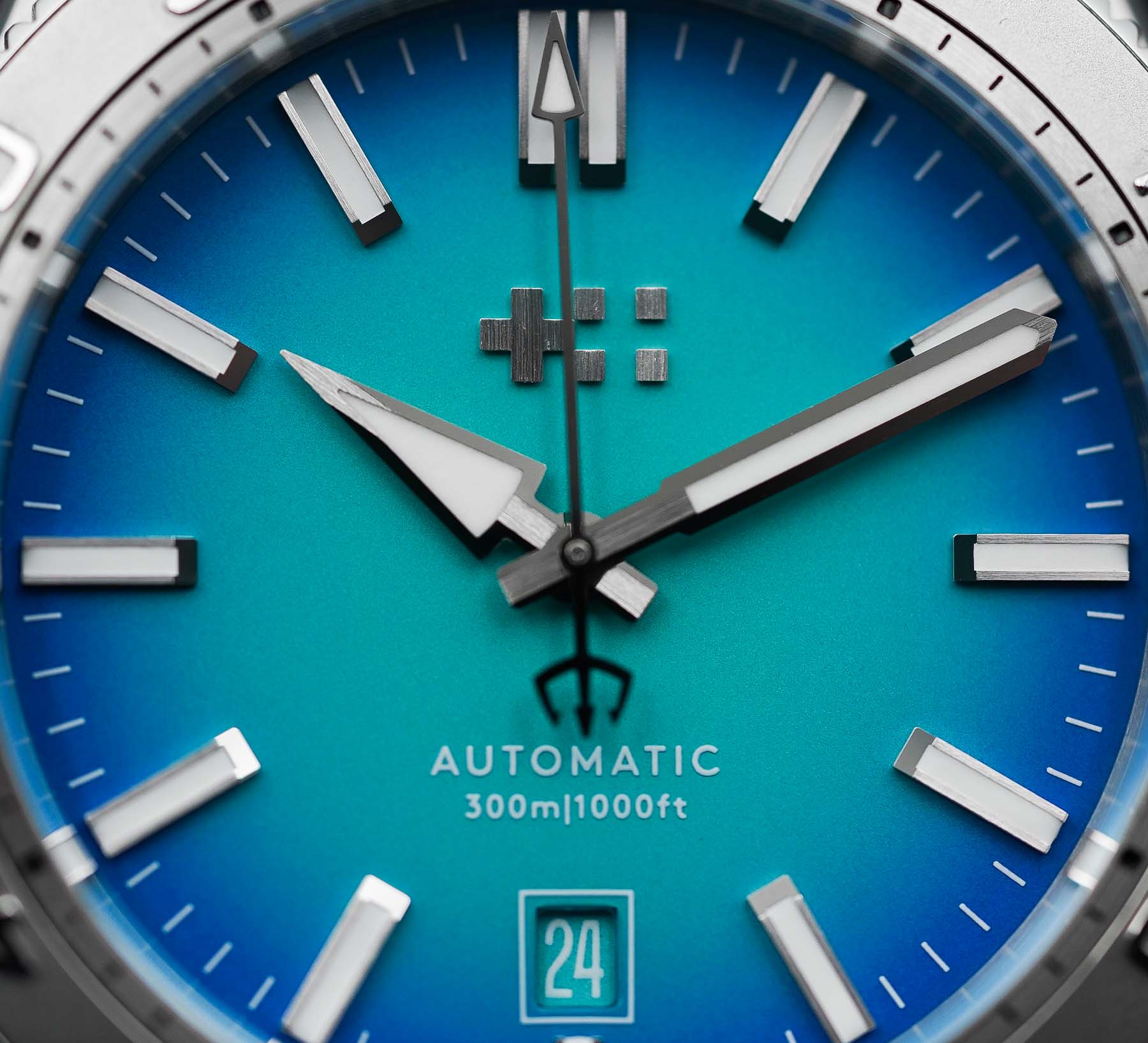
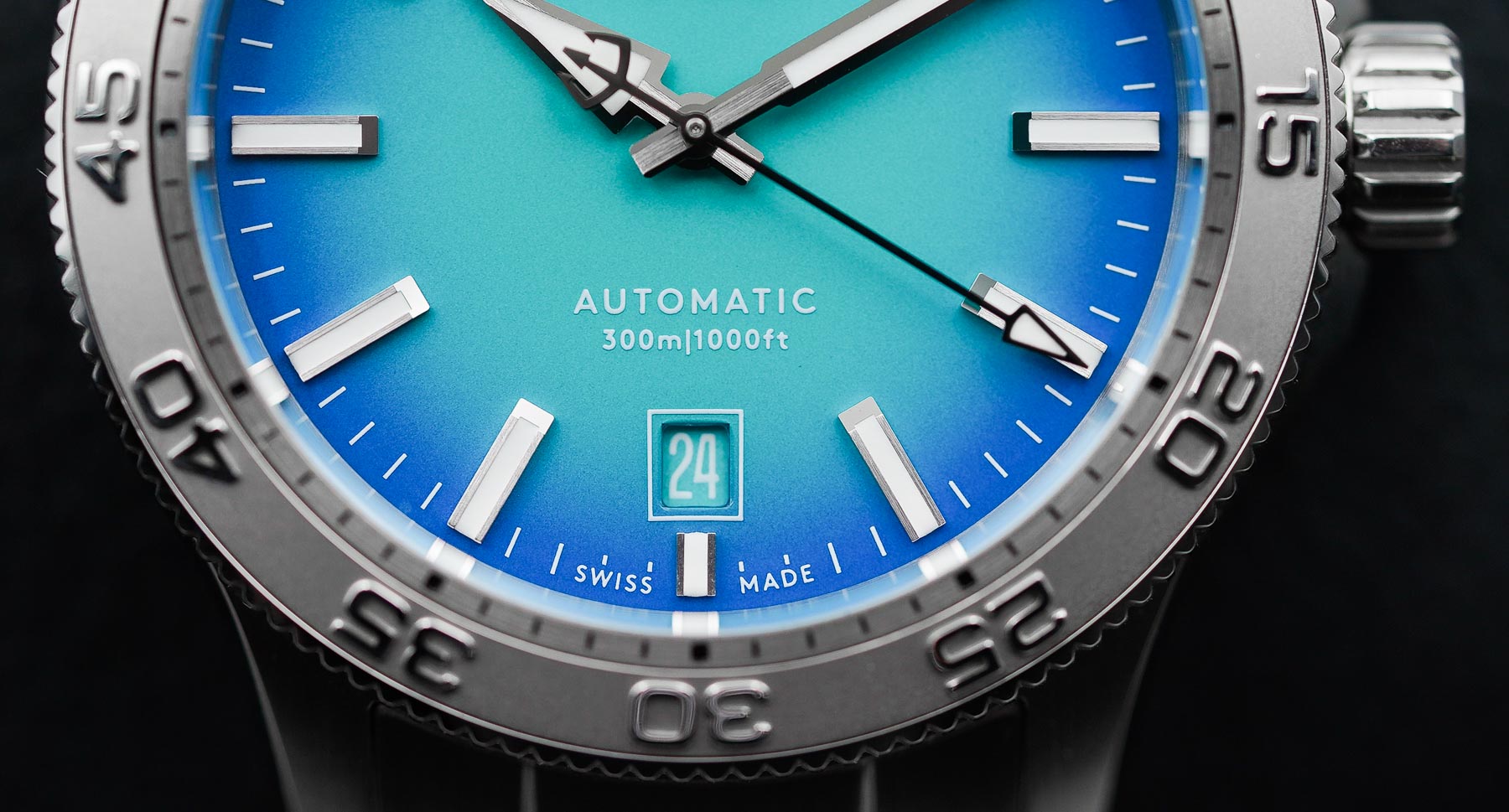
Christopher Ward nailed the concept of an ocean-inspired gradient without drifting into gimmick territory. The lacquered gradient is lighter in the center and deepens toward the perimeter, creating a sense of depth that feels genuinely aquatic rather than just decorative. It’s bright and tropical without looking like a novelty color. Depending on the lighting, the center can read almost turquoise or “pool blue,” while the edge settles into a richer, more saturated blue. That shift gives the dial movement — not mechanical movement, but visual movement. It changes as you move your wrist, which makes the watch feel lively even when the design is otherwise straightforward and clean.
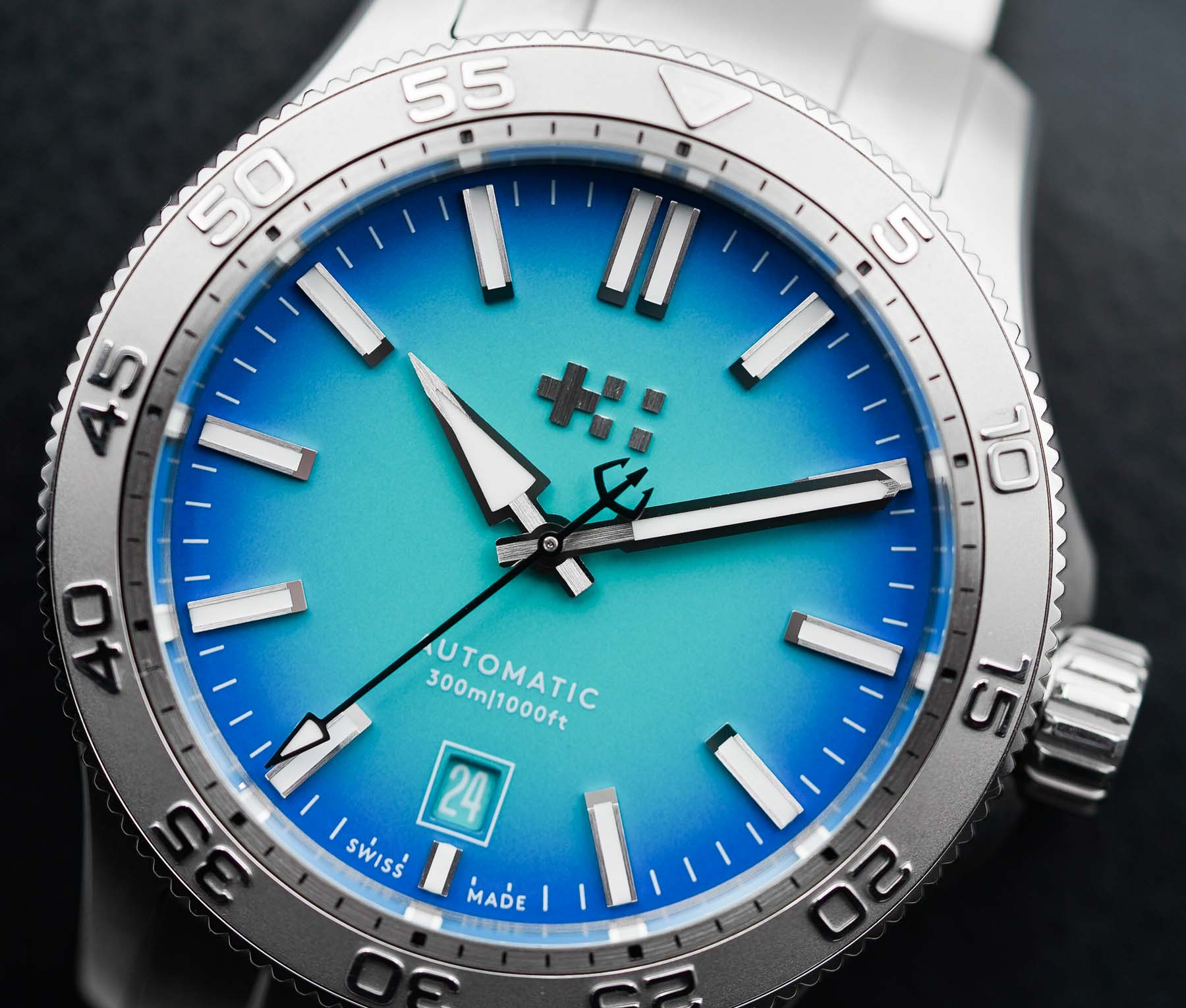
Christopher Ward also smartly keeps the layout crisp and legible. The applied indices are neatly finished, the hands are bold and purposeful, and the signature trident counterbalance on the seconds hand adds identity without clutter. The date at 6 o’clock is a big win here — both for symmetry and for how well it integrates into the dial. The color-matched date wheel is the kind of small decision that signals care. It’s a minor feature that makes a major difference in how cohesive the dial feels. Lume performance is another practical highlight. The hands and markers are generously treated with Super-LumiNova, and in real use this is exactly the type of diver you can check at a glance in low light without hunting for contrast. Most importantly: the Reef Blue dial doesn’t just “look nice.” It gives the Atoll a distinct identity inside Christopher Ward’s own lineup. It’s not a generic blue diver dial. It’s a “this is the Atoll” dial.
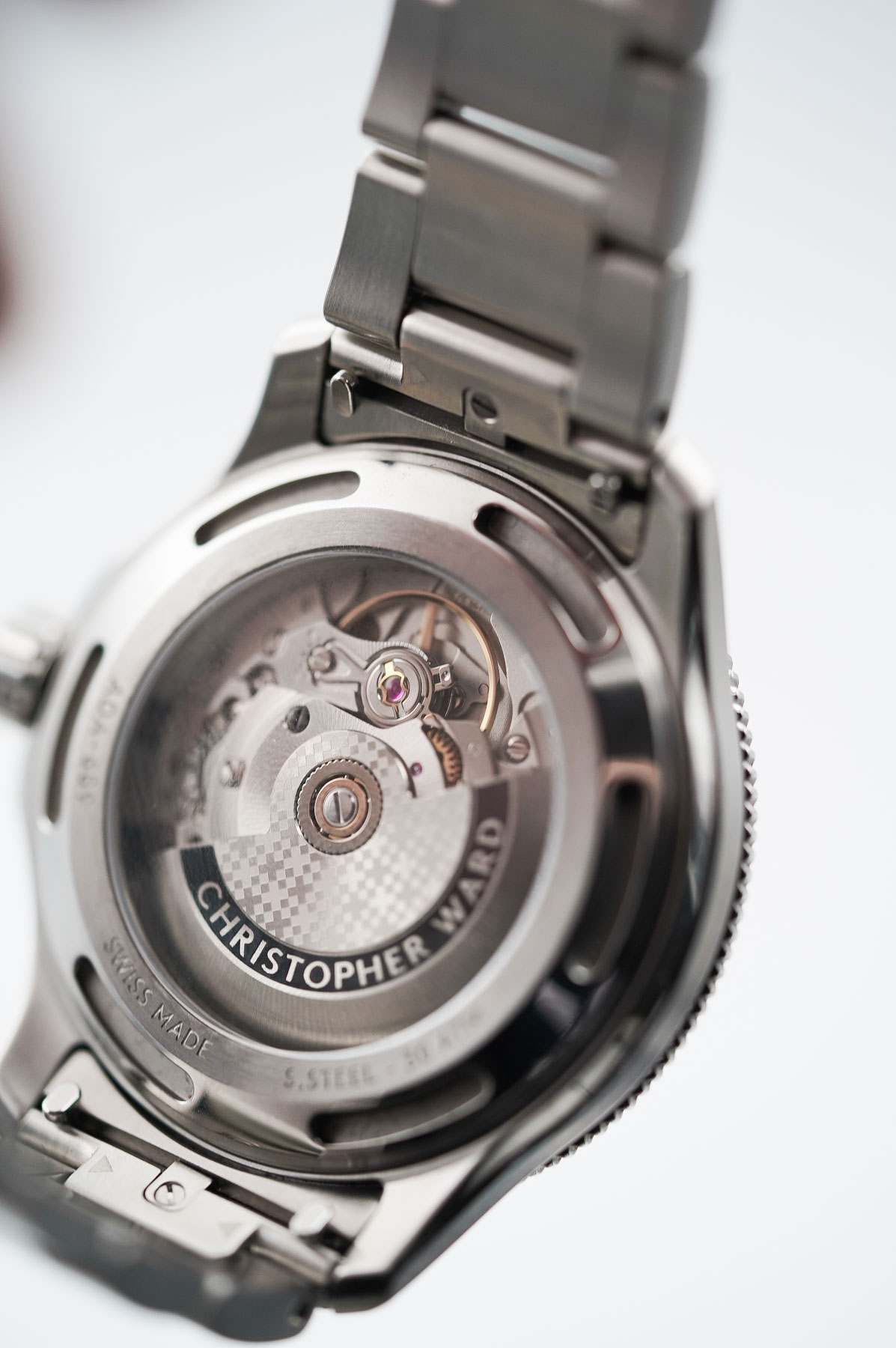
Inside is the familiar Sellita SW200-1, beating at 4Hz (28,800 vph) with a 38-hour power reserve. You’ll find this movement across a ton of respected watches, and for good reason: it’s reliable, easily serviceable, and generally drama-free. This isn’t a movement section where you get to wax poetic about technical innovation, and that’s totally fine. In this kind of watch, you want predictability. You want something that can take daily wear, travel, desk time, beach time, and the occasional actual swim without you worrying about fragility or obscure servicing. The SW200-1 is exactly that.

Christopher Ward often finishes and brands the rotor, and the exhibition caseback lets you see it. Some purists prefer a solid caseback on a diver, and I get that argument, but I also think this doesn’t detract from the watch’s purpose. The Atoll is a serious diver on paper, but its personality is broader than that — it’s a summer everyday watch that happens to be fully capable underwater. The display back fits the vibe. In short: the movement won’t be the reason you choose the Atoll, but it won’t give you a reason to hesitate either.
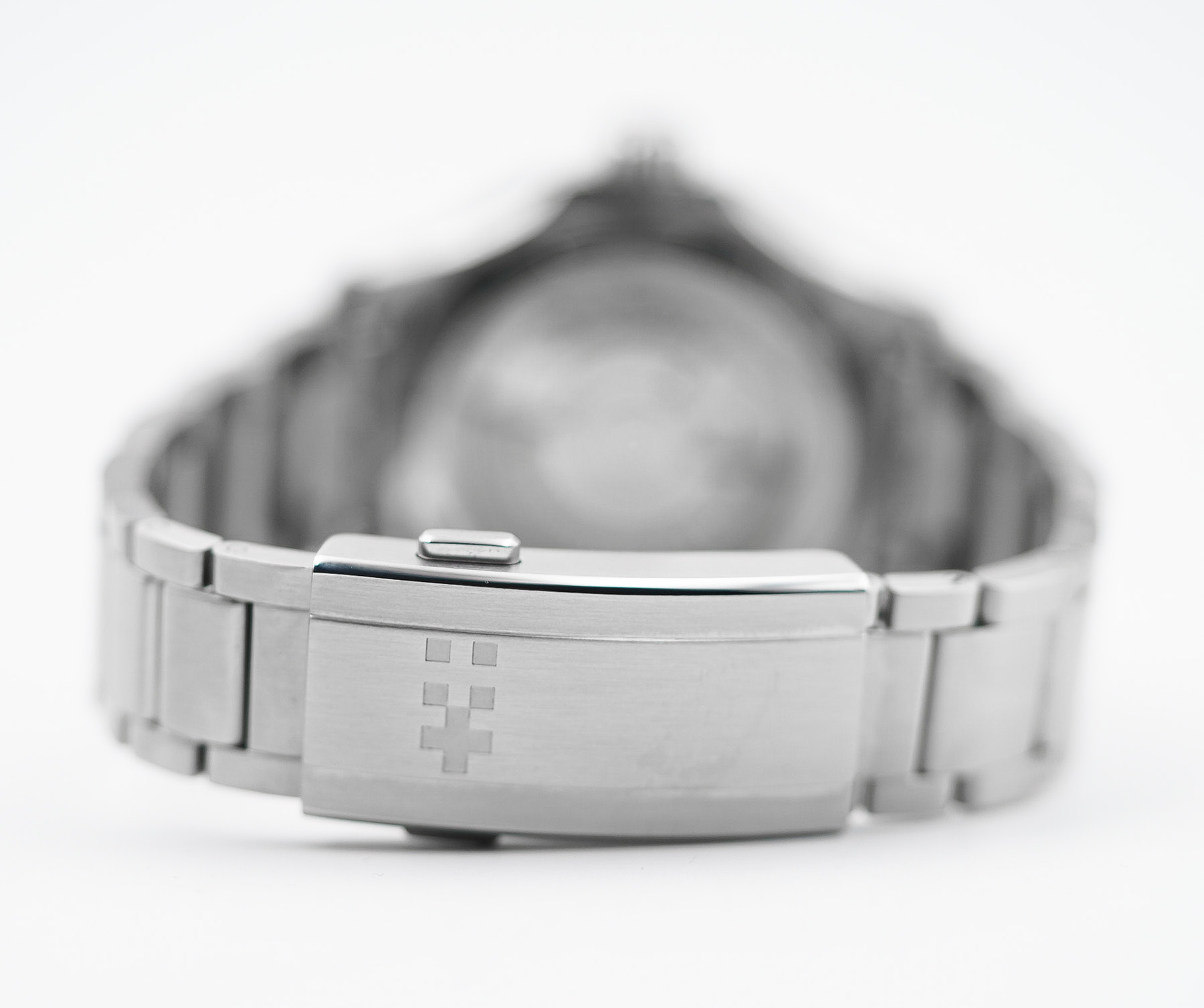
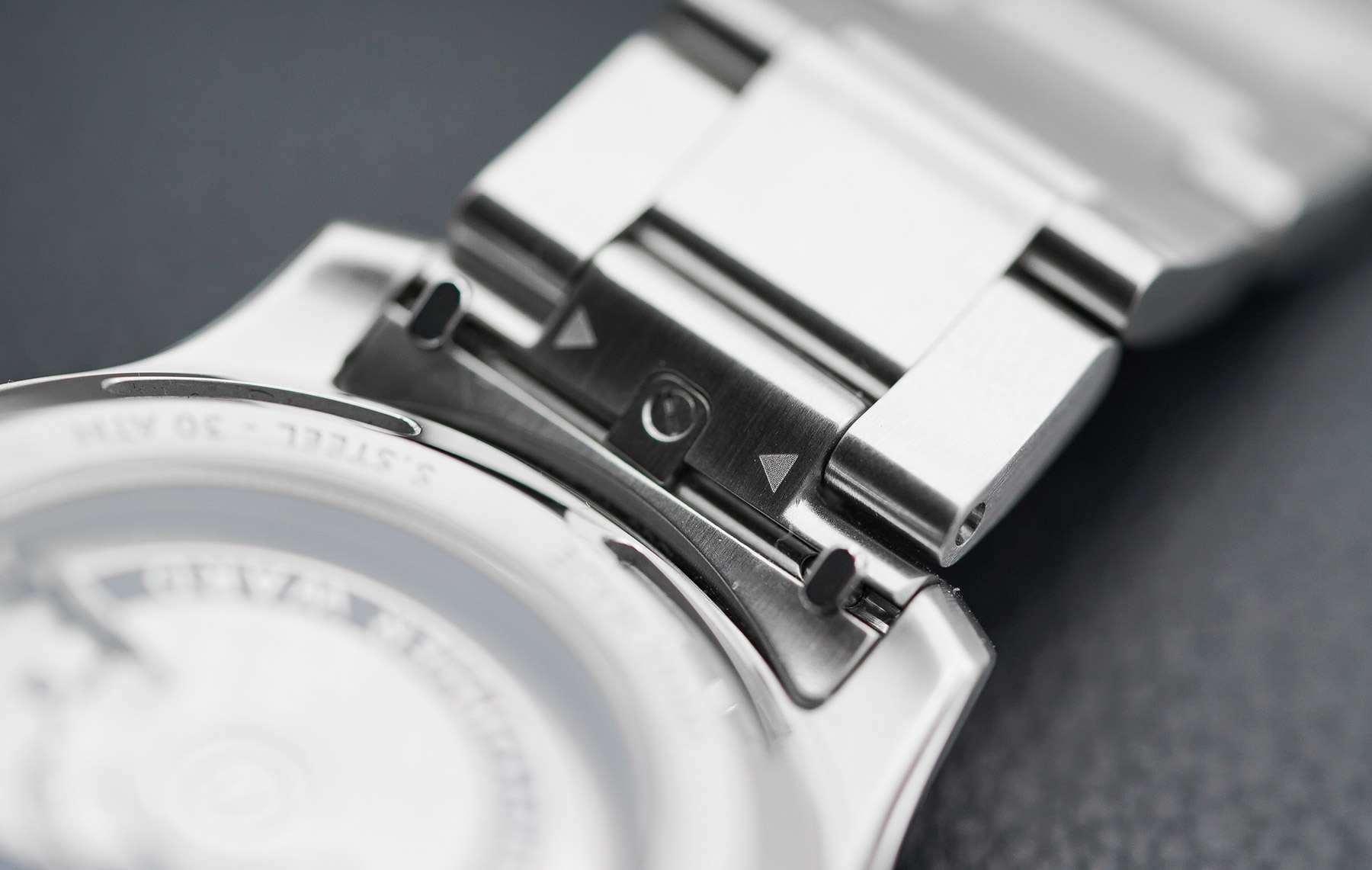
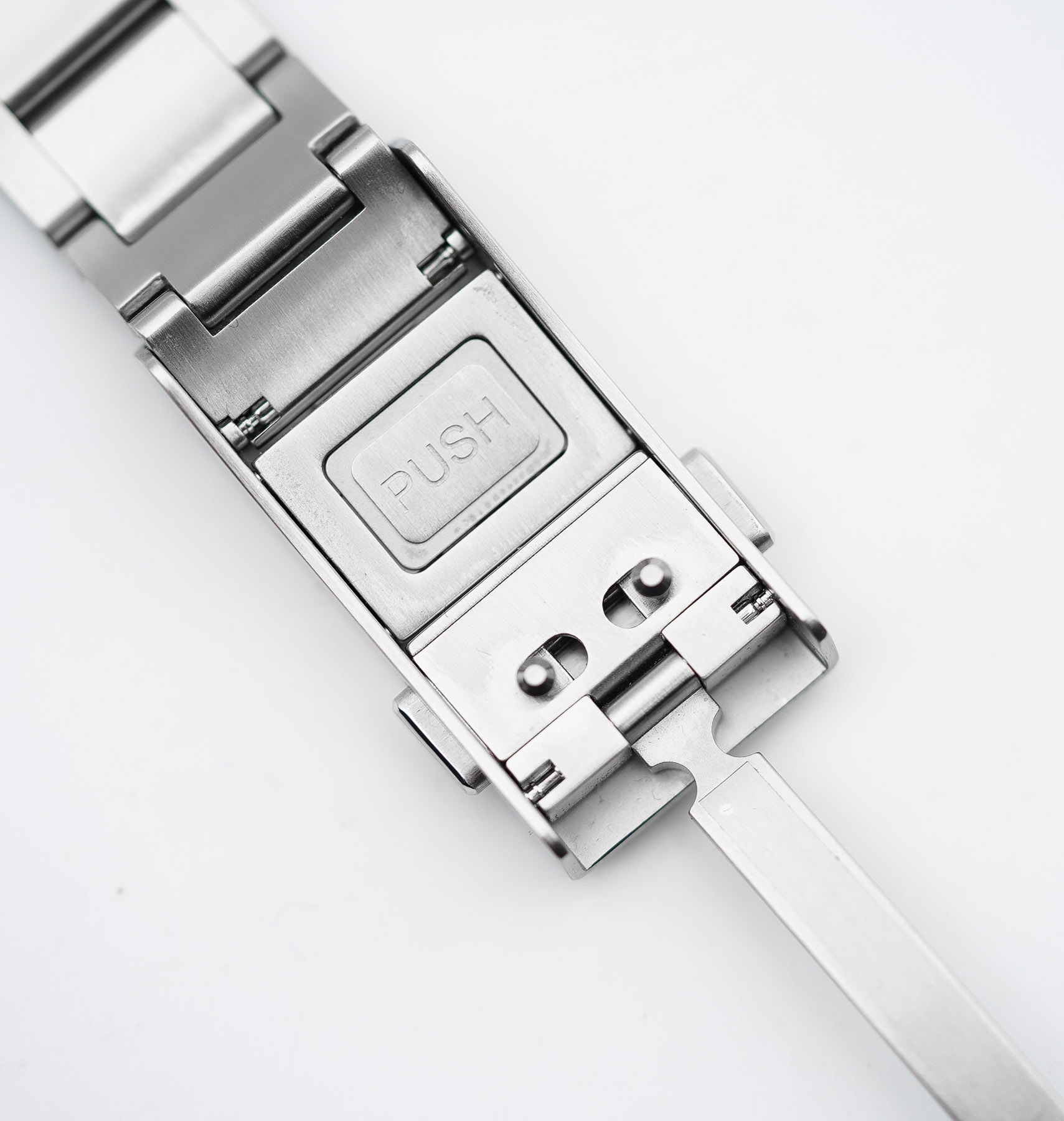
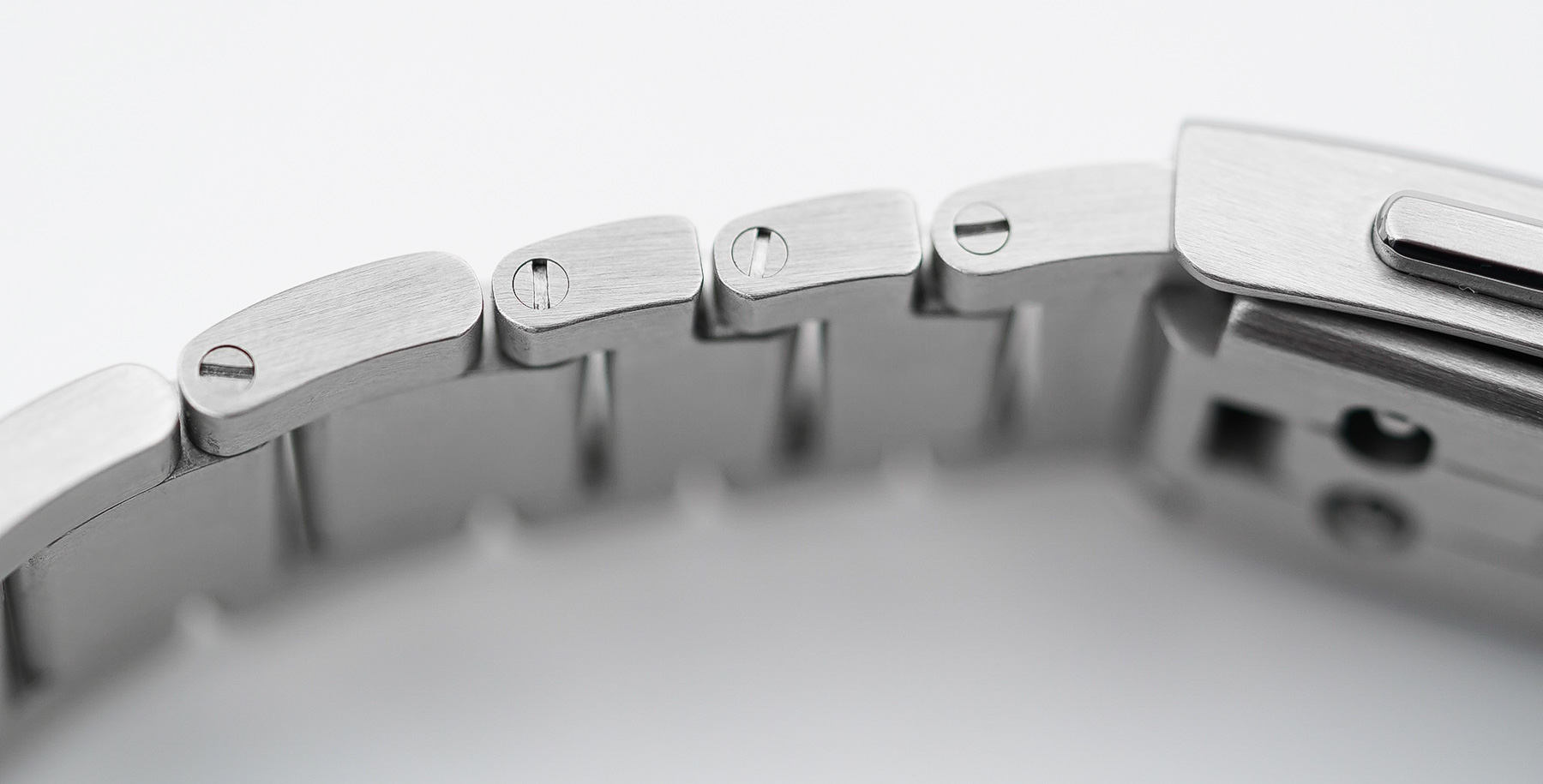
If the dial is the Atoll’s soul, the bracelet is its daily usability flex. The Bader bracelet is one of the better offerings in this price category, combining a clean, modern take on the classic three-link style with comfort-focused execution. Fit and finish feel a notch above what the price suggests, which is basically Christopher Ward’s brand thesis at this point. The standout detail is the micro-adjustment clasp, which makes real-world wear easier than you might expect from a sub-€1,200 diver. It’s the kind of thing you start to miss immediately when you wear other watches without it. Hot day? Wrist swelling slightly? You can dial in the fit without tools and without annoyance.
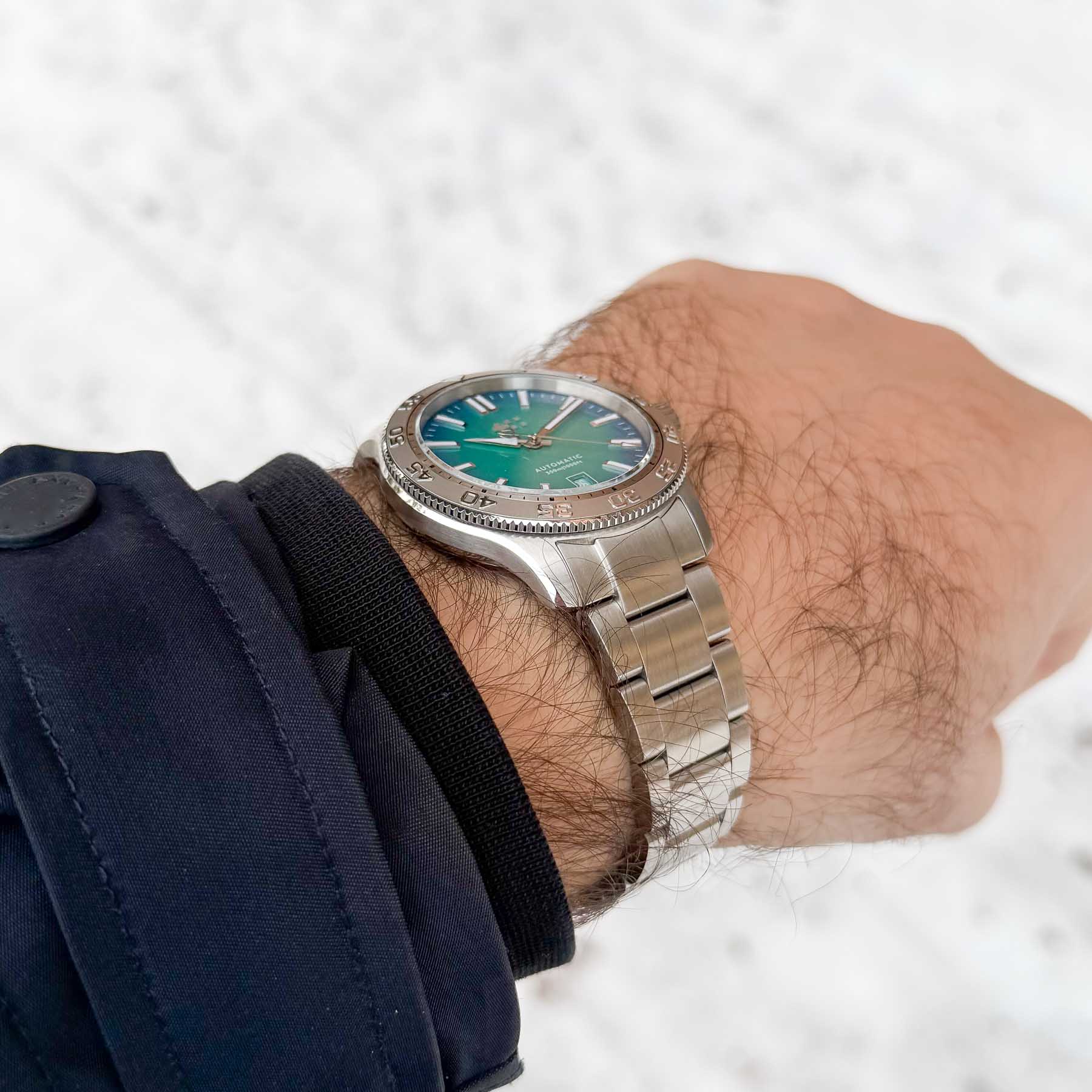
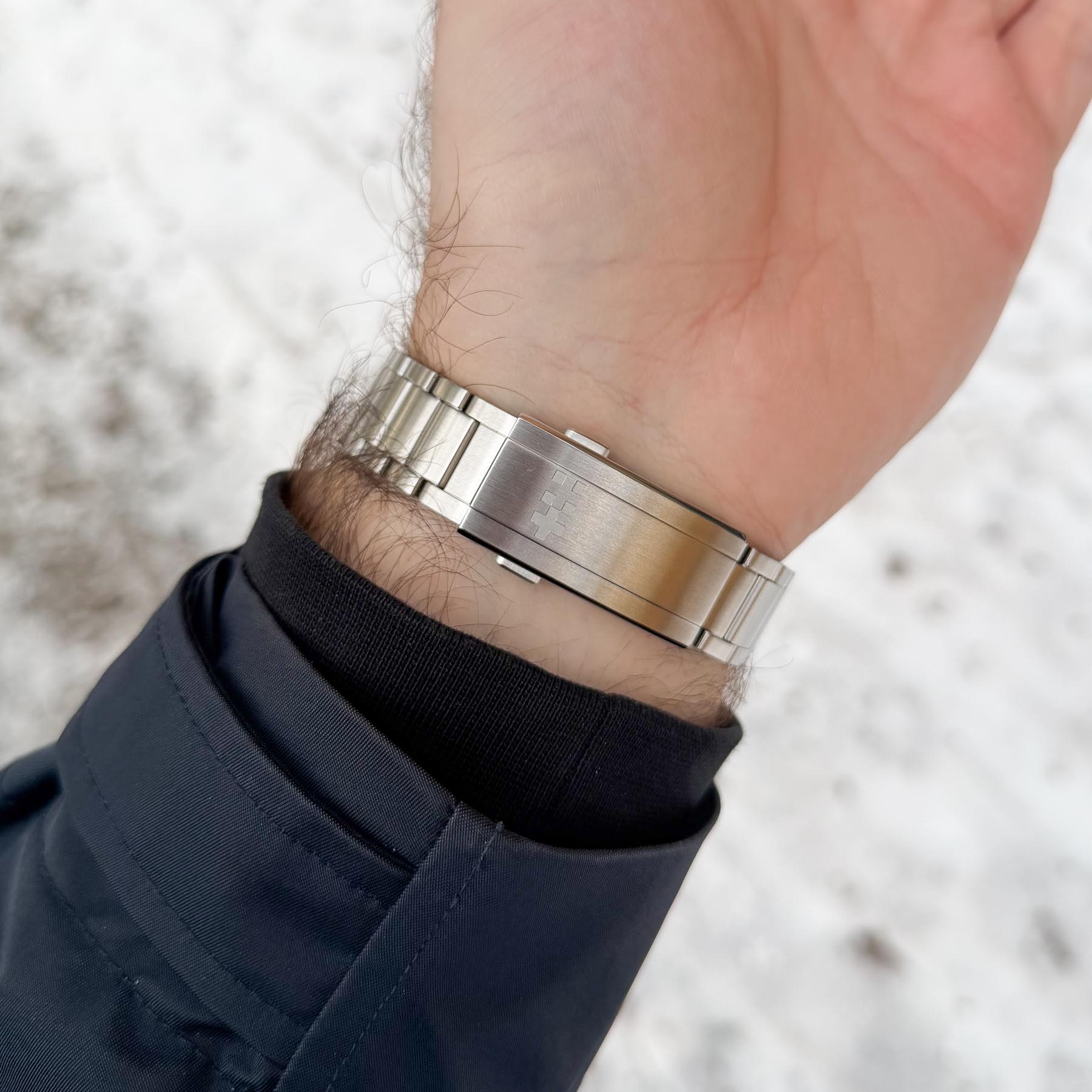

The bracelet also complements the Atoll’s case finishing nicely. It keeps the watch looking crisp and “complete” — a strong option if you want the Atoll to play the role of your single do-it-all sporty watch. Now, Christopher Ward also offers a tapering rubber strap for this model, and it clearly aligns with the watch’s summer mission. Even if you’re a bracelet person, that strap option makes sense as an add-on for travel or beach-heavy weeks. But if you want the Atoll to feel like a slightly more premium daily package, the bracelet is the version that lands the strongest.
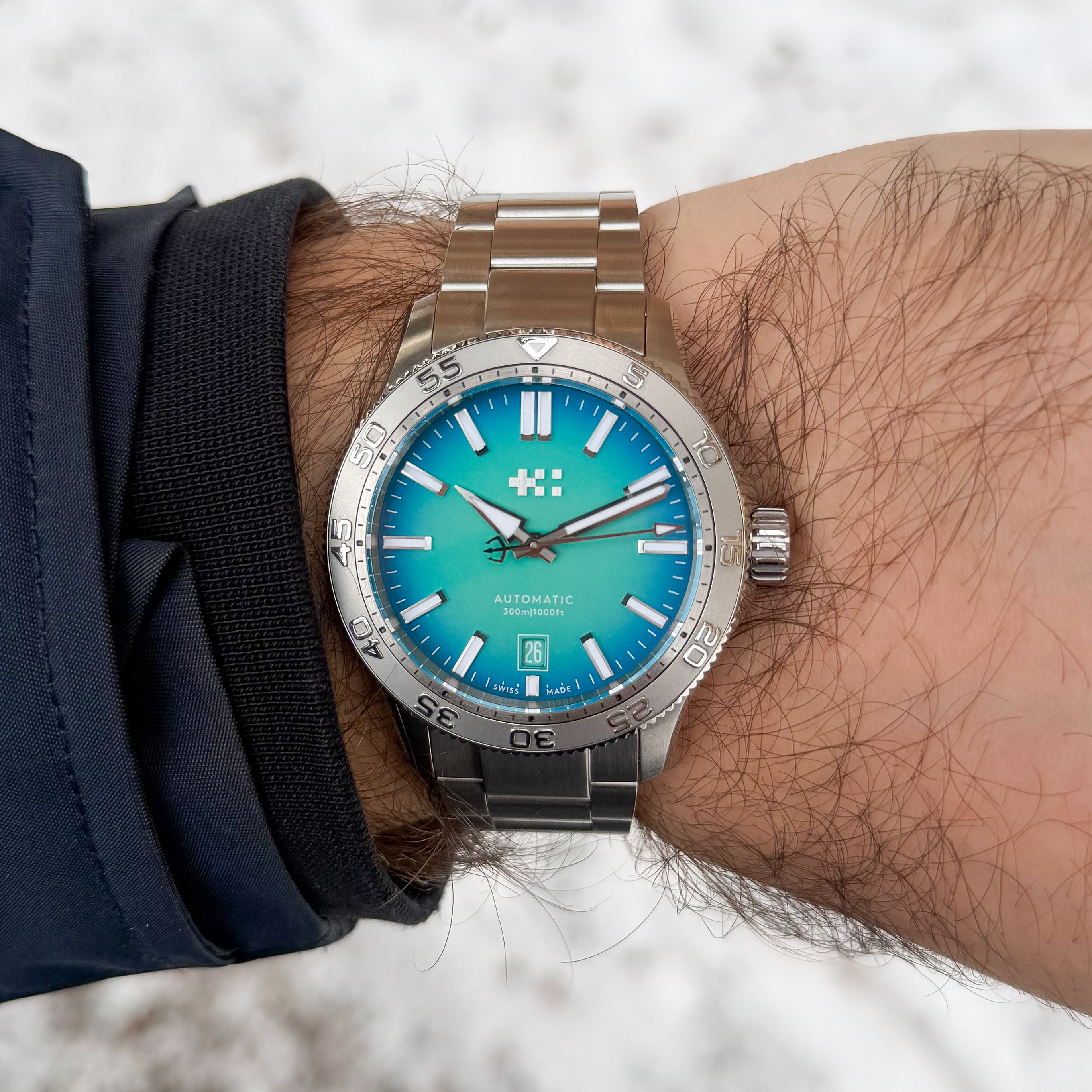
The Christopher Ward C60 Atoll 300 in Reef Blue succeeds because it doesn’t overcomplicate its purpose. It takes a proven platform, sharpens the style edges, and adds a dial that feels both modern and emotionally appealing. You get a slim, well-finished 40mm case, a tough and distinctive steel bezel, a dial that genuinely stands out in the segment, a trusty workhorse movement, and a bracelet with the kind of practical refinement that makes it easy to live with. Most brands try to sell you a summer diver with exaggerated color or a marketing story that does the heavy lifting. The Atoll doesn’t need to shout. The Reef Blue dial is confident enough to carry the watch on its own — and the underlying Trident Pro 300 architecture is strong enough to make sure this isn’t just a pretty face. If you want a diver under the psychological €1,000-ish barrier that feels legitimately versatile, looks great in photos, and still wears like a serious tool when you need it to, this one is a very easy recommendation.
 KaminskyBlog