
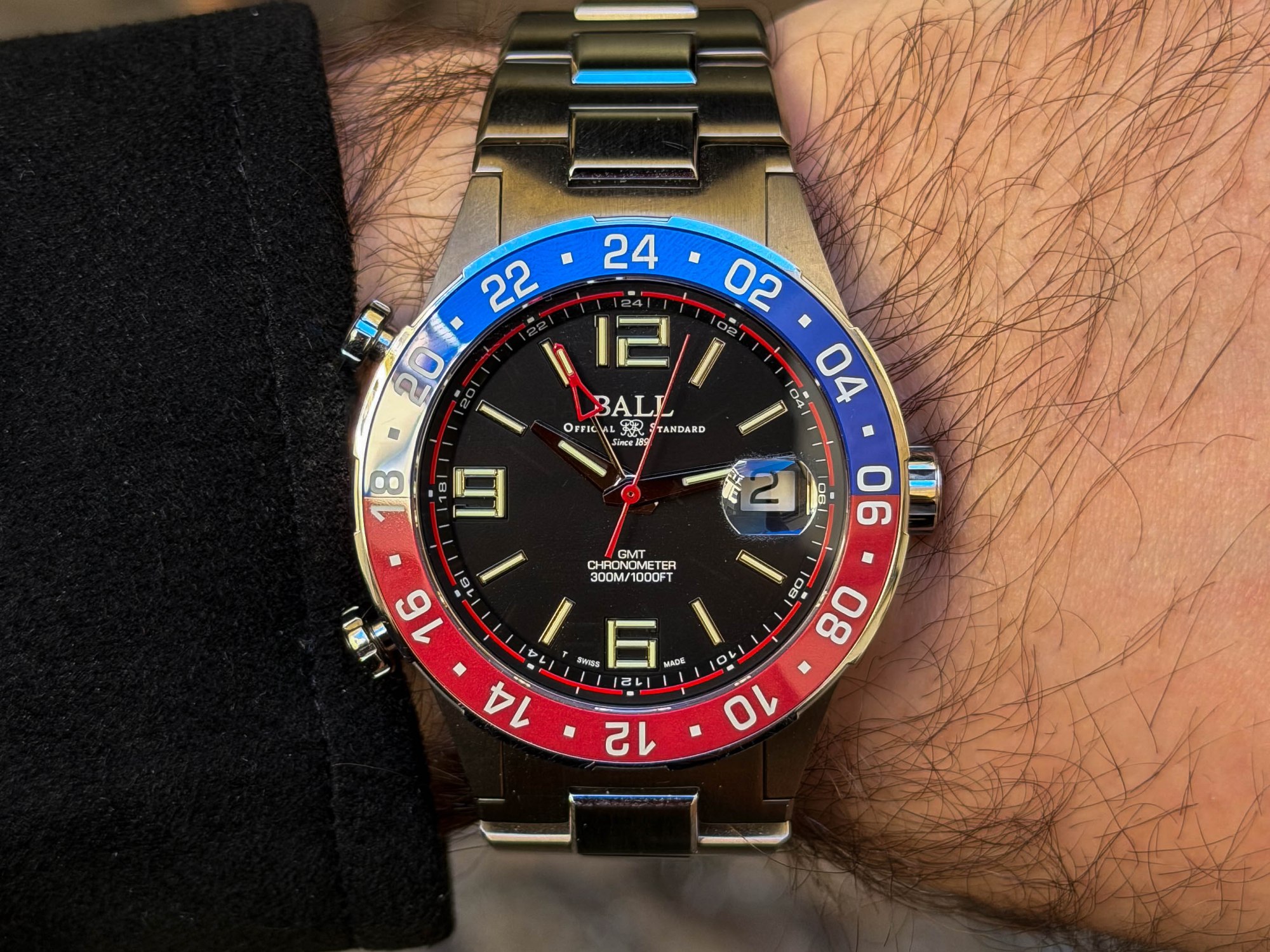
Since I started doing watch reviews 10 years ago (yes, 2026 marks the 10th anniversary of this blog), I’ve had the chance to handle and review almost every brand I was curious about back then — with a few notable exceptions. One of those brands is Ball. Part of the reason is simple: Ball is not a particularly popular name here in Europe, and even less so in my home country of Latvia. You rarely see Ball watches in local retailers, they don’t come up often in collector discussions, and for a long time they felt like one of those brands that existed mostly “somewhere else.” My first real exposure to Ball came through US-based watch YouTubers and reviewers, and what immediately stood out was how consistently positive the feedback was. Not the usual hype-driven praise or sponsored enthusiasm, but genuine appreciation for build quality, engineering, and the brand’s unapologetically functional approach to tool watches. That kind of consistency tends to get my attention, especially in a hobby where repetition and recycled designs are increasingly common.
Another element that genuinely intrigued me — and arguably Ball’s most recognizable technical signature today — is the use of tritium micro gas tubes for illumination. Unlike conventional lume, which needs to be charged by light and inevitably fades over the course of the night, tritium tubes glow continuously on their own. According to Ball, this illumination remains visible for up to 25 years, gradually dimming over time due to the natural decay of tritium. In real-world terms, that means decades of reliable night-time legibility without any effort from the wearer. For someone who has always valued functionality over gimmicks, this felt less like a novelty and more like proper instrument design. A watch that is readable at any time, in any condition, without relying on external light sources, fits perfectly into the philosophy of a true tool watch. That philosophy, as it turns out, has been at the core of Ball Watch Company since its very beginning.
The origins of Ball go back to the early days of railroad expansion in the United States. In 1891, a catastrophic train collision occurred in Kipton, Ohio, caused in part by an inaccurate conductor’s watch. In the aftermath, jeweler Webb C. Ball was appointed Chief Time Inspector for several major railroad lines. His task was not to build watches, but to ensure that timekeeping across the rail network met strict, standardized requirements. What followed was the creation of the “Railroad Standard” (RR Standard) — a system of rigorous rules governing accuracy, legibility, durability, and regular inspection of timepieces used by railroad personnel. Under Ball’s supervision, watches had to meet demanding precision criteria and were subject to routine checks. Although Ball did not manufacture watches himself at the time, he worked closely with respected American manufacturers such as Hamilton, Elgin, and Waltham, supplying movements and watches that complied with his standards. Over time, the Ball name became synonymous with reliability and precision, trusted by railroad workers whose lives quite literally depended on accurate timekeeping. These early standards helped shape broader ideas of chronometric accuracy that would later influence modern certification systems.
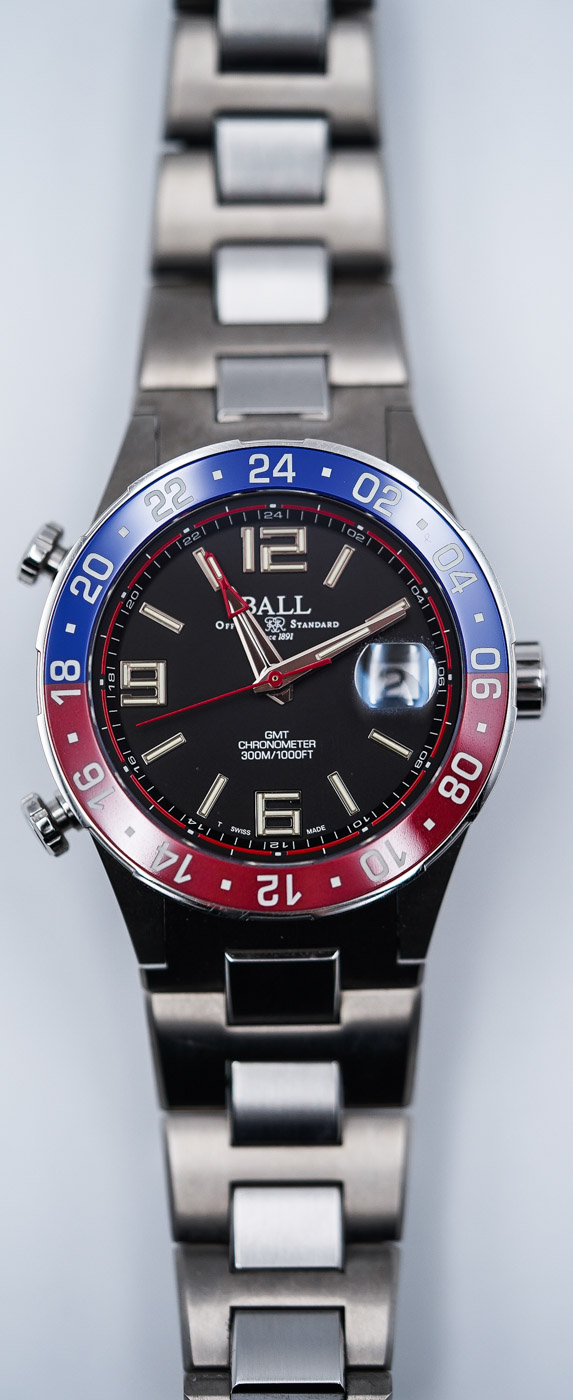
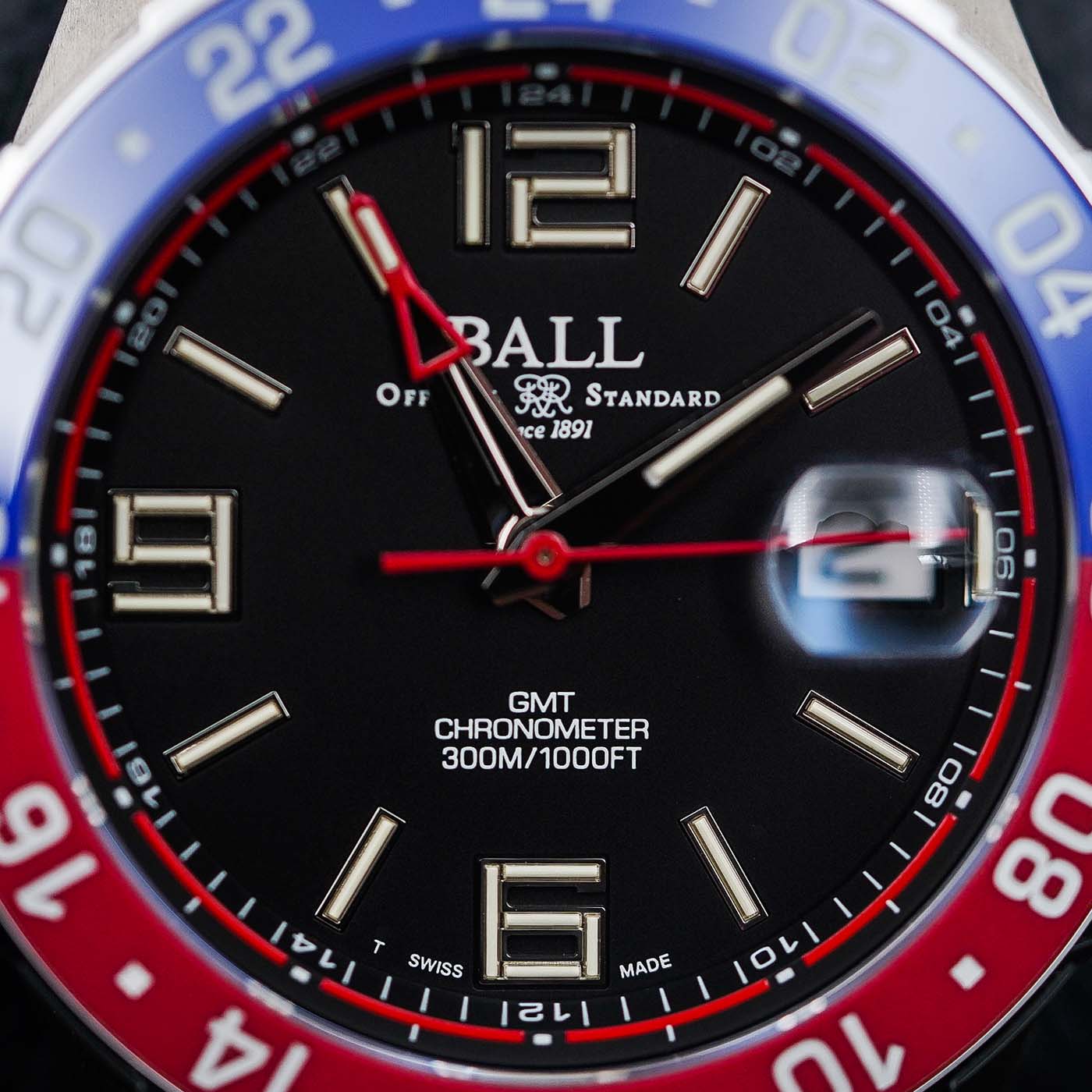
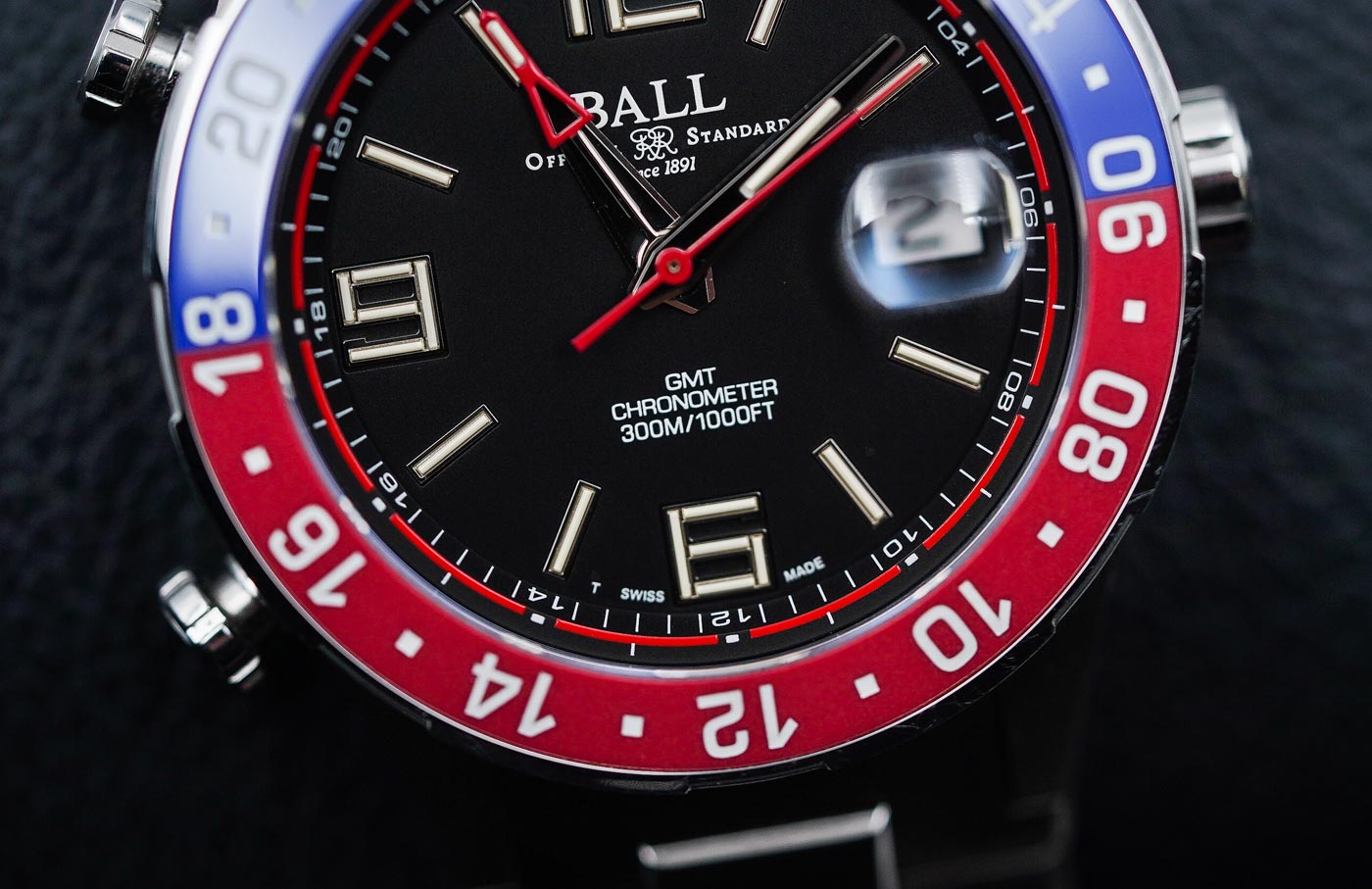
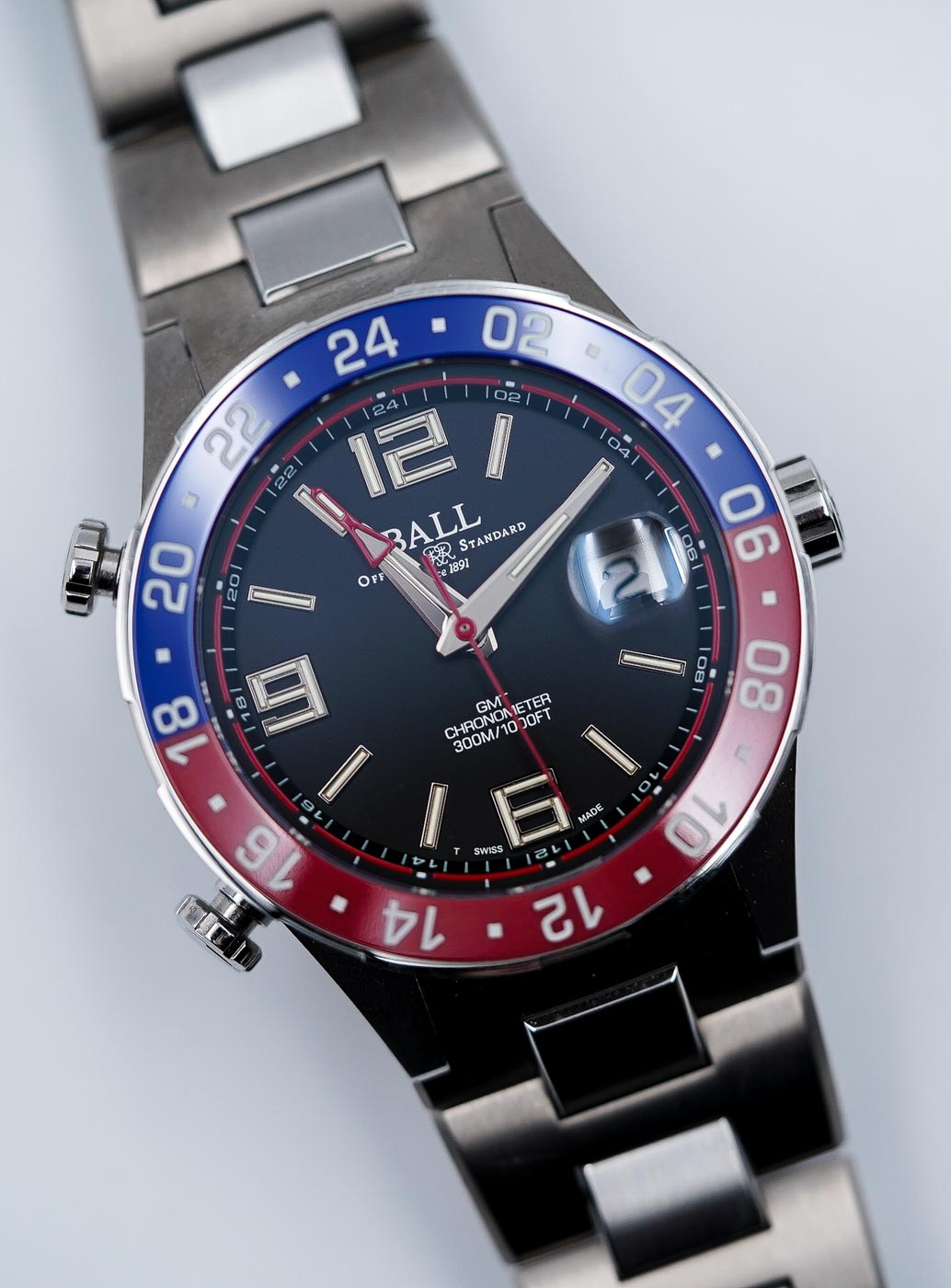
As the importance of railroads declined and the watch industry evolved, Ball adapted. The company gradually transitioned from its American railroad roots into a Swiss watchmaking identity, while preserving the core principles that defined its early success. Today, Ball Watch Company is headquartered in La Chaux-de-Fonds, Switzerland, producing Swiss-made mechanical watches that blend historical purpose with modern engineering. Rather than leaning heavily on vintage aesthetics, Ball has focused on technical innovation and real-world performance. The adoption of Swiss-made tritium micro gas tubes is a direct continuation of that mindset — a modern solution aligned with the same functional priorities that once governed railroad timekeeping. Contemporary Ball watches combine this legacy of accuracy and legibility with modern materials, enhanced shock resistance, anti-magnetic protection, and chronometer-certified movements. While Ball may still fly under the radar in parts of Europe, it has cultivated a loyal following among enthusiasts who value engineering, practicality, and authenticity over branding and hype. And in many ways, that quiet confidence — rooted in history but expressed through modern tool watches — is exactly what finally pushed Ball from my “still need to review” list onto my wrist.
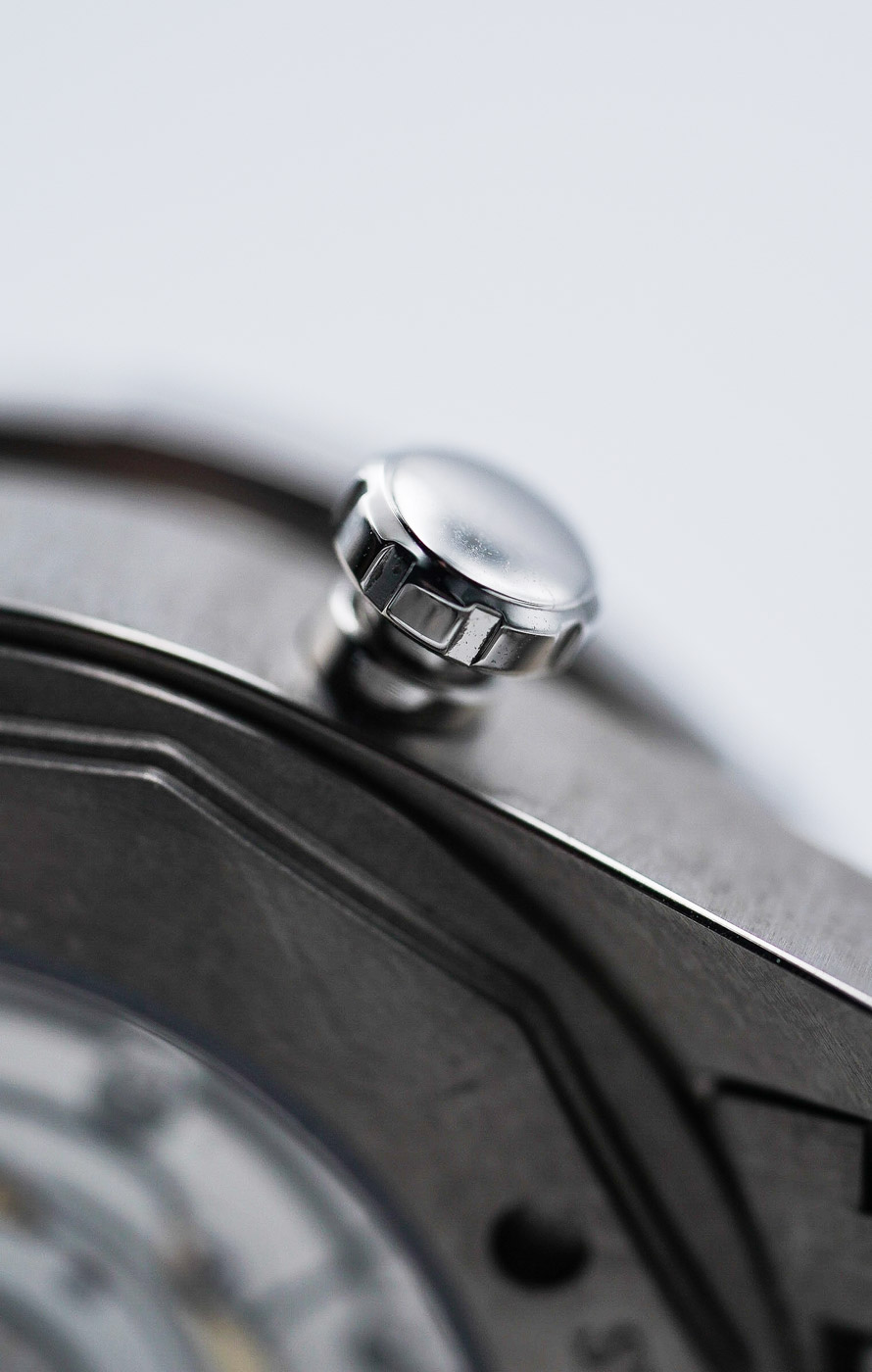
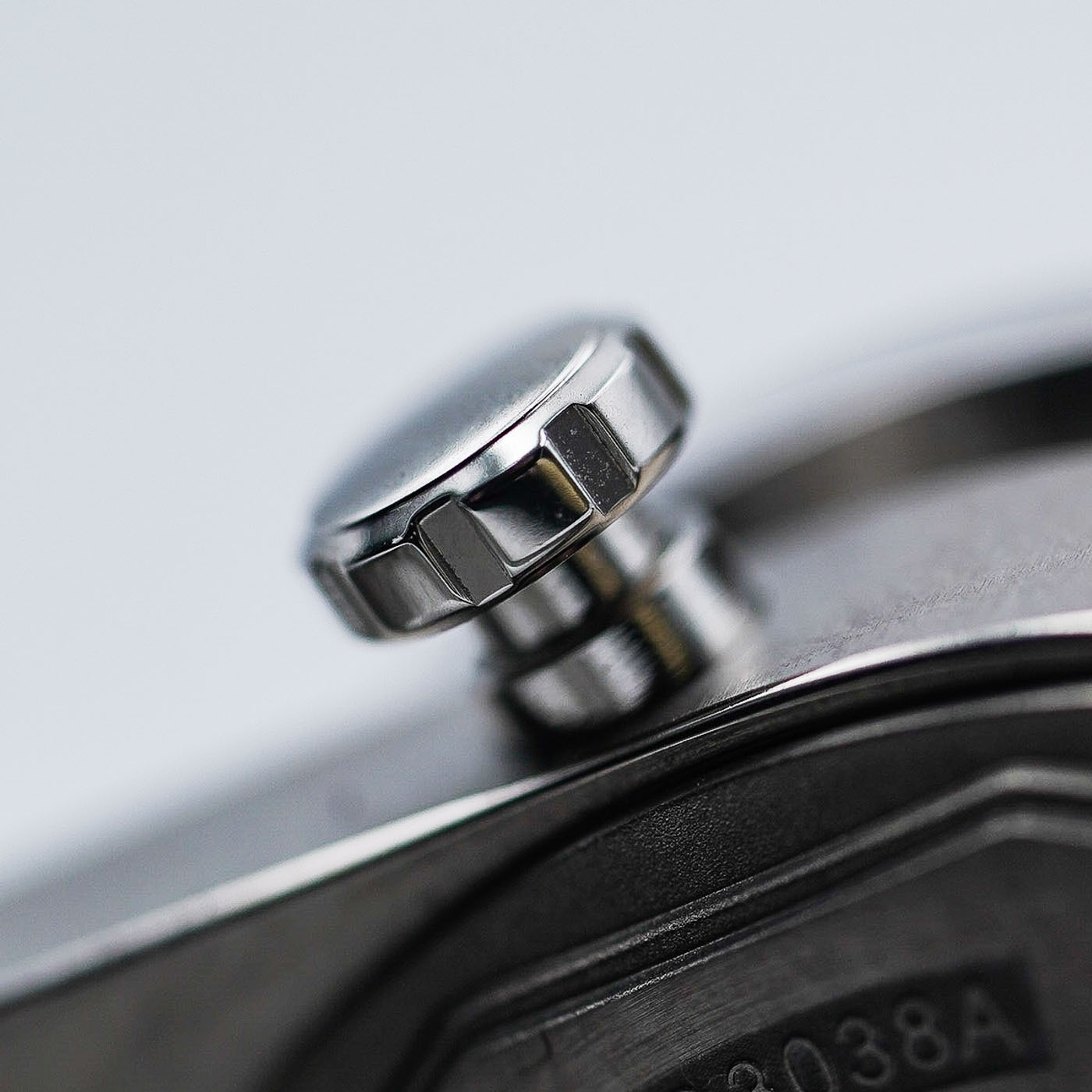
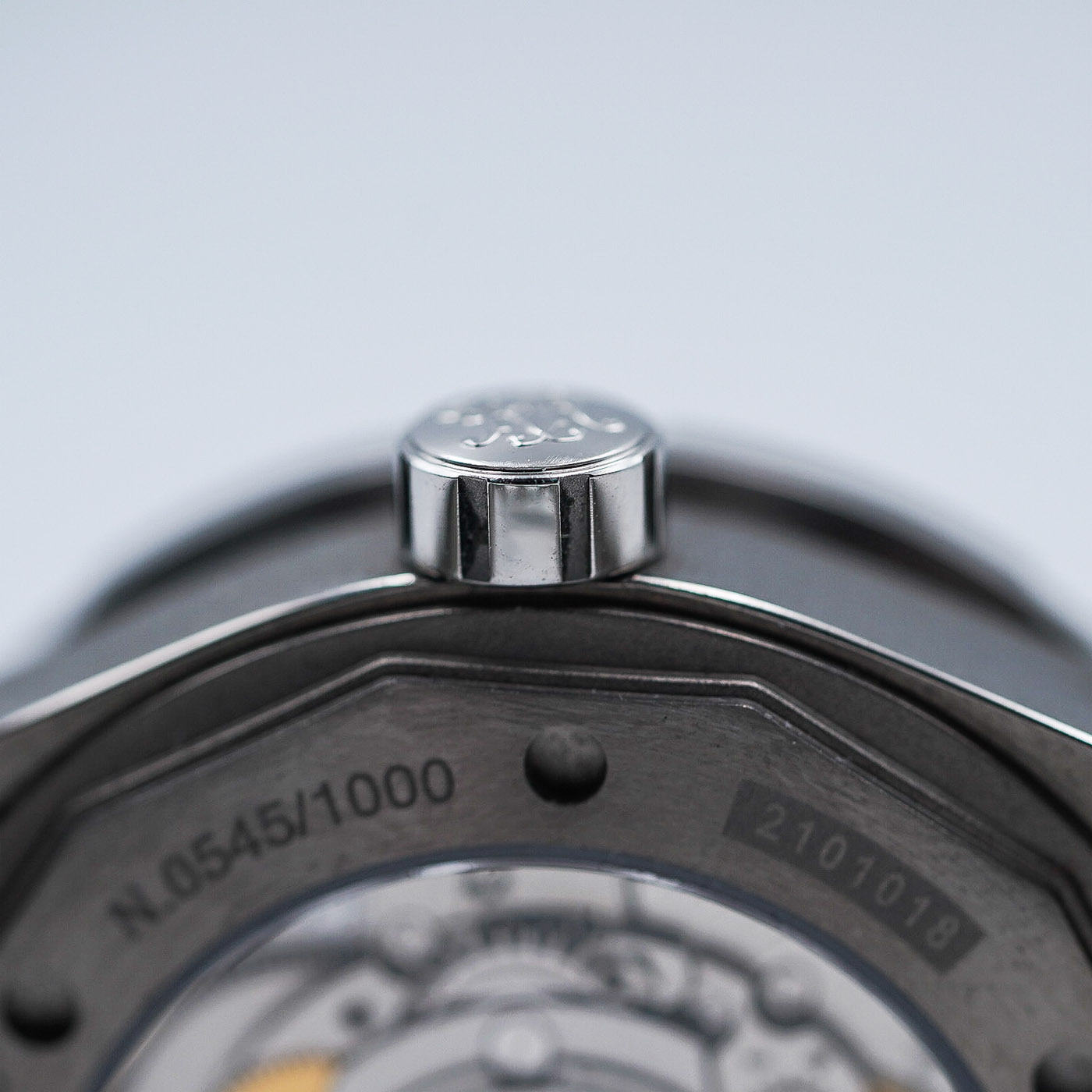
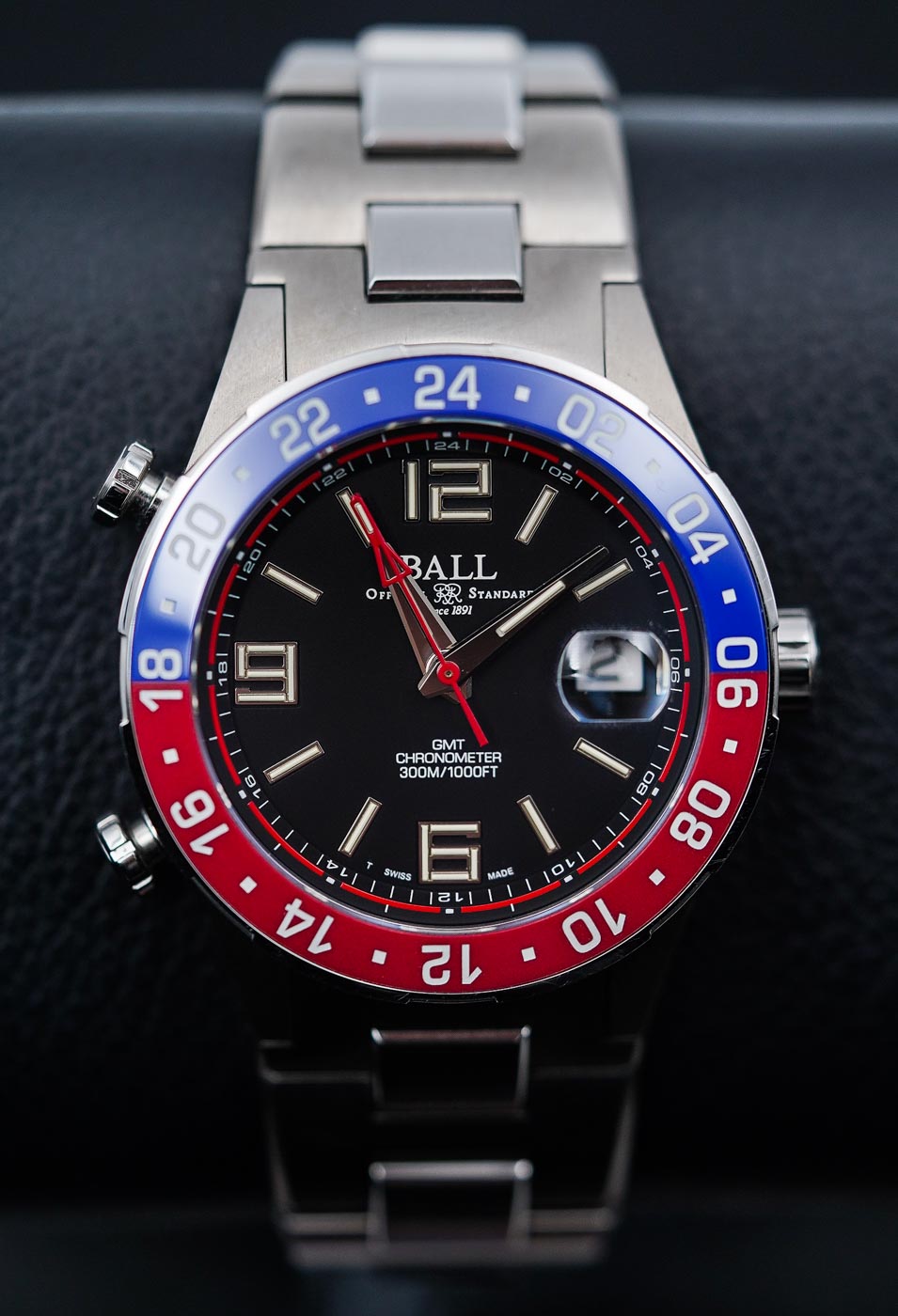
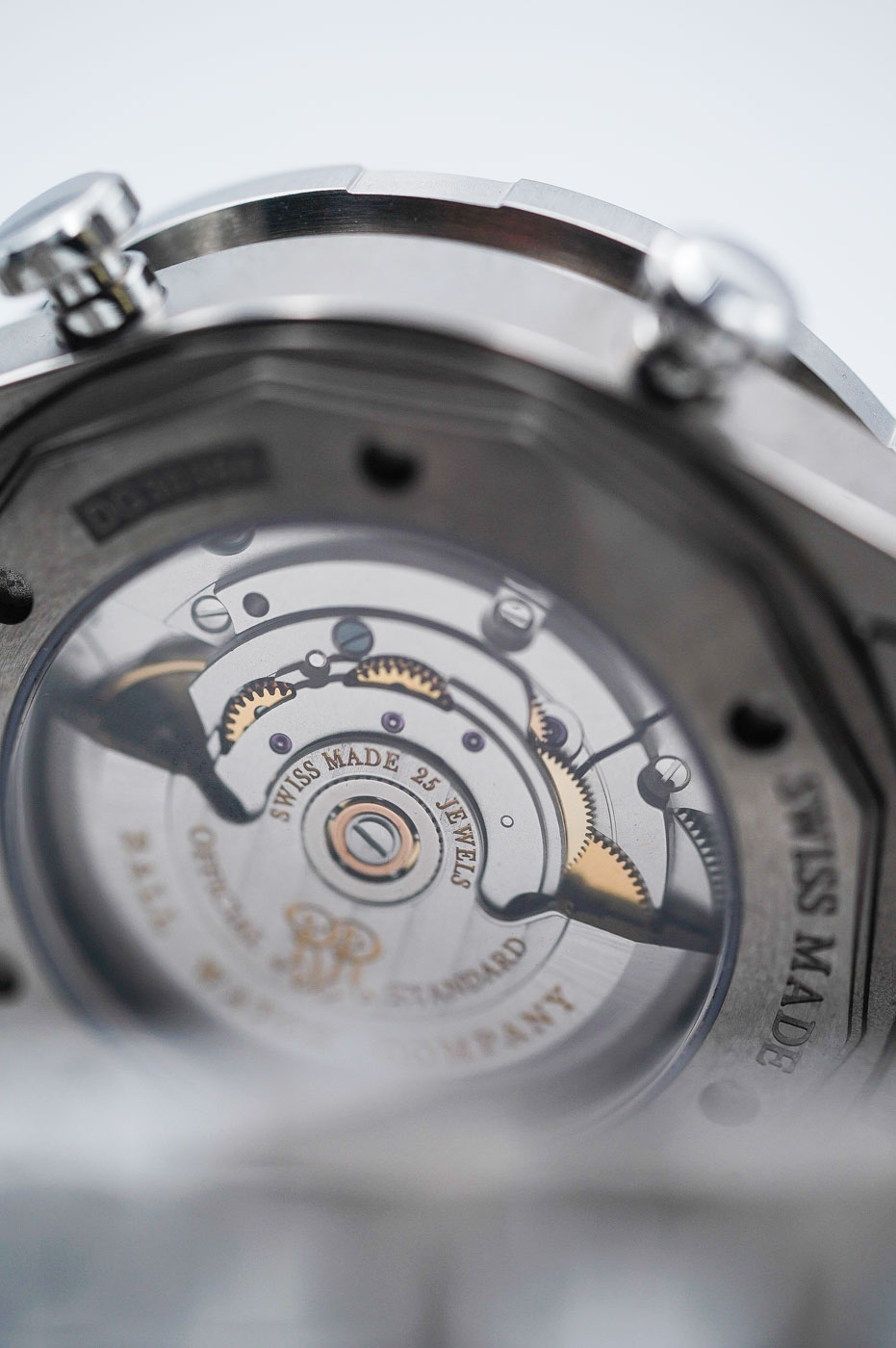
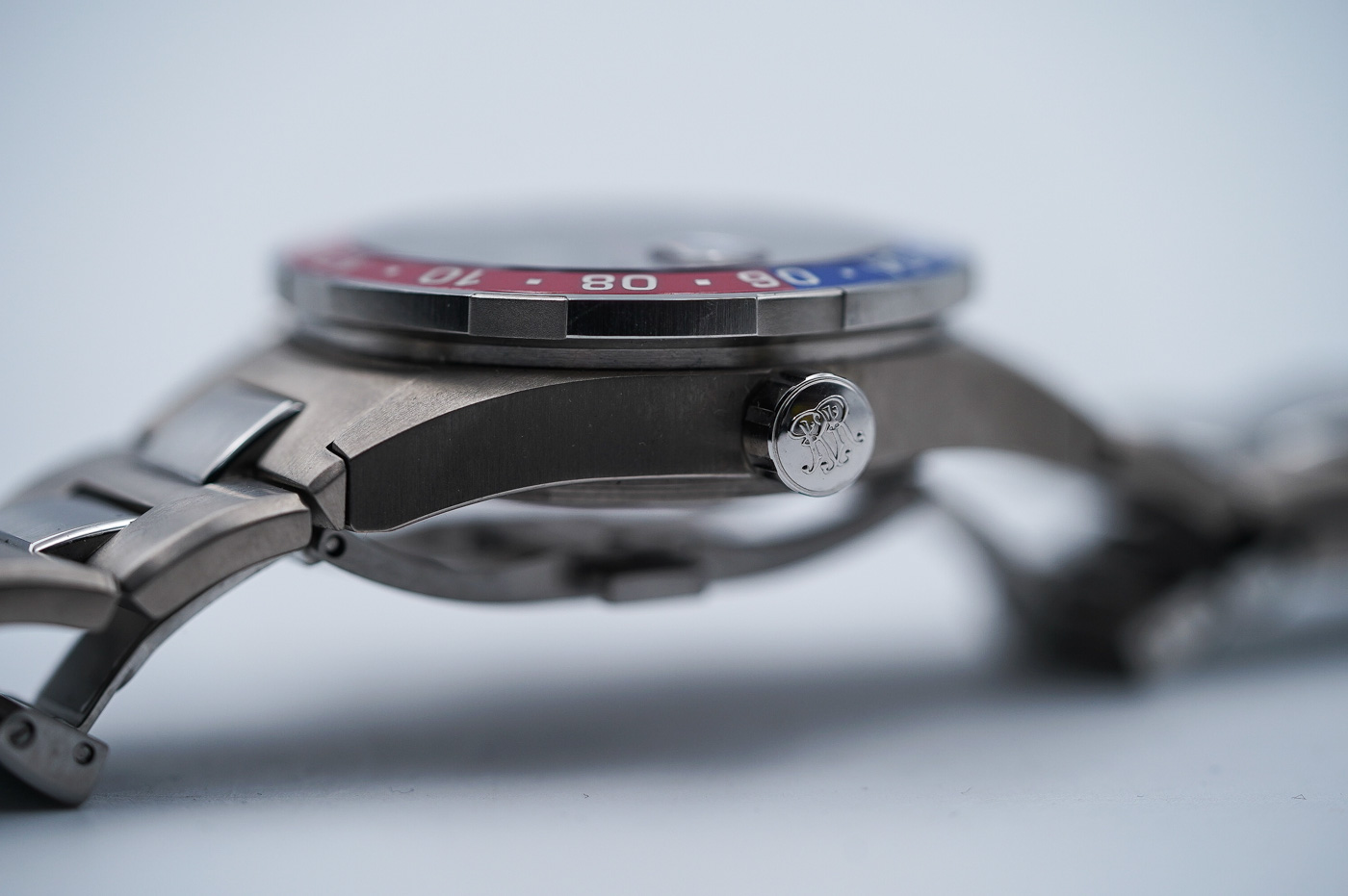
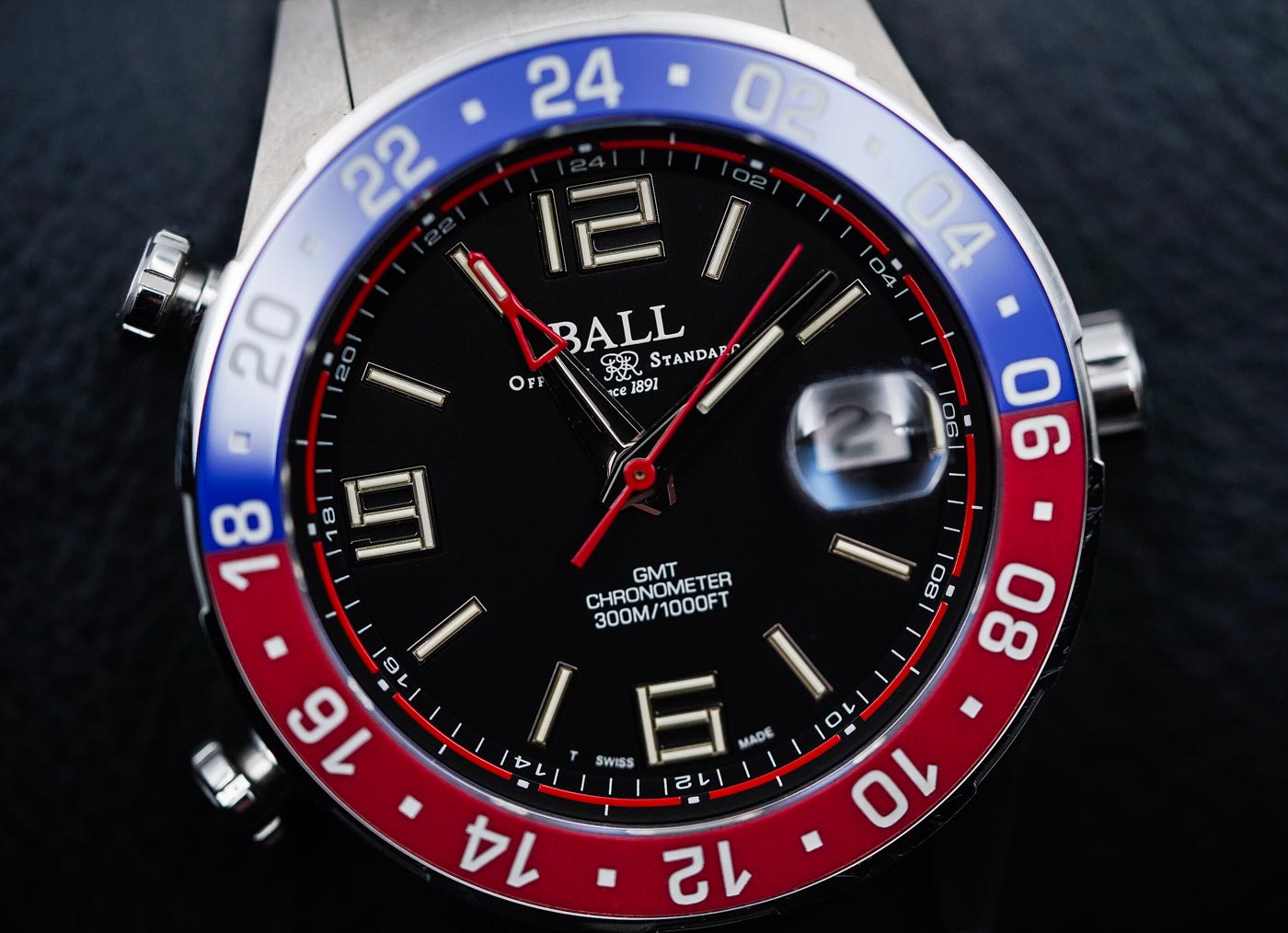
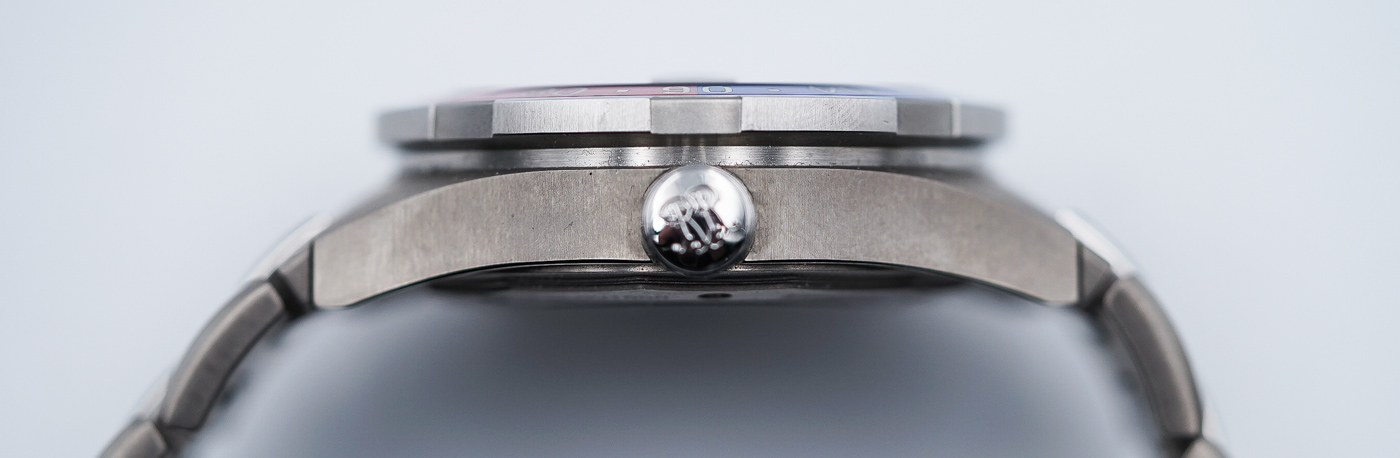
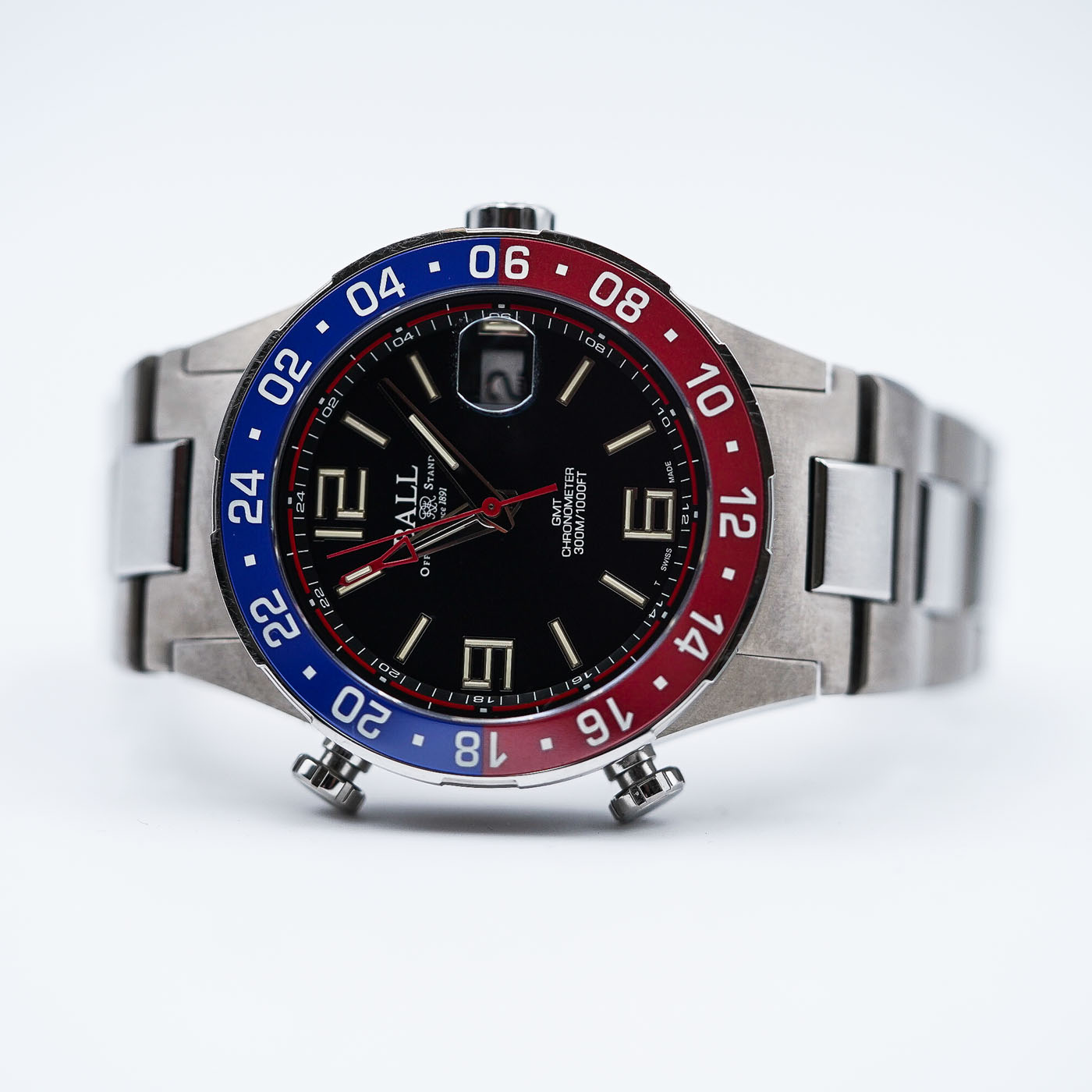
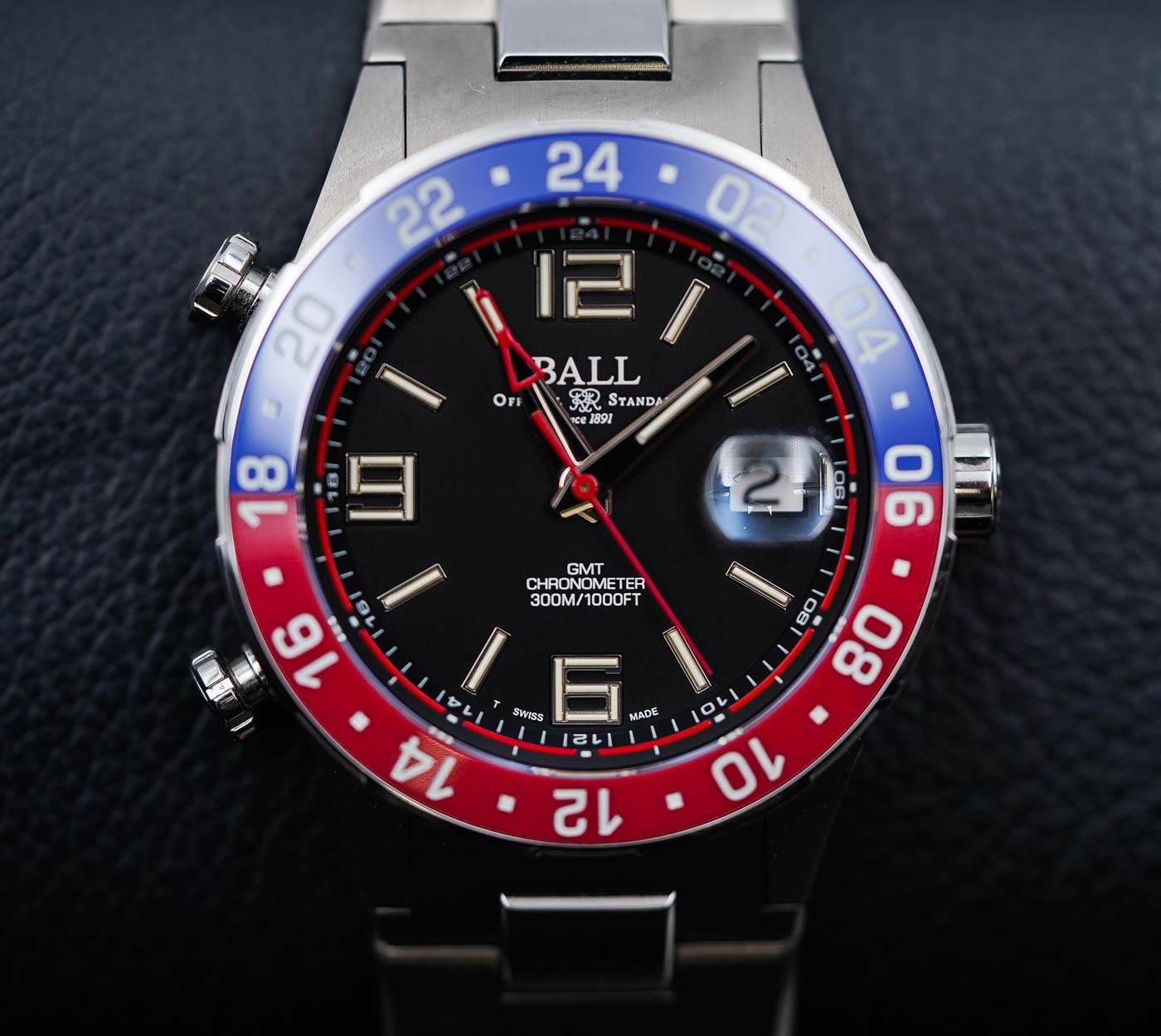
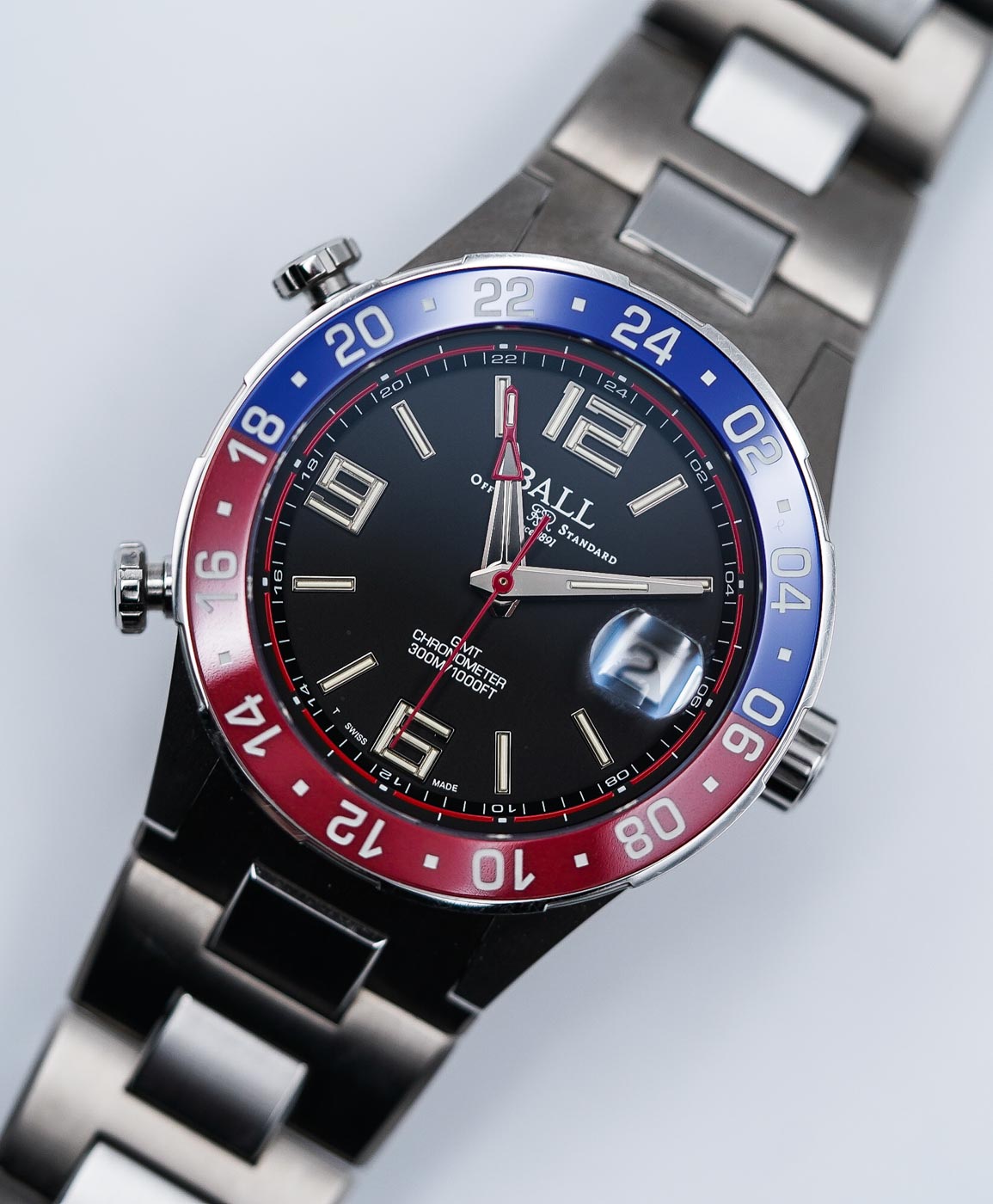
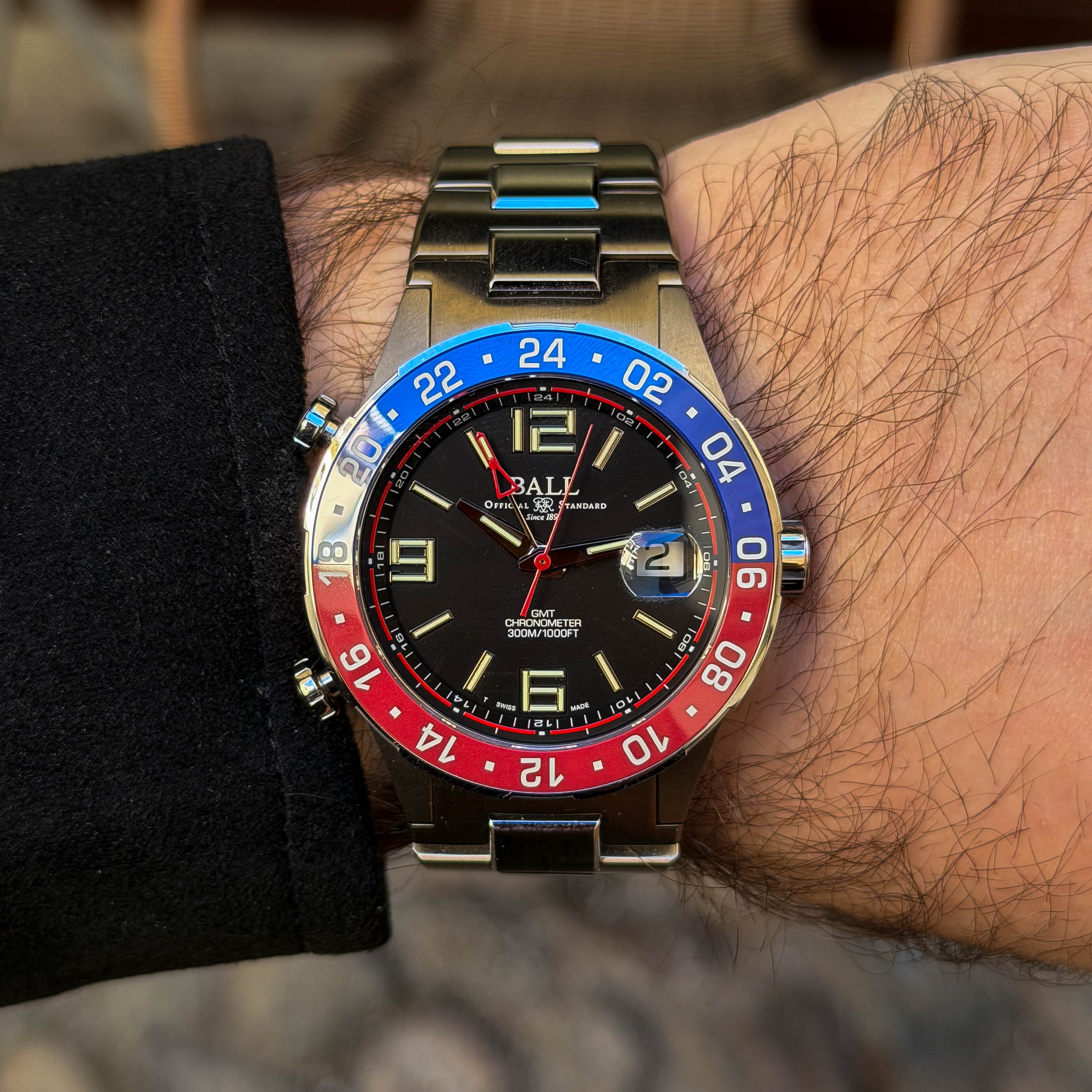
The case of the Roadmaster Pilot GMT immediately establishes the watch’s identity as a modern, no-nonsense tool watch designed for real-world use rather than vintage nostalgia. Crafted from titanium, the 40mm case delivers an ideal balance between presence and wearability. Titanium’s inherent advantages—light weight, corrosion resistance, and strength—are fully leveraged here, making the watch comfortable for extended wear while remaining extremely robust. At 14mm thick, the watch has enough verticality to feel purposeful without becoming top-heavy or awkward under a cuff. The proportions are well judged, and the lug-to-lug length of just under 47.8mm ensures the watch sits securely on the wrist, even for those who typically shy away from sportier designs. The case profile is clean and functional, with brushed surfaces dominating and very little unnecessary polish, reinforcing the utilitarian intent. Encircling the dial is a bi-directional rotating ceramic bezel featuring the classic red-and-blue “Pepsi” color scheme. The ceramic insert is highly scratch-resistant and finished with crisp 24-hour numerals that are both functional and visually balanced. The bezel action is deliberate and secure, allowing precise alignment for tracking a third time zone without feeling loose or vague. Luminous treatment on the bezel further enhances usability in low-light environments.
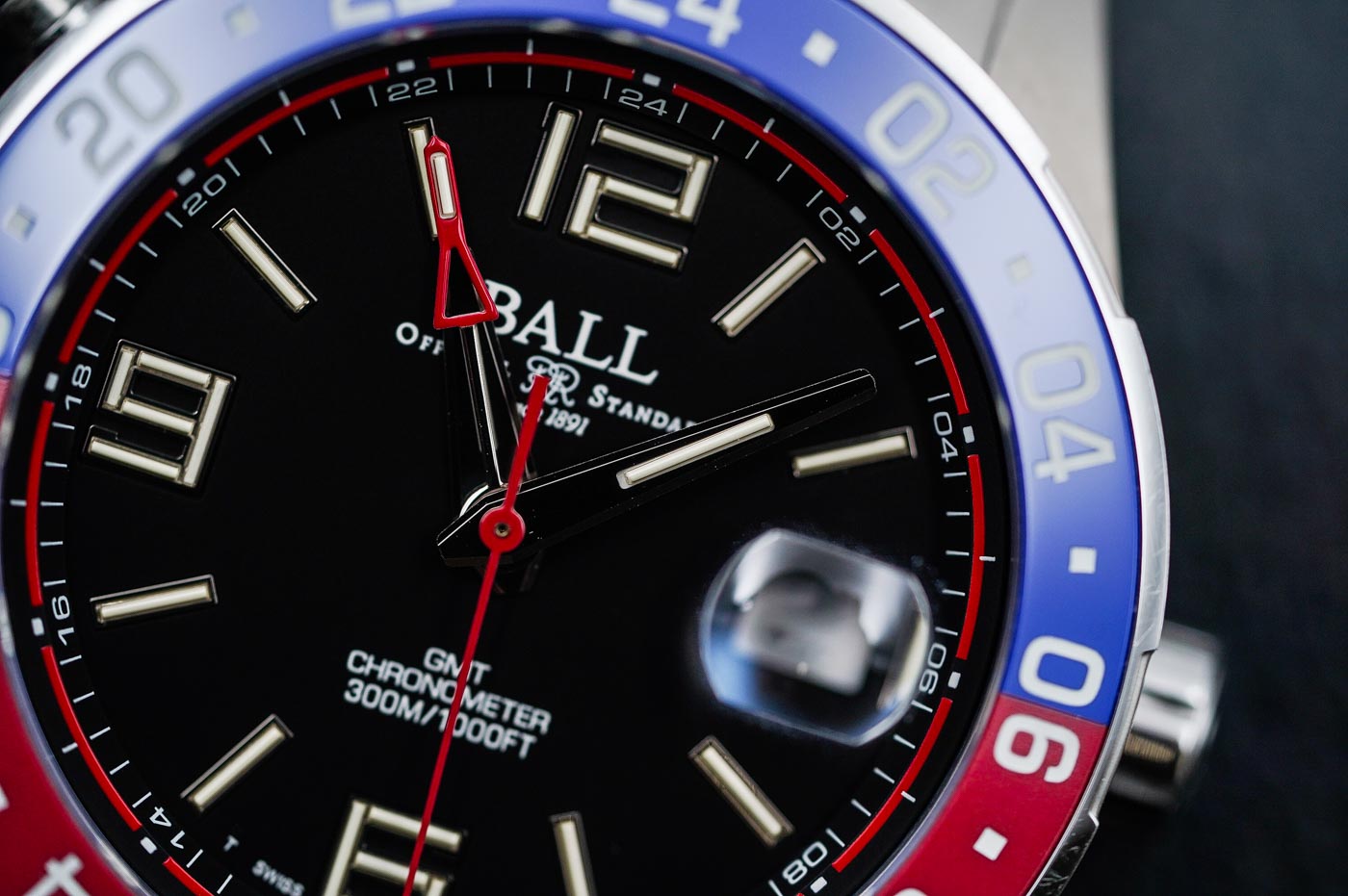
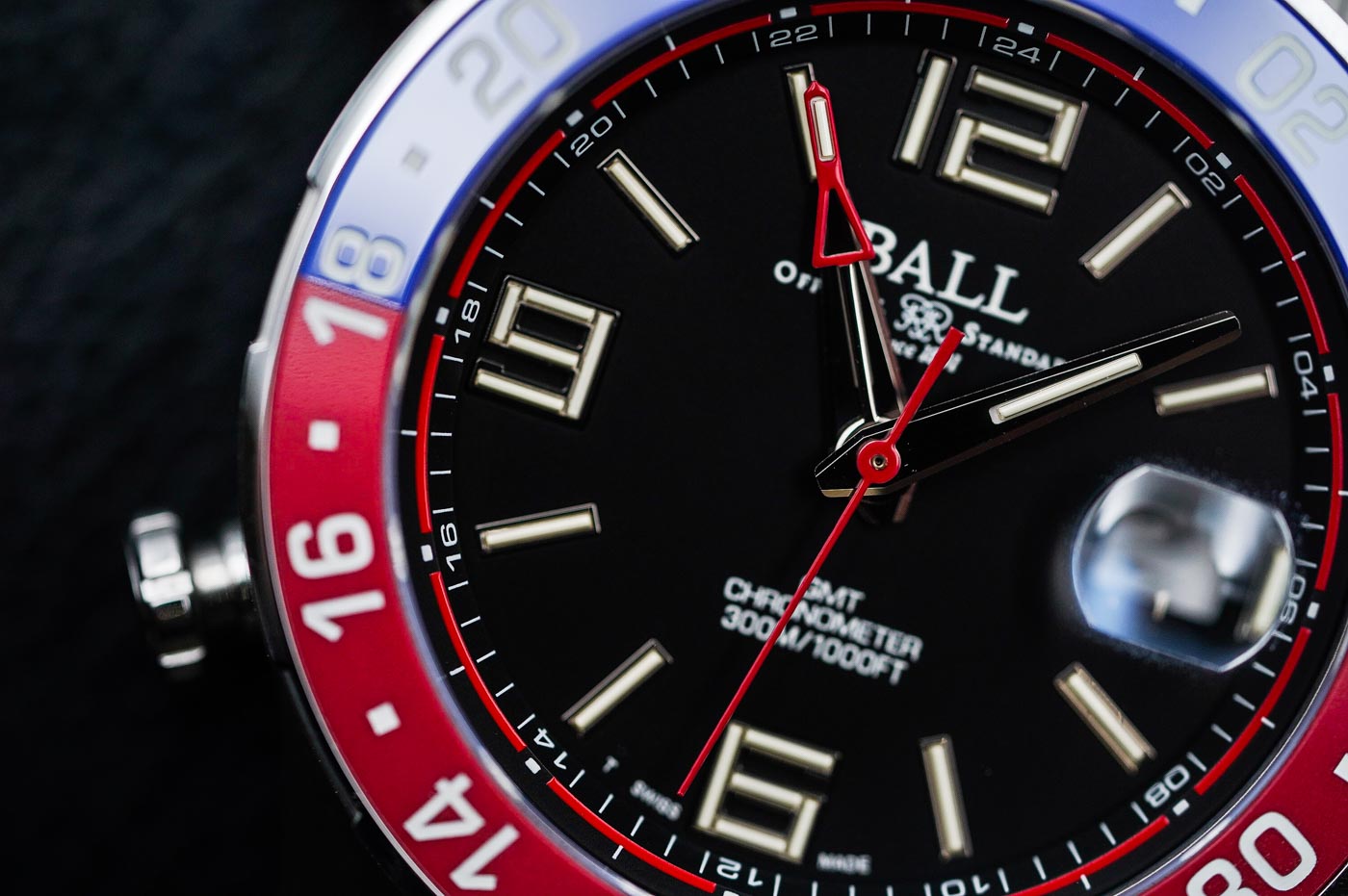
One of the defining features of the case is the pair of screw-lock pushers positioned on the left side. These are not decorative elements—they are central to the watch’s functionality. When unlocked, they allow intuitive adjustment of the local local hour hand. From a design perspective, the pushers are a slightly odd choice. I would have preferred a more recessed solution, similar to the Ulysse Nardin Dual Time, or even traditional chronograph-style pushers like those on the Rolex Daytona. As they are, they sit fairly proud of the case and feel more exposed than necessary, potentially making them easier to knock during daily wear. The upper pusher advances the local hour hand forward in one-hour increments, while the lower pusher moves it back by one hour. The signed screw-down crown at 3 o’clock operates smoothly, with a reassuring sense of resistance and precision. Front and back sapphire crystals complete the case construction. The front crystal is treated with anti-reflective coating, keeping glare to a minimum, while the exhibition caseback provides a clear view of the movement inside. Overall, the case design reflects Ball’s engineering-driven philosophy—nothing feels ornamental, and every component serves a purpose. Combined with a water resistance rating of 300 meters, the Roadmaster Pilot GMT confidently exceeds what most GMT watches in this category offer. This is not a watch that merely looks rugged; it is built to withstand conditions far beyond everyday travel.
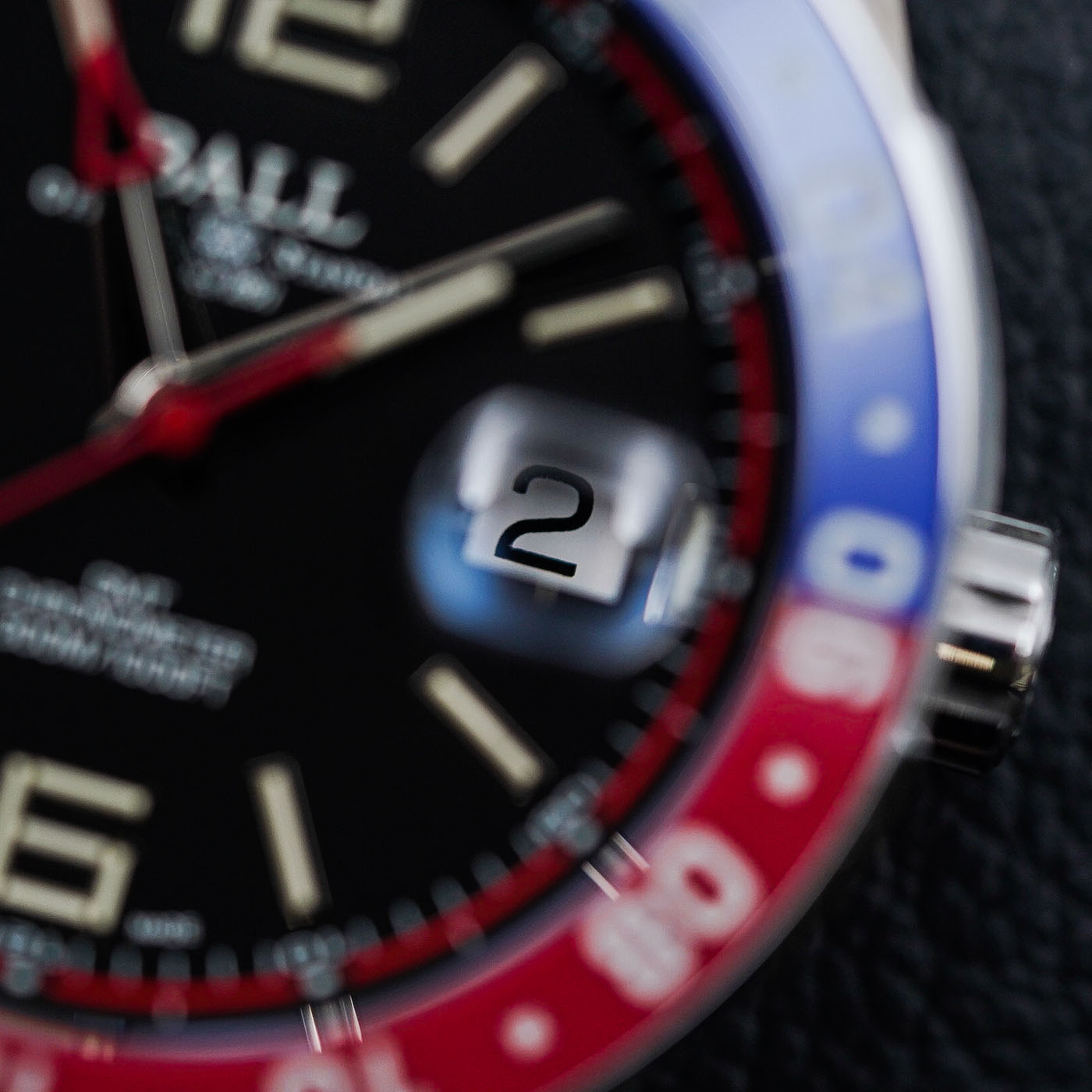
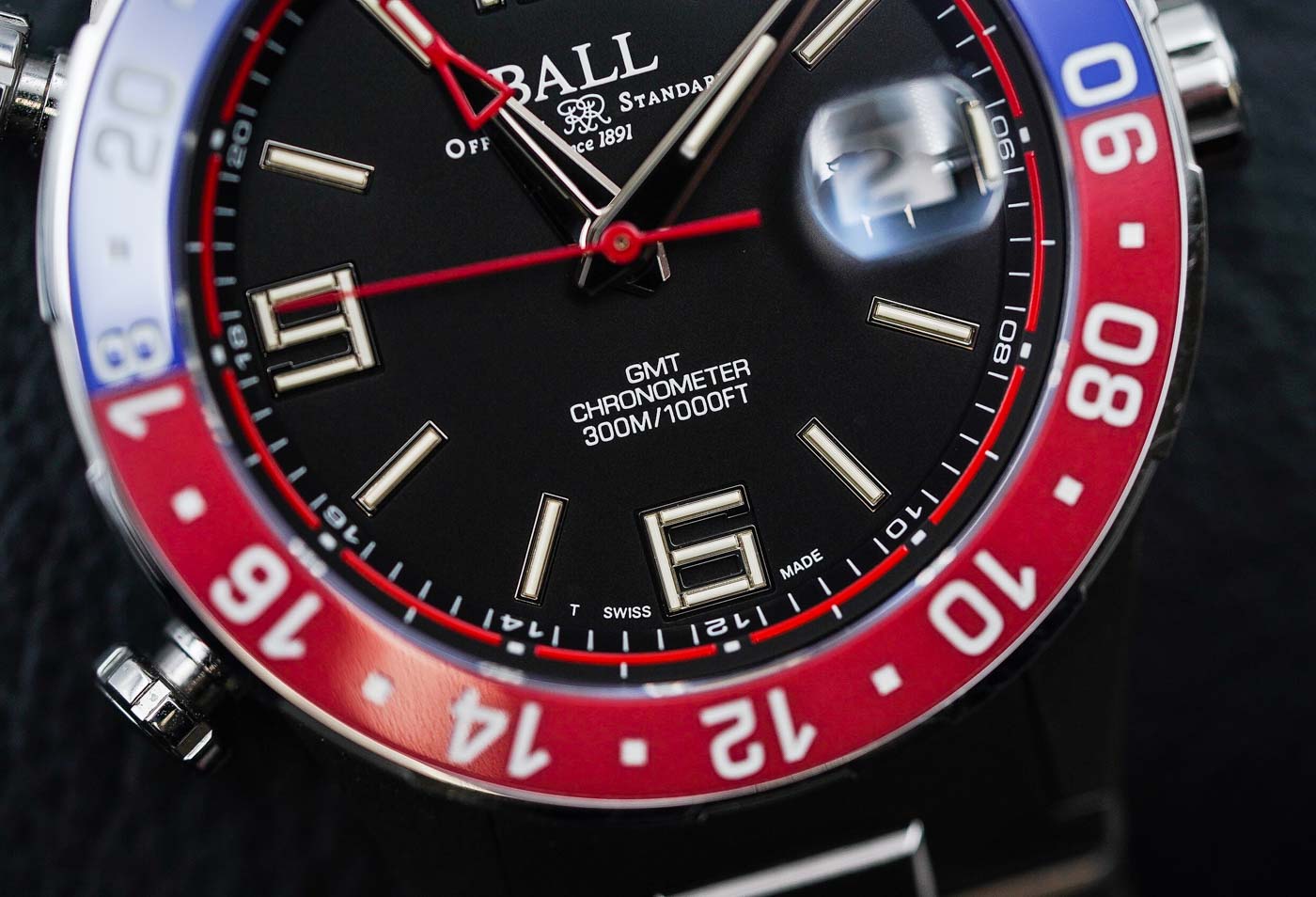
The matte black dial is the visual anchor of the Roadmaster Pilot GMT and one of its strongest features. Its subdued finish avoids reflections and glare, allowing the hands, markers, and numerals to stand out clearly in all lighting conditions. The design is unmistakably Ball, blending industrial aesthetics with excellent legibility. Large applied numerals at 3, 6, and 12 o’clock give the dial a distinctive character without overwhelming it. These numerals, along with the remaining hour markers, are integrated with Ball’s signature micro gas tubes, which provide continuous illumination without requiring any external charging. Unlike traditional lume, which fades over time, the tritium-filled tubes glow consistently, making the watch exceptionally readable in total darkness. The hands are bold and well proportioned, with the hour, minute, and GMT hands all fitted with micro gas tubes. The GMT hand is easily distinguishable thanks to its triangular tip in red colour, ensuring quick orientation when tracking additional time zones. Color contrast is handled intelligently, maintaining clarity without introducing unnecessary visual noise. A magnified date window sits at 3 o’clock, framed cleanly and aligned perfectly with the dial layout. While date magnifiers are functional, I would preffer it without the magnifier lense. I generally don’t like cyclops, but that is my personal opinion. At night, the dial becomes truly exceptional. The tritium tubes glow vividly and evenly, creating an almost instrument-like appearance. Combined with the luminous bezel markings, the watch remains fully legible in complete darkness—whether in a cockpit, on a night flight, or simply in a dark room. This level of night readability is something very few GMT watches can match.
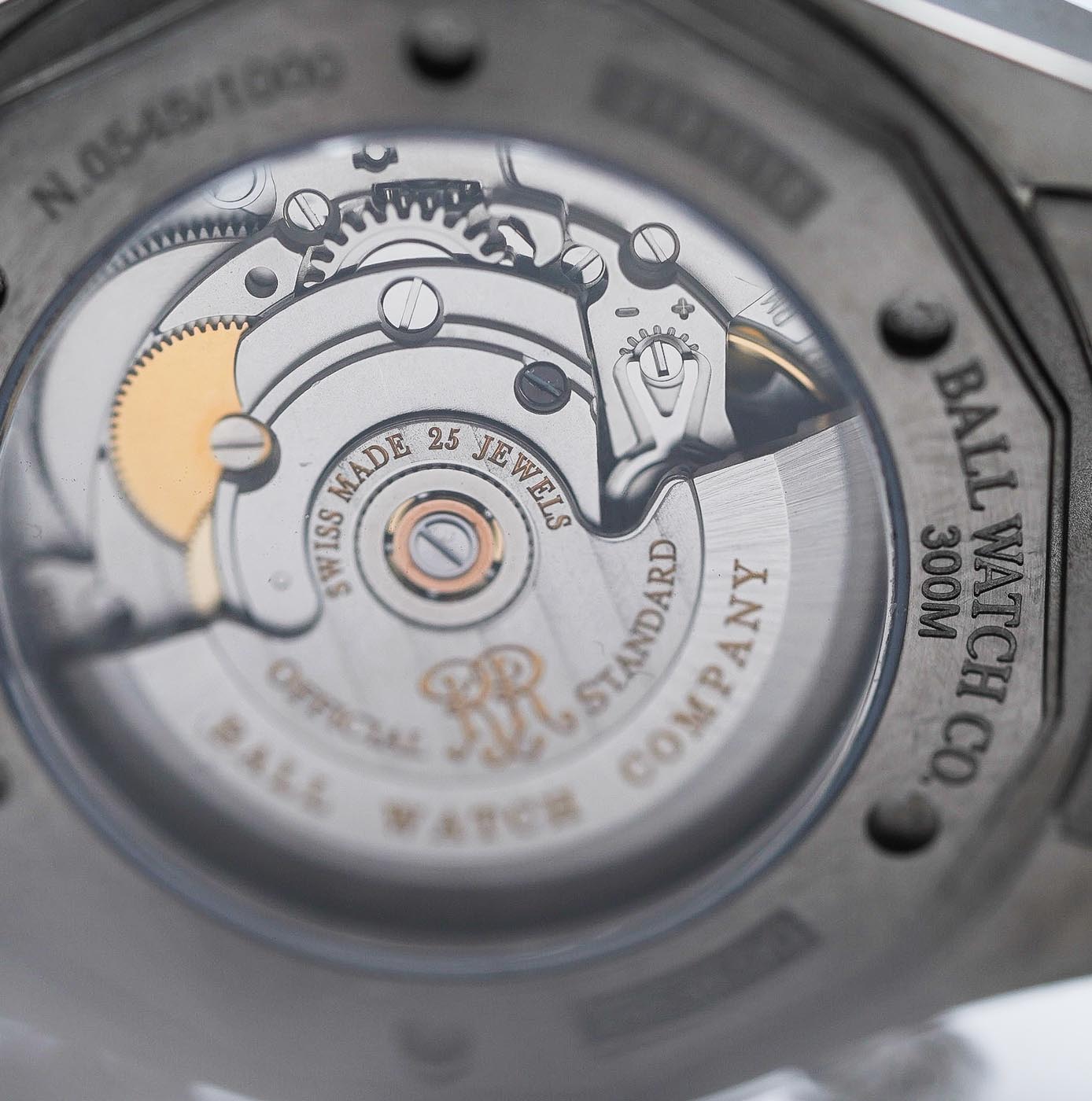
At the heart of the Roadmaster Pilot GMT is an automatic movement built for precision, resilience, and practicality. Certified as a chronometer, it meets strict accuracy standards, reinforcing Ball’s reputation for technical integrity rather than marketing-driven claims. What truly sets this movement apart is the patented quick-set system that allows independent adjustment of the local 12-hour hand. Using the two pushers on the left side of the case, the wearer can jump the local hour hand forward or backward in one-hour increments without stopping the movement or affecting the minute hand or GMT hand. This design transforms the watch into a true traveler’s GMT, rather than an office-style GMT. The operation is intuitive and secure. Each pusher must be unlocked before use, preventing accidental adjustments, and the tactile feedback is precise and confidence-inspiring. When crossing time zones, the process is quick and seamless, allowing the wearer to adapt instantly without disrupting timekeeping accuracy.
The GMT hand remains fixed on home time, while the rotating bezel can be used to track a third time zone if needed. This layered functionality makes the watch exceptionally versatile for international travel. The date mechanism is also intelligently integrated, advancing automatically when the local hour hand passes midnight, eliminating unnecessary adjustments in most scenarios. Beyond its GMT functionality, the movement is engineered to withstand demanding conditions. With shock resistance rated to 5,000Gs and anti-magnetic protection up to 4,800A/m, it is well equipped for environments that would challenge many mechanical watches. The frequency of 28,800 vibrations per hour ensures smooth seconds-hand motion and stable timekeeping, while the power reserve is sufficient for daily wear. Viewed through the sapphire caseback, the movement reflects Ball’s focus on durability over decorative finishing. It is not about Geneva stripes or polished bevels—it is about performance, reliability, and long-term stability.
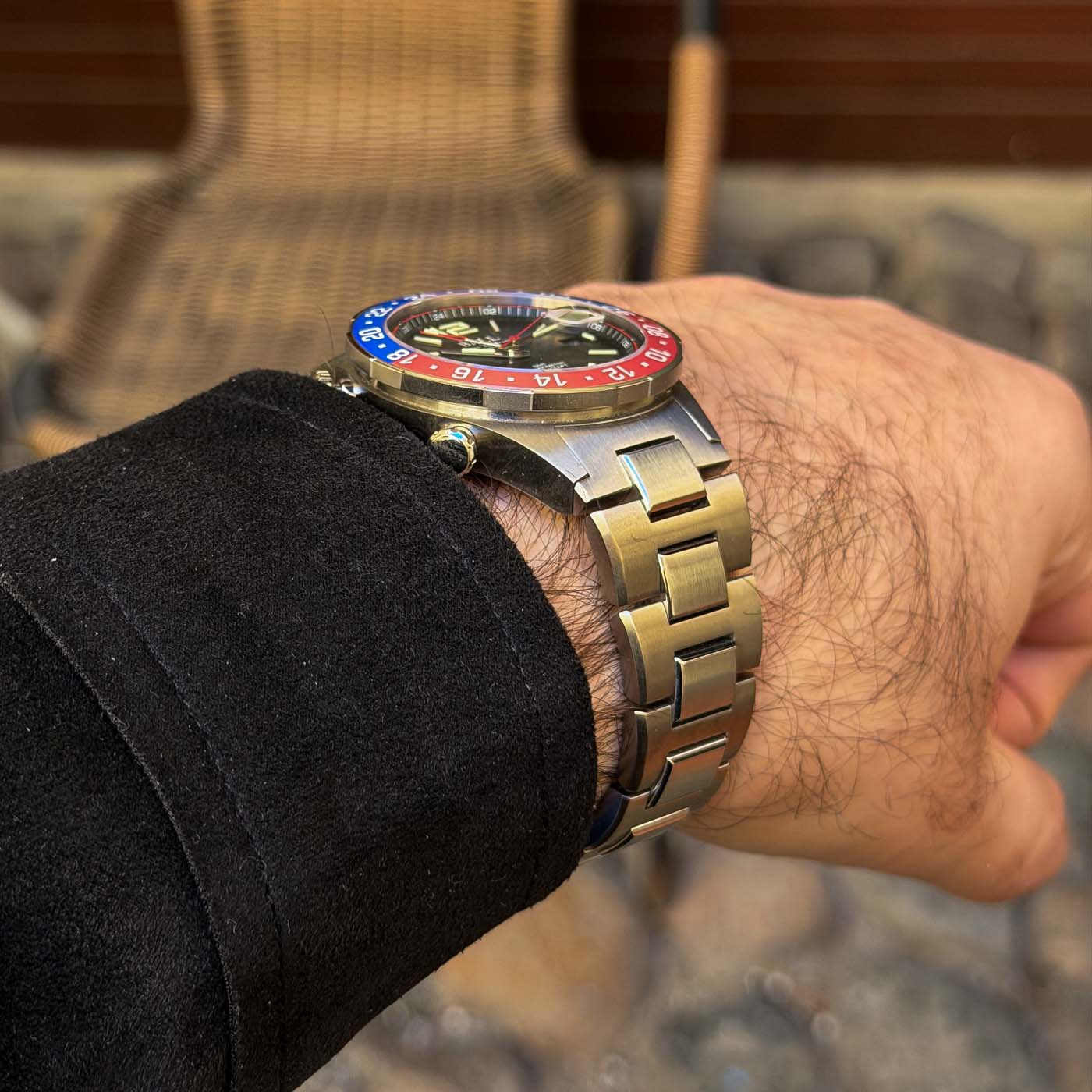
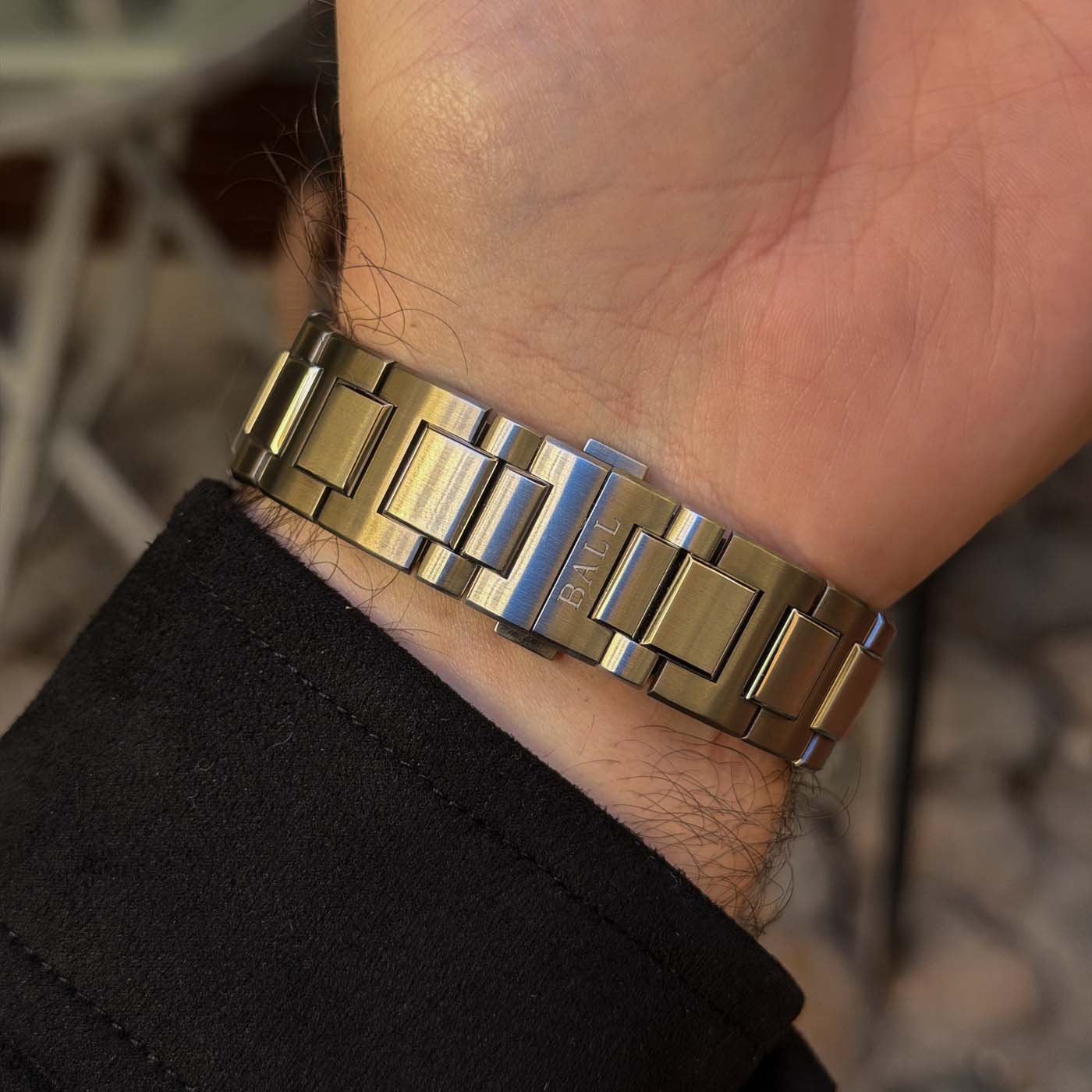
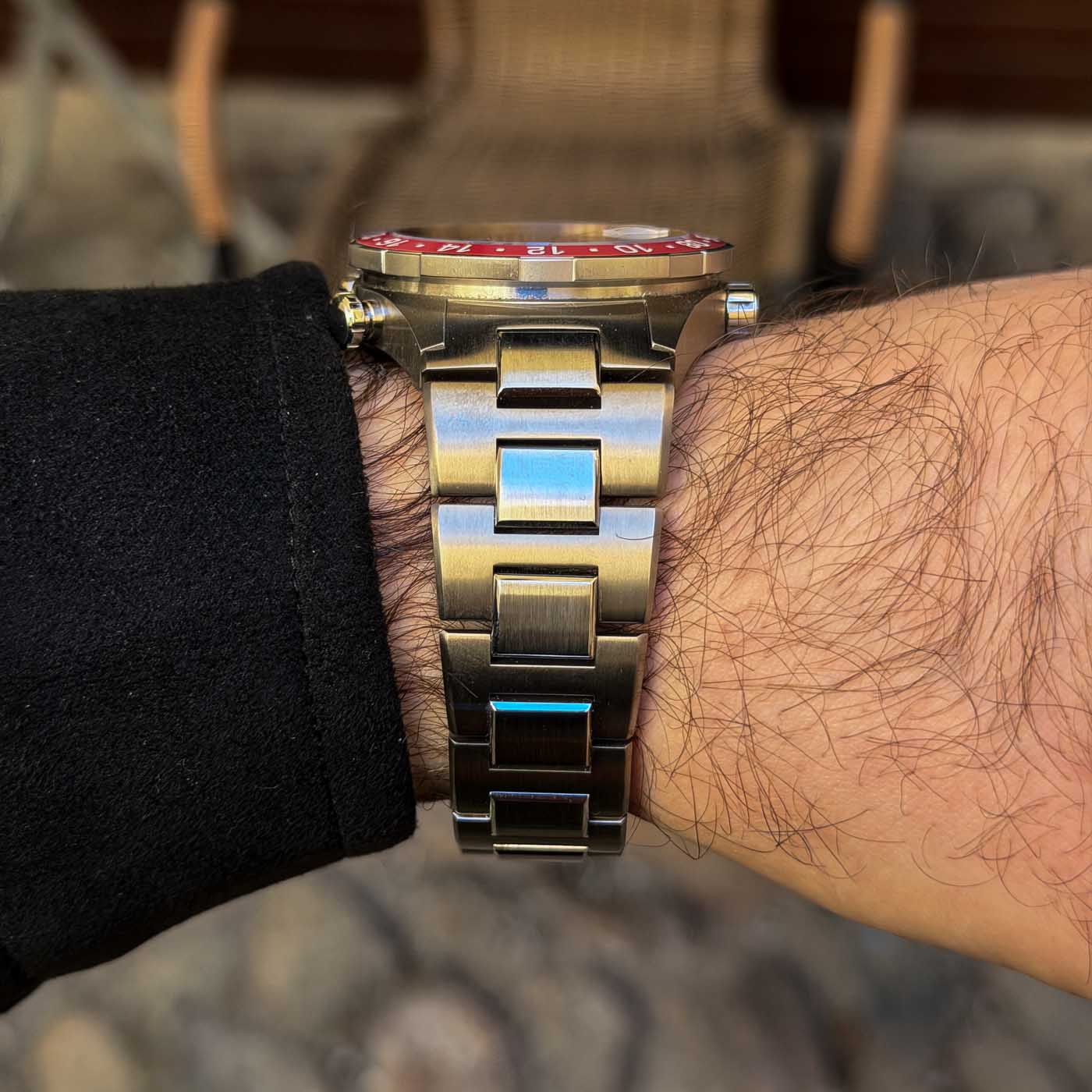
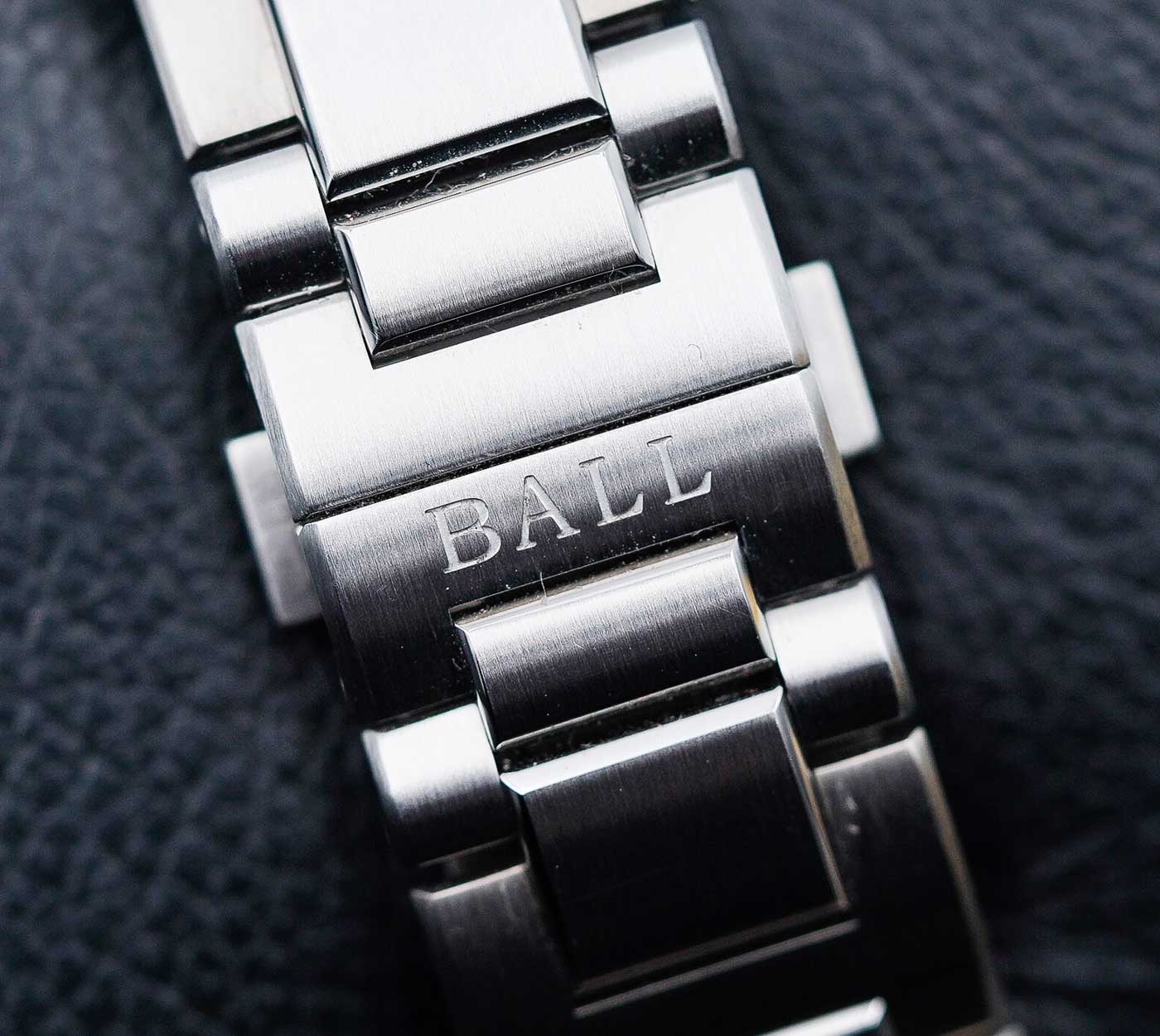
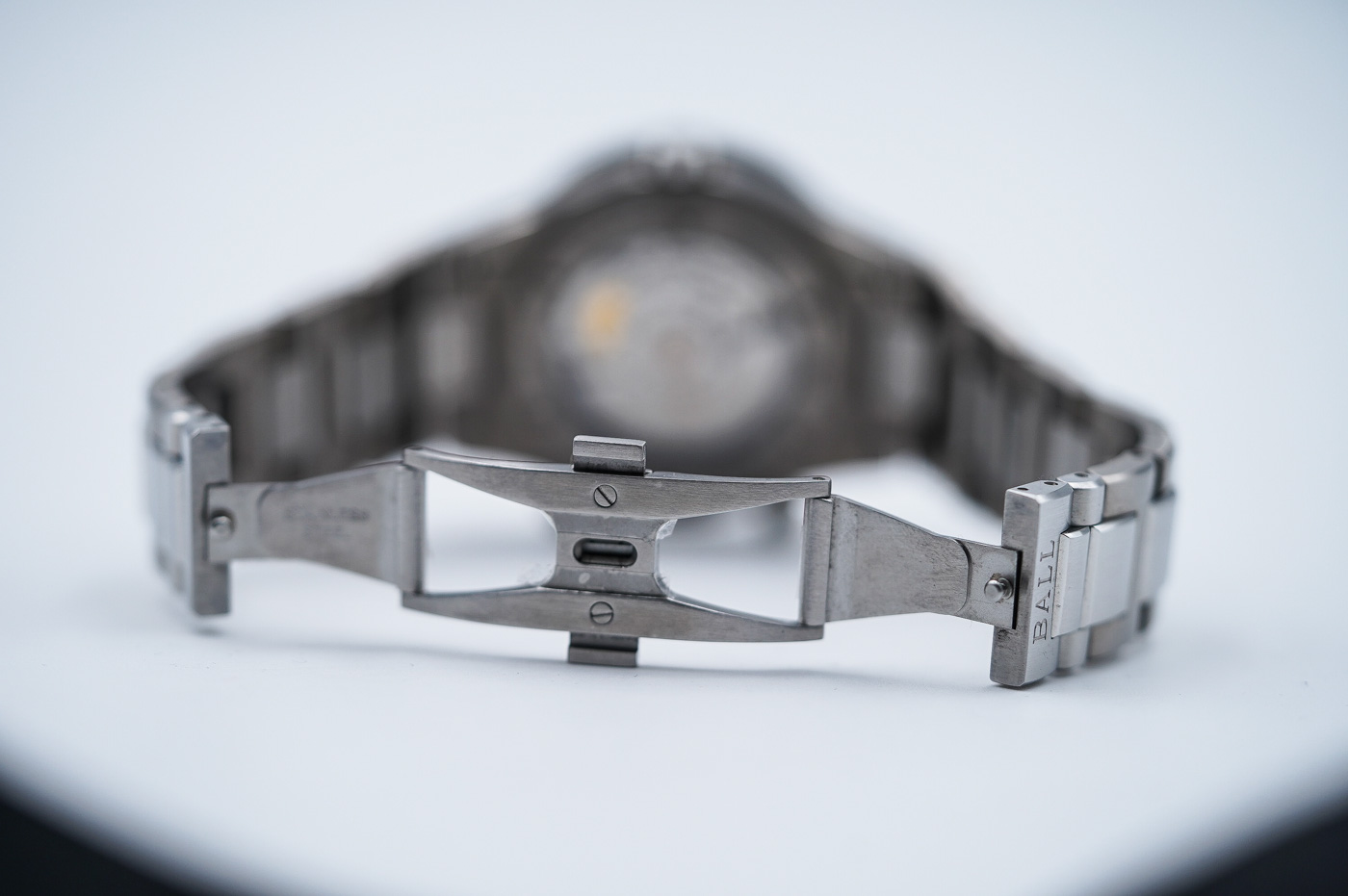
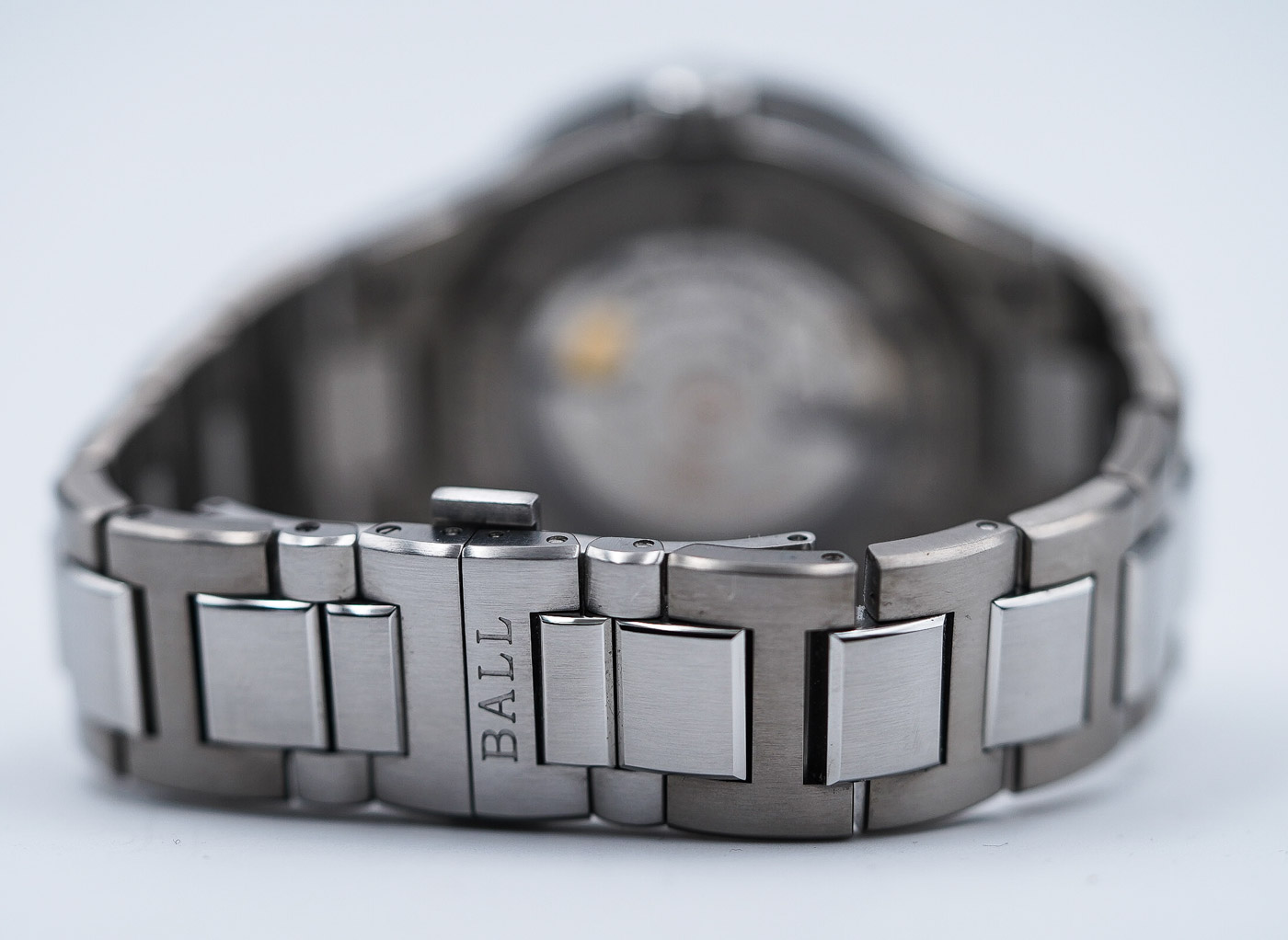
The bracelet is another area where Ball balances comfort, durability, and practicality. Constructed from a combination of titanium and stainless steel, it features brushed titanium outer links and center links. I like how light it feels on the wrist. The whole watch weighs in at 160g. The bracelet tapers elegantly from the lugs toward the integrated stainless steel clasp, enhancing comfort and improving overall ergonomics. On the wrist, it feels secure and well balanced, distributing the watch’s weight evenly. The links articulate smoothly, allowing the bracelet to conform naturally to the wrist’s shape. While the clasp is functional rather than luxurious, it aligns with the watch’s tool-watch ethos. It closes securely and does its job without unnecessary complexity. The bracelet can also be easily swapped for a strap, and thanks to the watch’s proportions and neutral color palette, it pairs exceptionally well with rubber, nylon, or leather alternatives.
After spending meaningful time with the Roadmaster Pilot GMT, I understand far better why Ball Watch Company inspires such consistently positive feedback among enthusiasts. This is not a brand built on nostalgia, marketing theatrics, or artificially limited hype cycles. Instead, Ball focuses on tangible engineering advantages — and in daily wear, that difference becomes very clear. The Roadmaster Pilot GMT feels purpose-built. The titanium case keeps it wearable despite its robust specifications. The 300 meters of water resistance push it well beyond what most GMT watches in this category attempt. The chronometer certification reinforces the brand’s historic connection to precision. And the independent jumping hour system makes it a genuinely practical traveler’s GMT rather than a desk-diver with an extra hand. But the defining experience — the thing that truly separates this watch — is the tritium illumination. In total darkness, when the dial and bezel glow with unwavering clarity, the watch stops feeling like an accessory and starts feeling like an instrument. There is no waiting for lume to charge, no gradual fading through the night. It simply works. Quietly. Reliably. Continuously. And that consistency aligns perfectly with Ball’s railroad origins — where accurate, legible timekeeping was never about aesthetics, but about responsibility.
Are there elements I would personally tweak? Yes. I would prefer slightly more recessed pushers and a cleaner crystal without the magnifier. But those are subjective preferences, not fundamental flaws. From a technical and functional standpoint, the watch delivers exactly what it promises — and arguably more. In a market saturated with vintage reissues and derivative designs, the Roadmaster Pilot GMT feels refreshingly sincere. It doesn’t chase trends. It doesn’t pretend to be something it isn’t. It is a modern tool watch built around durability, usability, and real-world performance. And perhaps most importantly for me — after ten years of reviewing watches — it feels different. Not louder. Not flashier. Just more deliberate. Ball may still fly under the radar in parts of Europe, including Latvia, but after this experience, I suspect it won’t stay off my radar again.

