
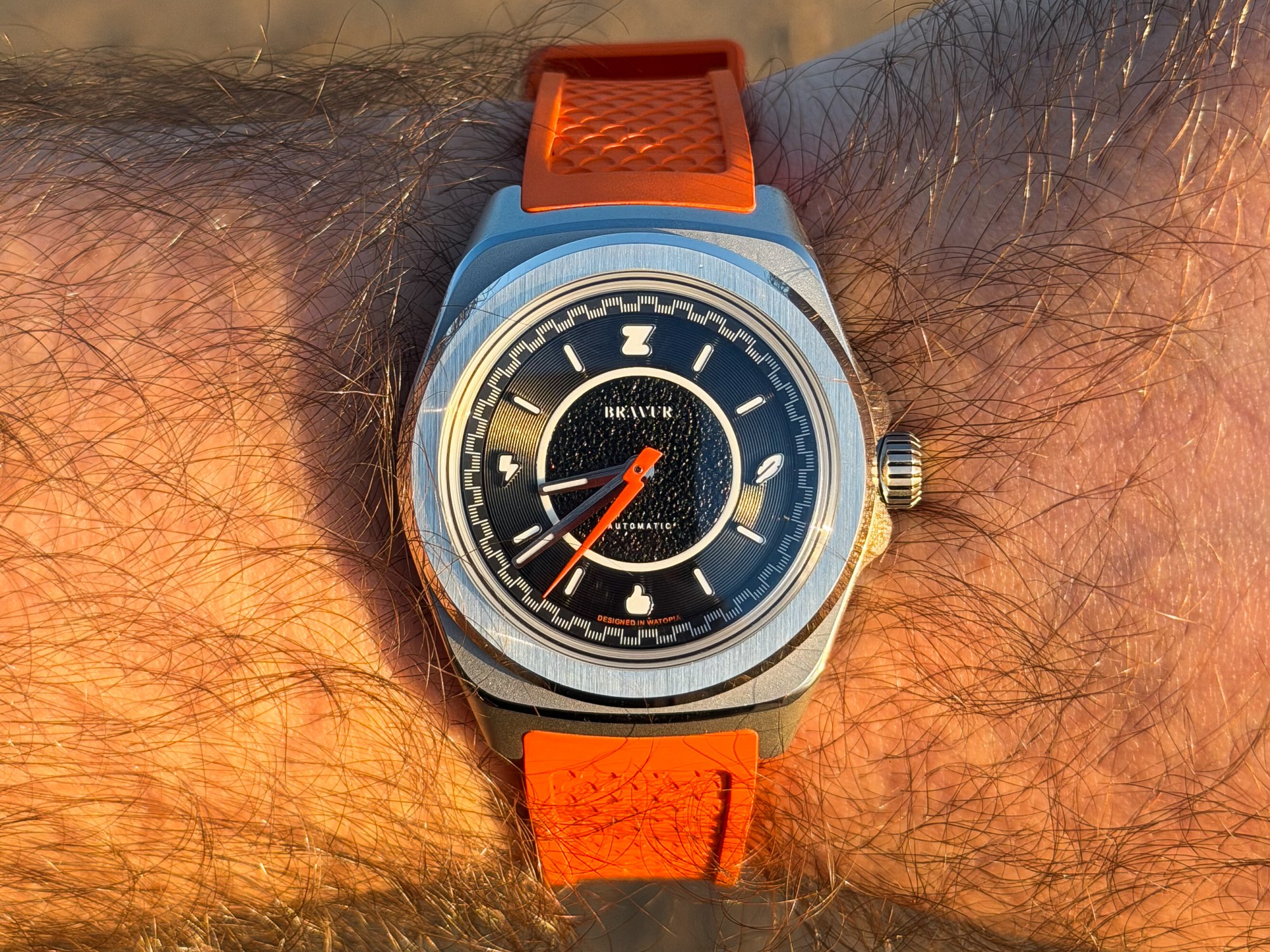
Today we are looking at a watch from a company called Bravur, a Swedish brand that has gradually emerged as a compelling voice in design-driven independent watchmaking, with a distinctly Scandinavian character. Founded by industrial designers Magnus Äppelryd and Johan Sahlin, Bravur has built its identity around clean design, thoughtful detailing and small-scale production. There is also something increasingly rare about the way the company operates: every Bravur watch is hand-built in the brand’s own workshop in Båstad, in the south of Sweden. I first encountered Bravur through its more restrained, minimalist watches, including the BW003, which I reviewed some years ago. Since then, however, the company has taken a rather interesting turn. Cycling has moved from being an influence somewhere in the background to becoming a central part of Bravur’s identity.
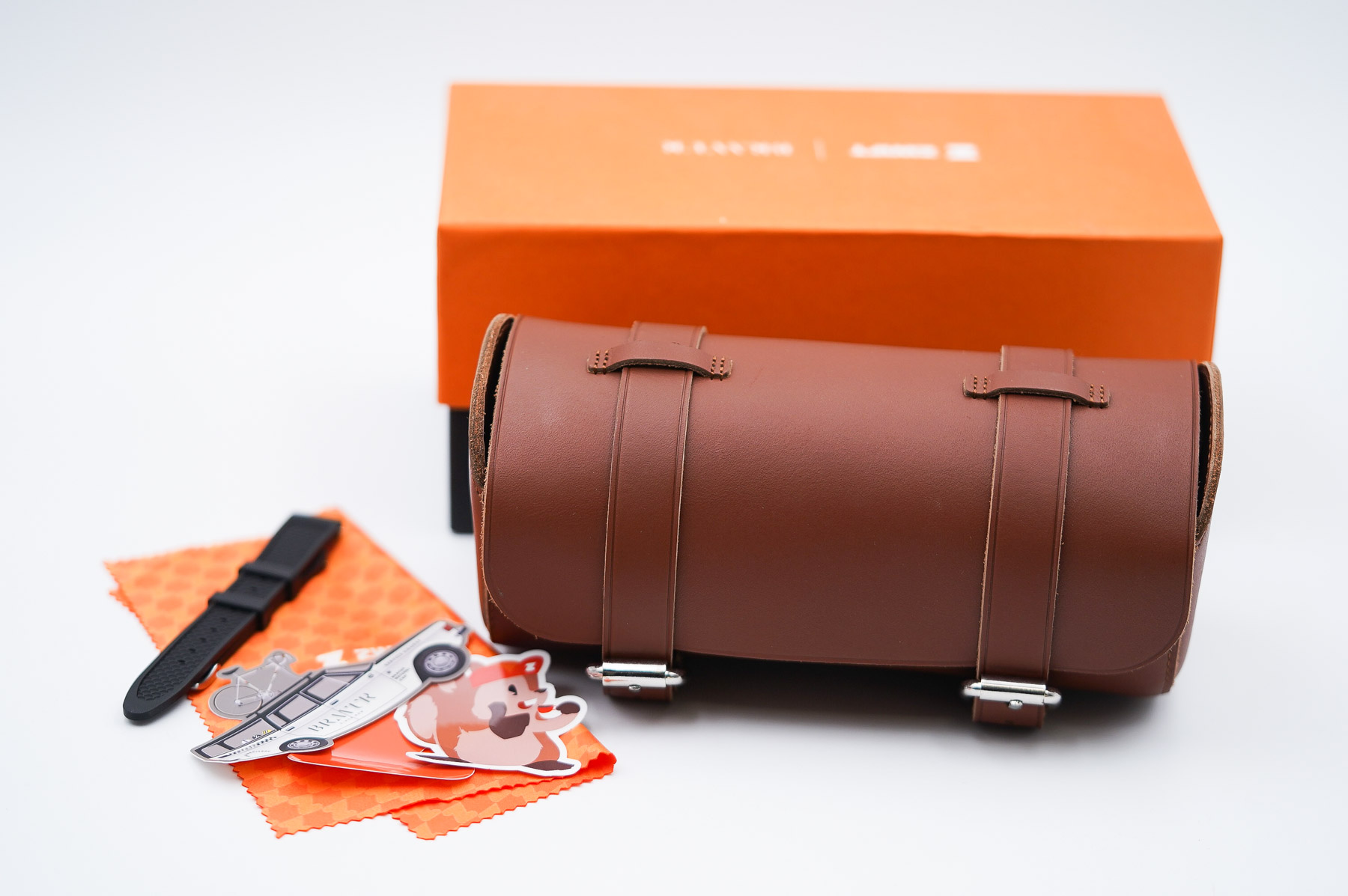
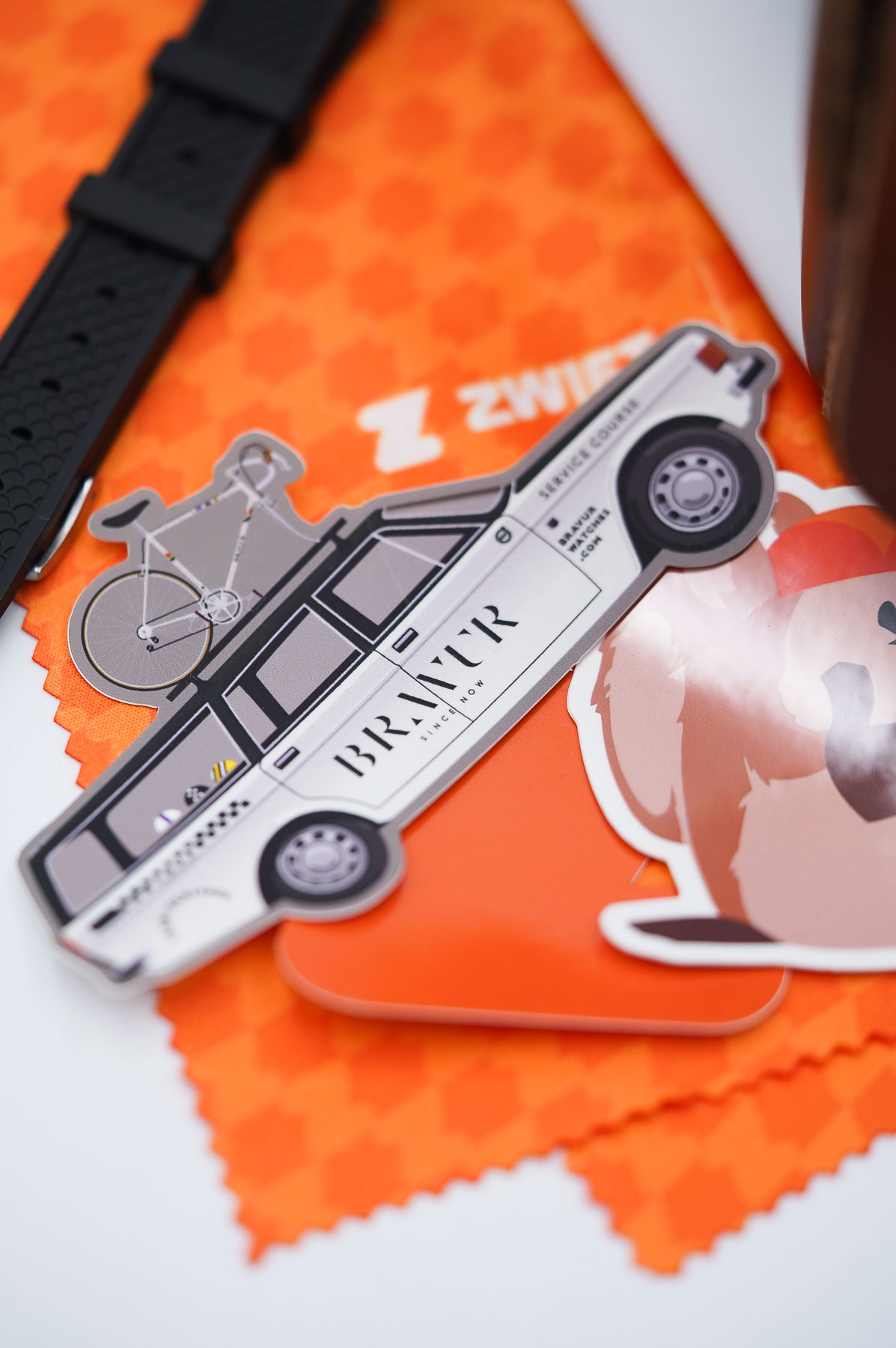
The large orange cardboard box didn’t initially look particularly exciting. Open it, however, and things become much more interesting. Instead of the conventional watch box that inevitably ends up sitting forgotten in a cupboard, Bravur packs the watch inside a leather bicycle handlebar bag. Better still, the bag doubles as a watch roll capable of carrying three watches. I really like this idea. Watch packaging can easily become excessive, particularly when elaborate wooden boxes serve little practical purpose once the watch has been removed. Here, Bravur has created something directly connected to cycling while also making the packaging genuinely useful. It feels clever rather than gimmicky.
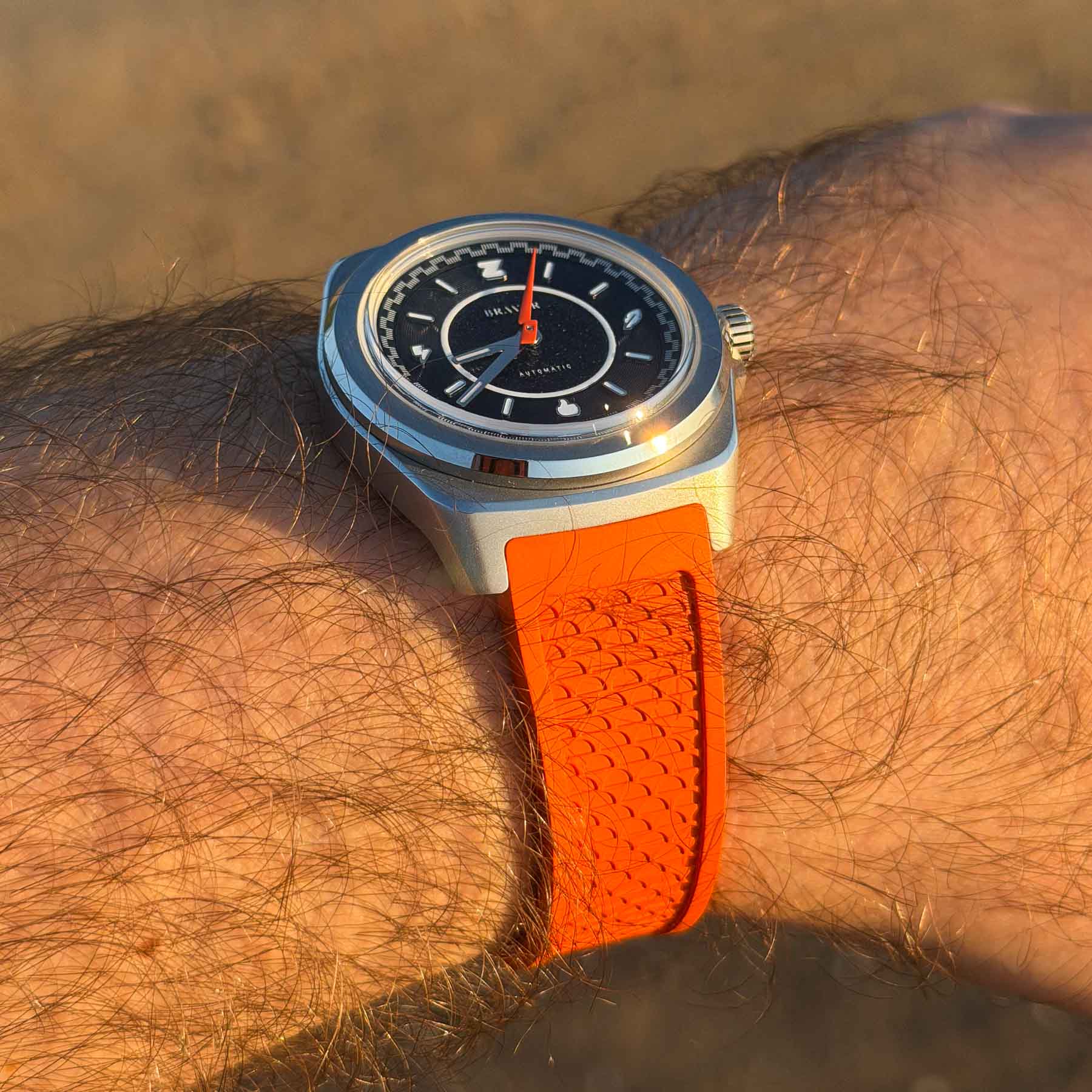
Then came the watch itself. My immediate reaction was that it was smaller than I had expected — but in a very positive way. There is something almost tool-watch-like about the Bravur x Zwift, yet the compact dimensions completely change its personality. Instead of feeling bulky or excessively masculine, it feels sporty, purposeful and extremely wearable. On the wrist, it is compact and very comfortable. And considering that this is a cycling-inspired watch, that seems exactly right. A watch supposedly inspired by performance shouldn’t feel like an anchor strapped to your arm.
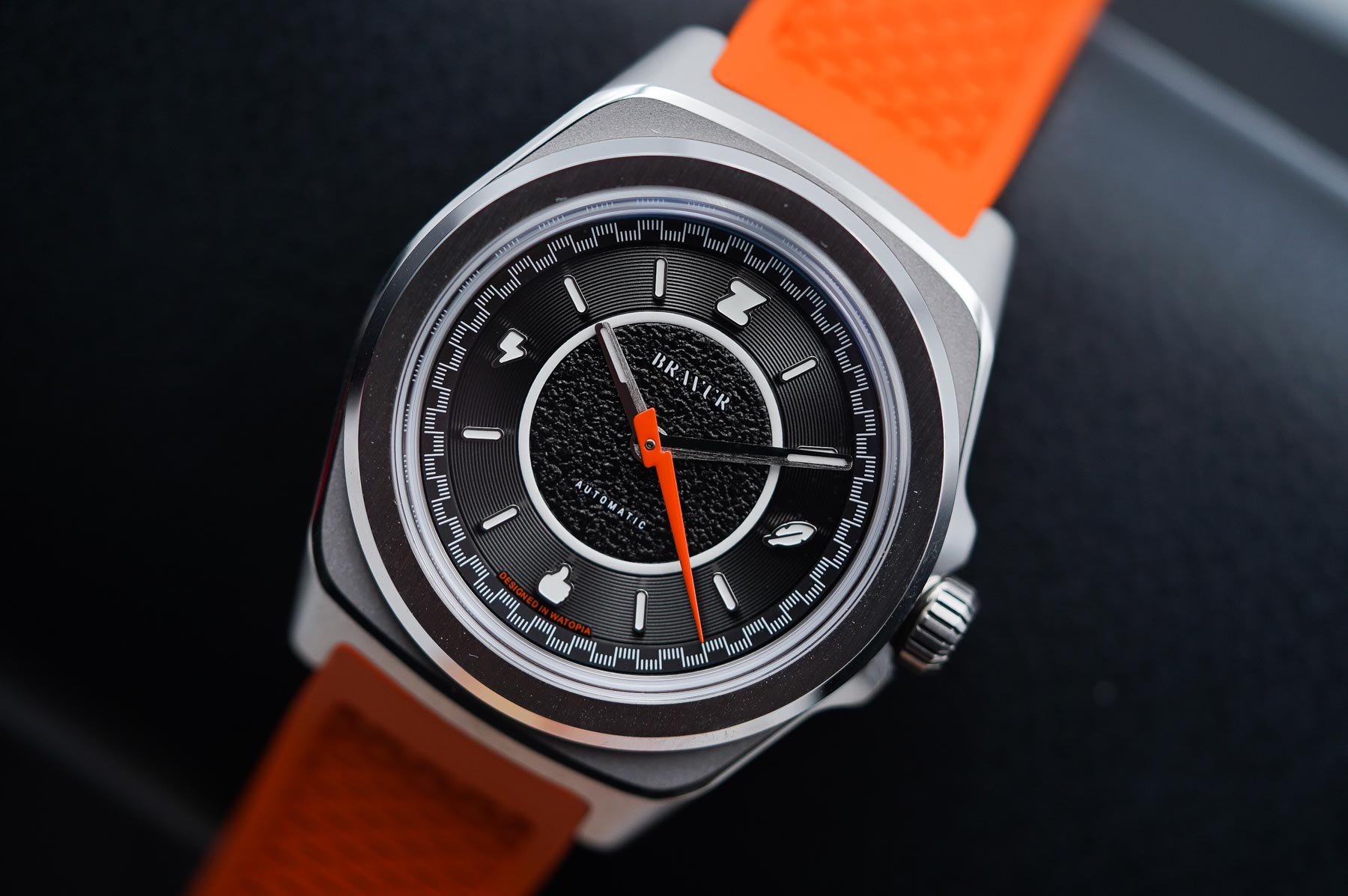
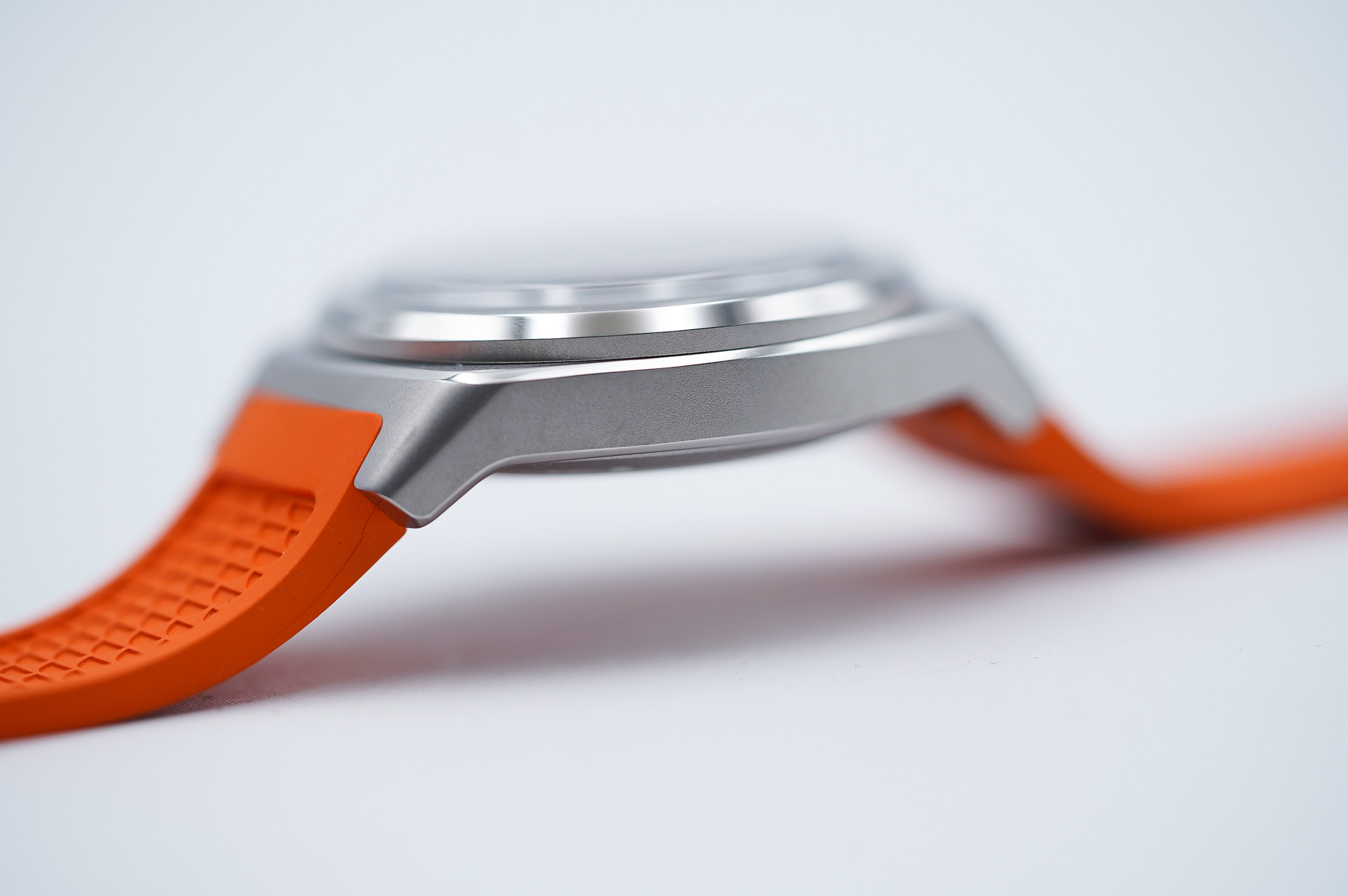
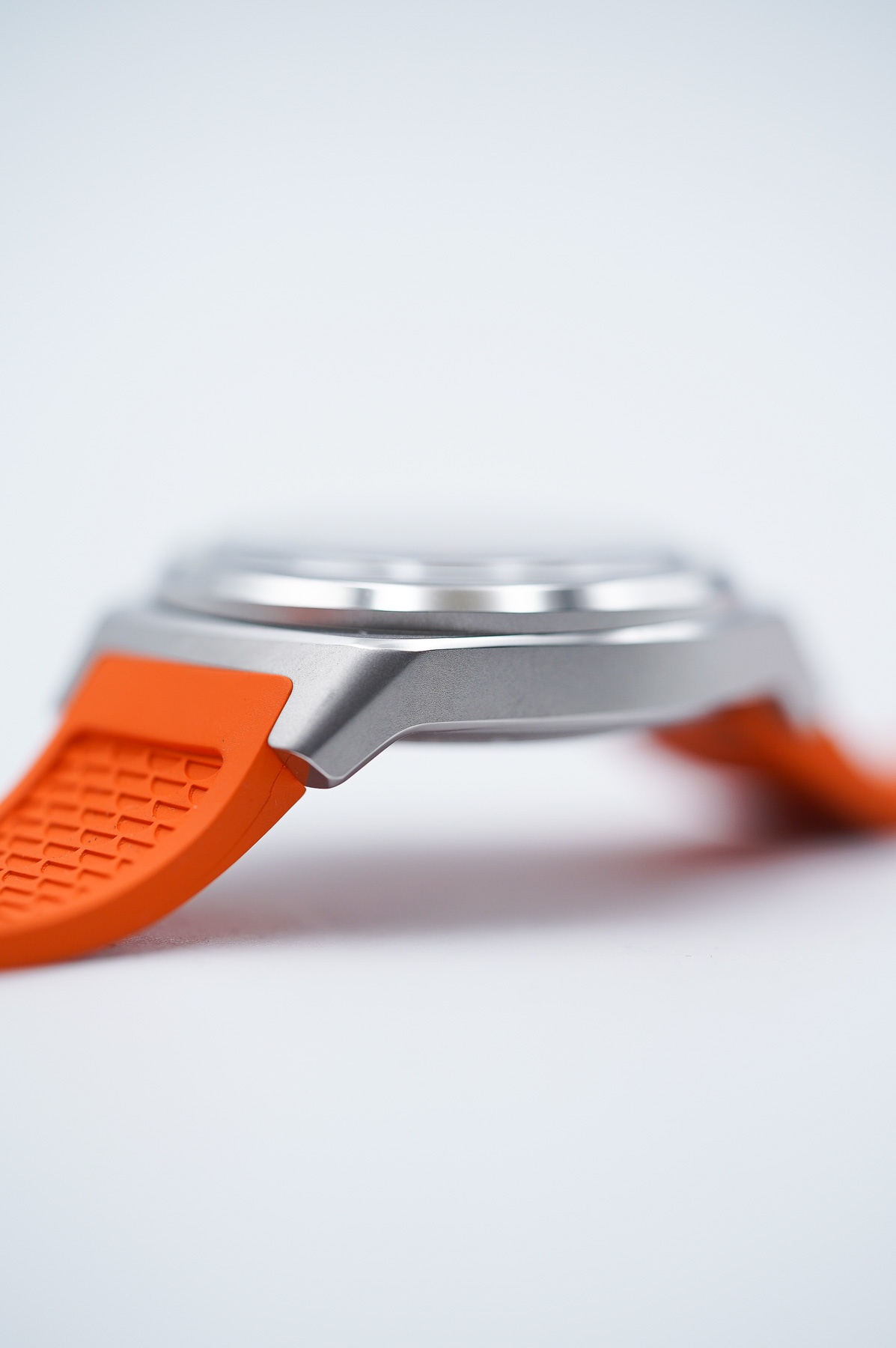
The stainless-steel case measures 37mm in diameter, 44.6mm lug-to-lug and 11.4mm thick. Those numbers may sound modest by contemporary sports-watch standards, but they are one of the strongest aspects of the watch. The 37mm diameter gives the Bravur x Zwift a slightly vintage sense of proportion, while the relatively short 44.6mm lug-to-lug measurement allows it to sit naturally on the wrist. The watch has enough presence to feel substantial, but never becomes intrusive. What really makes the case interesting, however, isn’t its size. It’s the finishing.
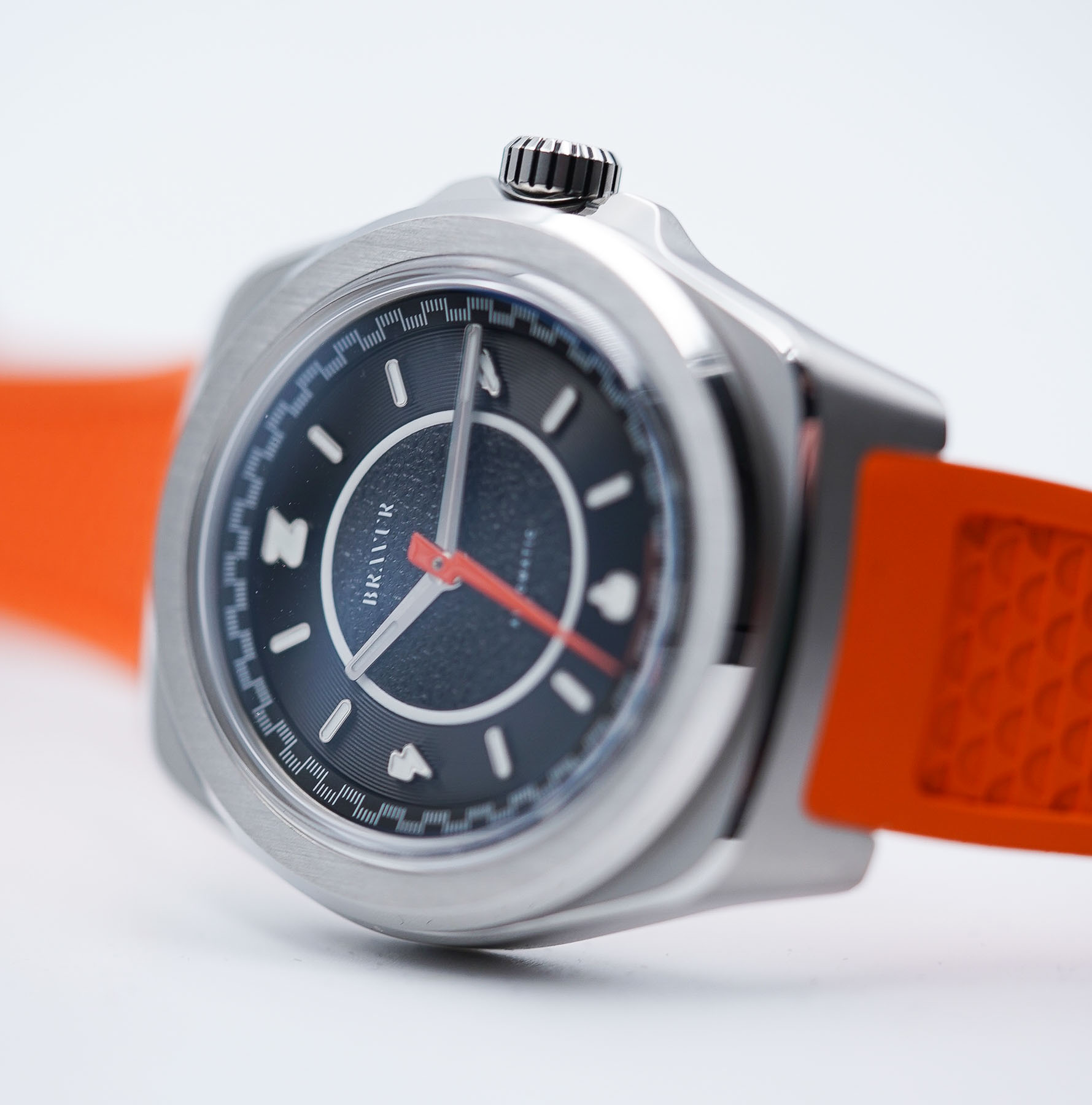
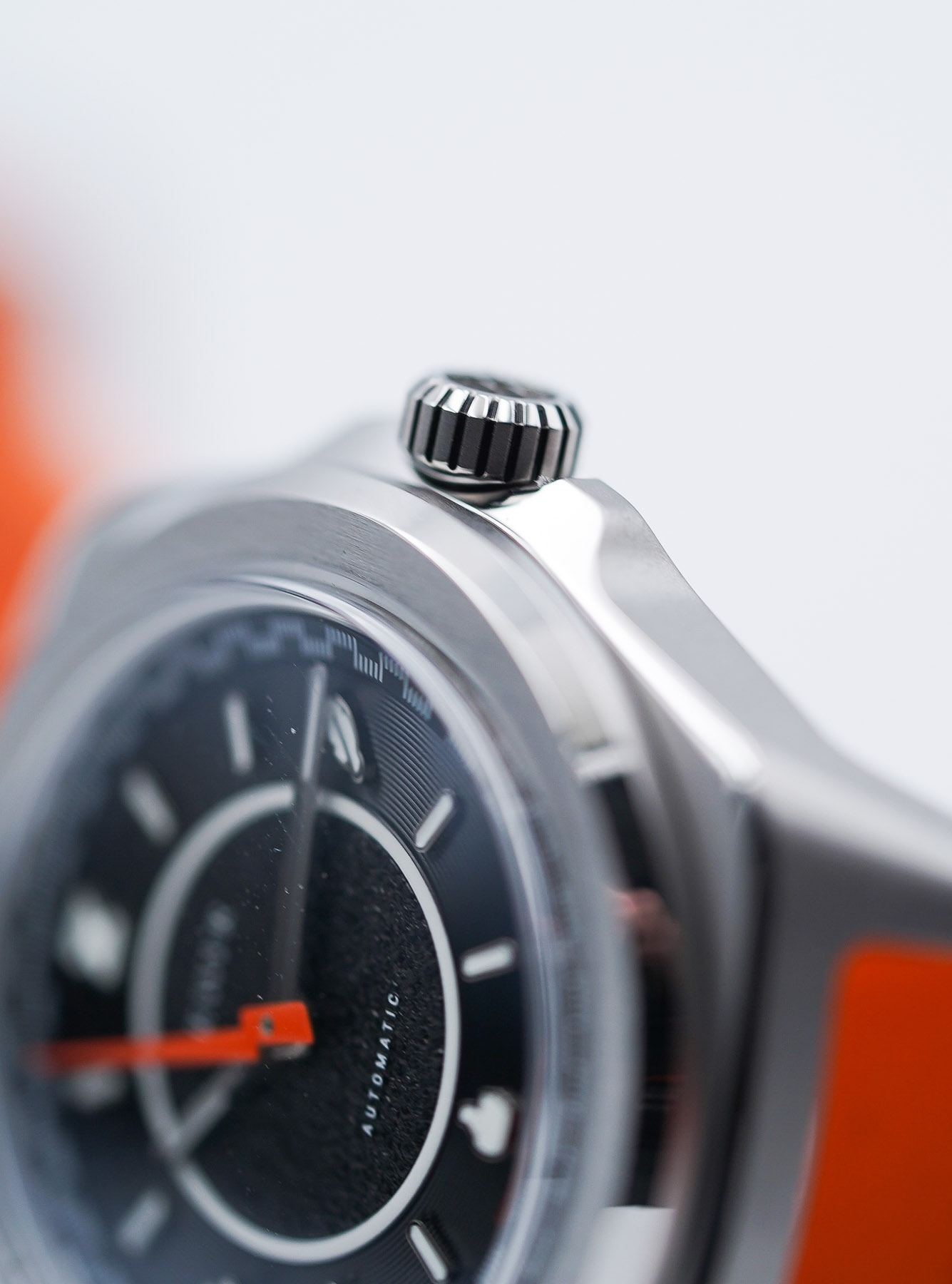
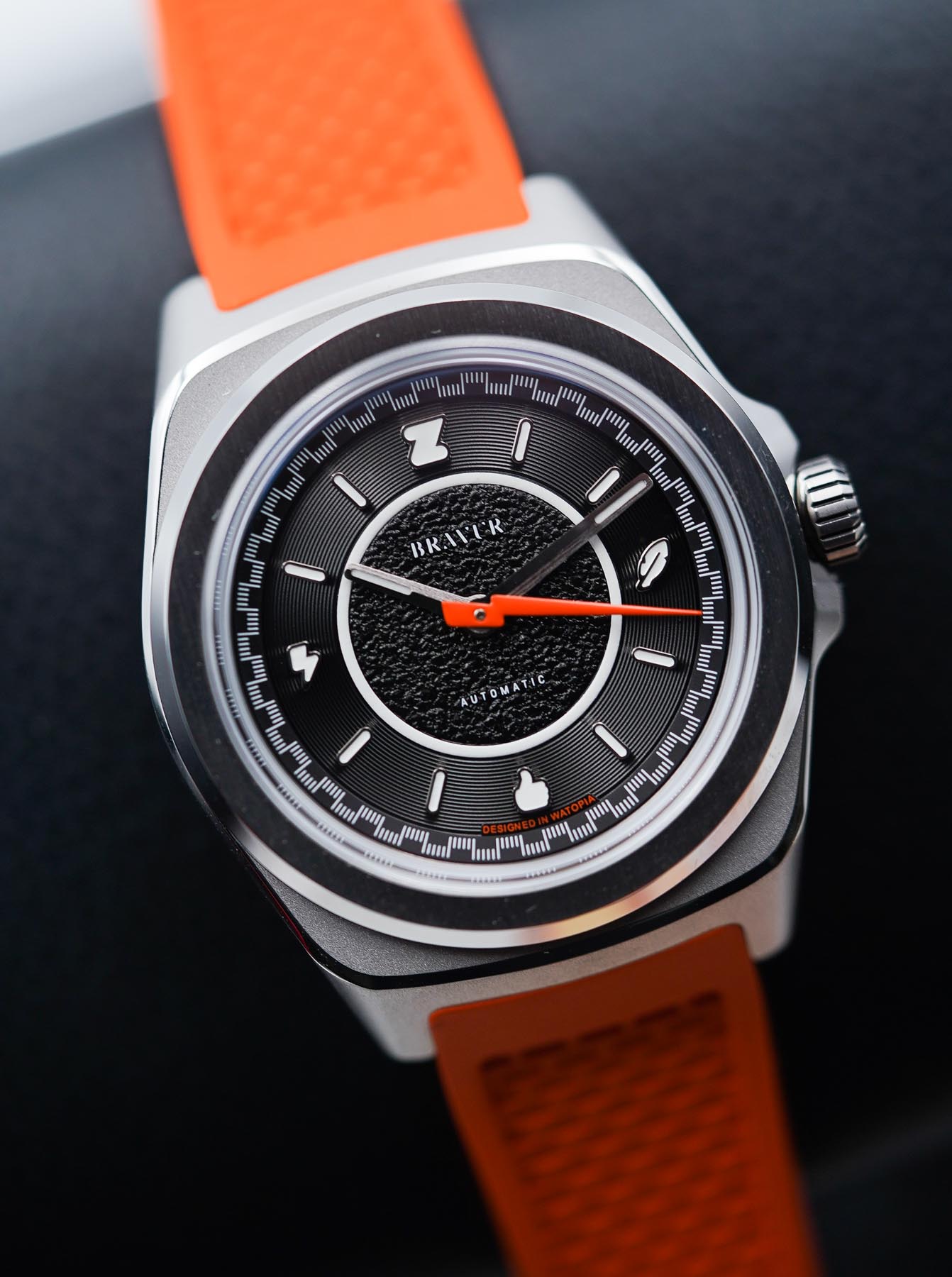
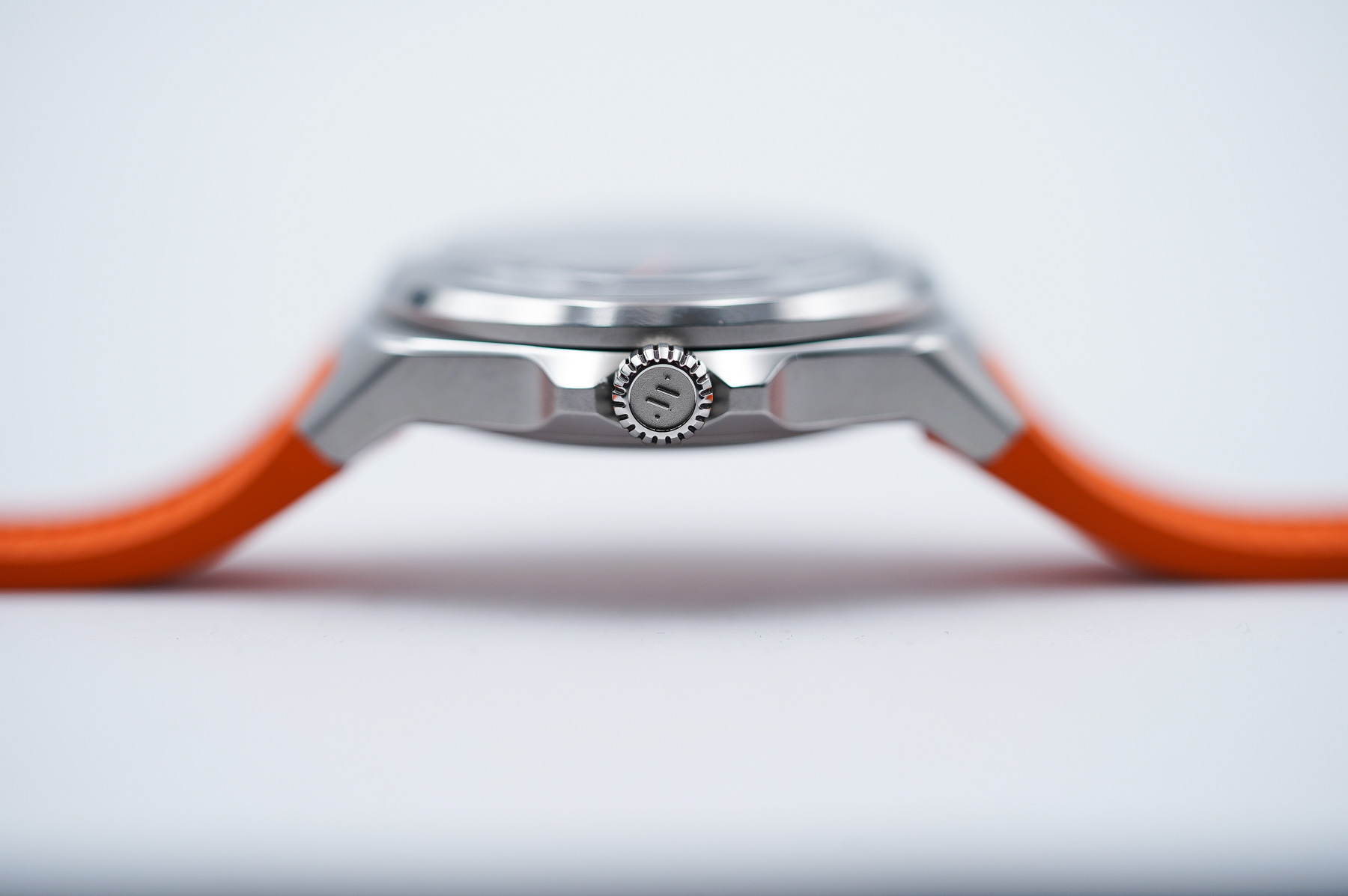
Bravur has managed to combine several different surface treatments without making the case appear unnecessarily complicated. The broad bezel has a brushed upper surface, while the predominantly blasted and satin-finished case is interrupted by polished accents and bevels. These transitions give the architecture much more definition than you might expect from a watch in this price category. The lugs are particularly successful. Their semi-rounded, sculpted shape flows naturally from the case and helps keep the overall footprint compact. The integrated crown guards are another nice detail. They arguably aren’t essential on a watch like this, but aesthetically they work beautifully, emerging organically from the case instead of looking like separate blocks attached to its side. The case is protected by a domed sapphire crystal, while a screw-down crown and 100 metres of water resistance provide the practicality expected from a genuinely sporty watch. And despite all these elements, nothing feels overbuilt. It is a surprisingly sophisticated case — and perhaps one of the most distinctive aspects of the entire watch.
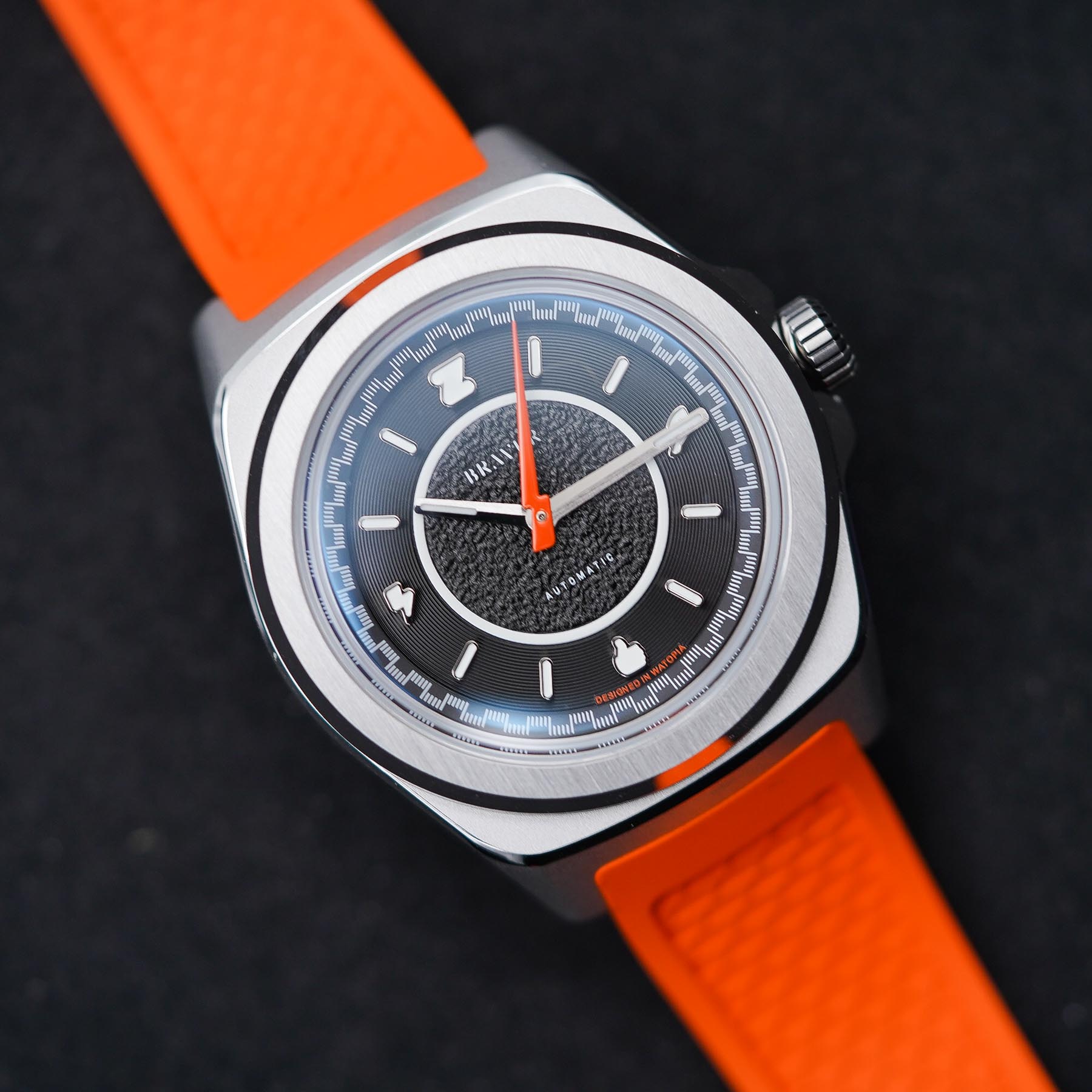
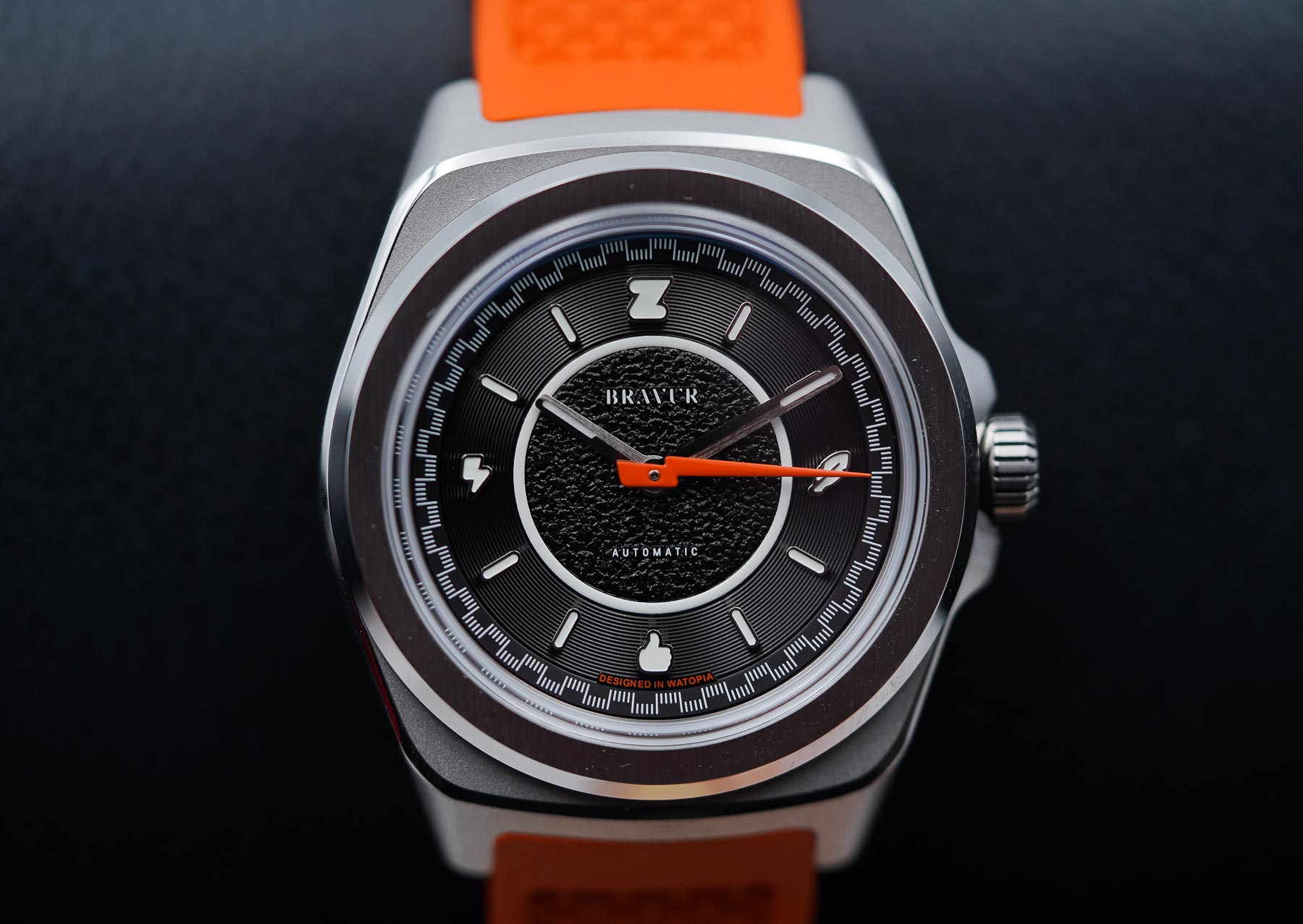
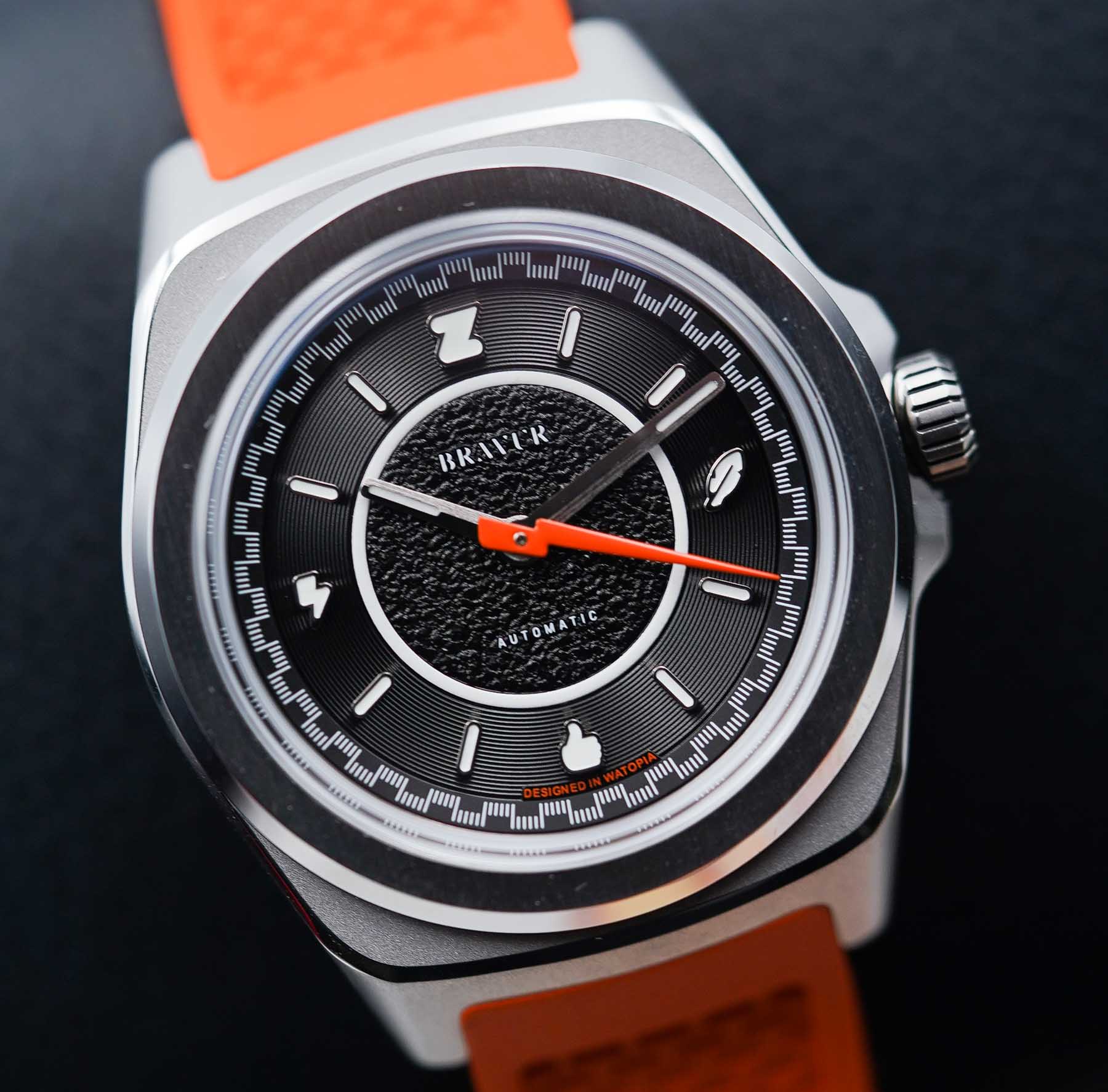
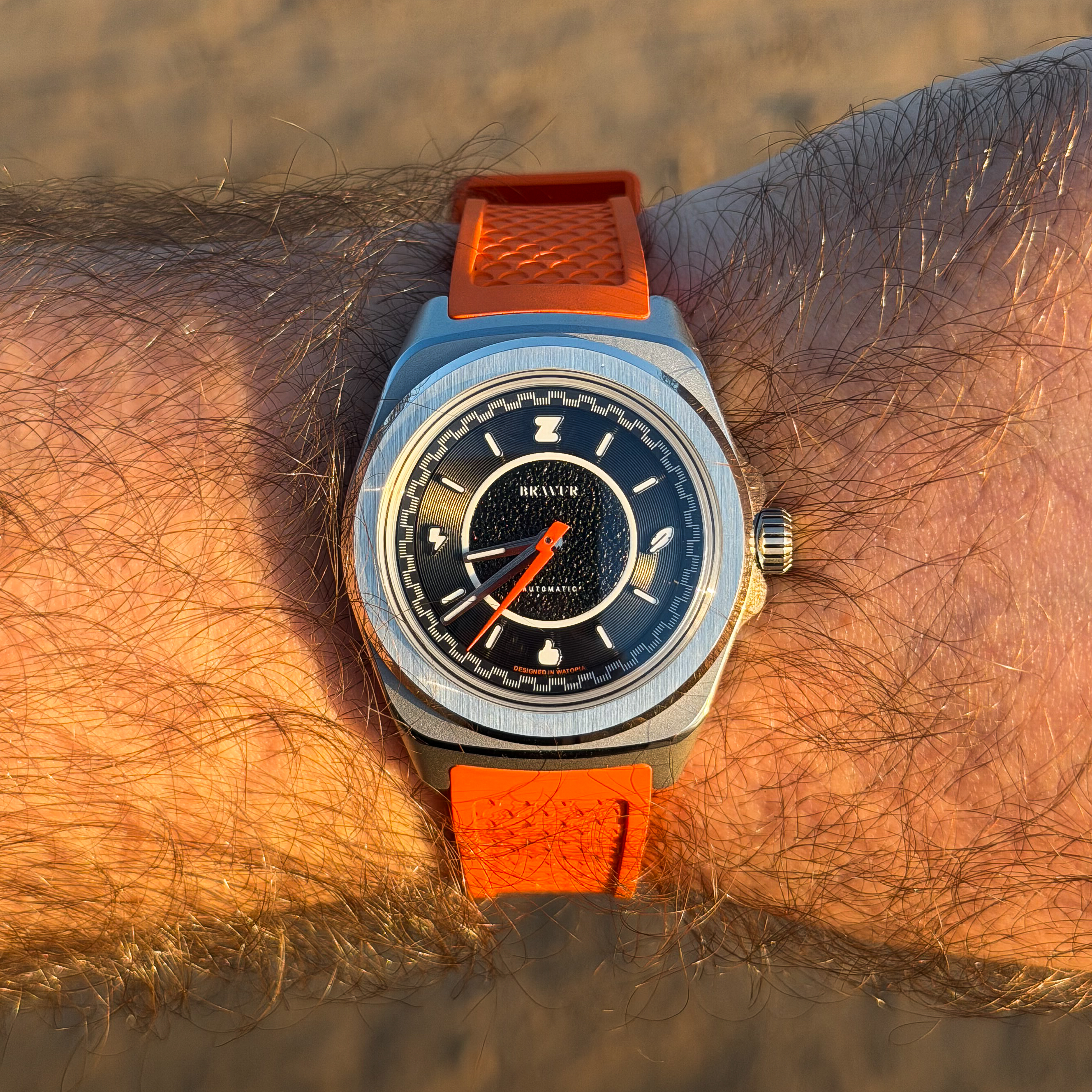
If the case establishes the quality of the watch, the dial is where the Bravur x Zwift collaboration really comes alive. There is a lot happening here, but you don’t necessarily notice all of it immediately. That’s important because Bravur could easily have covered the dial with Zwift branding and produced something resembling promotional merchandise. Instead, the references have largely been integrated into the actual design. At 12 o’clock sits the Zwift logo, while the other cardinal positions introduce symbols familiar to users of the platform. There is the feather power-up icon, the watt/power reference and, at six o’clock, the applied thumbs-up symbol representing Zwift’s familiar “Ride On” gesture between cyclists. Even if you know nothing about Zwift, these elements simply look like unusual graphic hour markers. If you do use the platform, however, they become little visual Easter eggs.
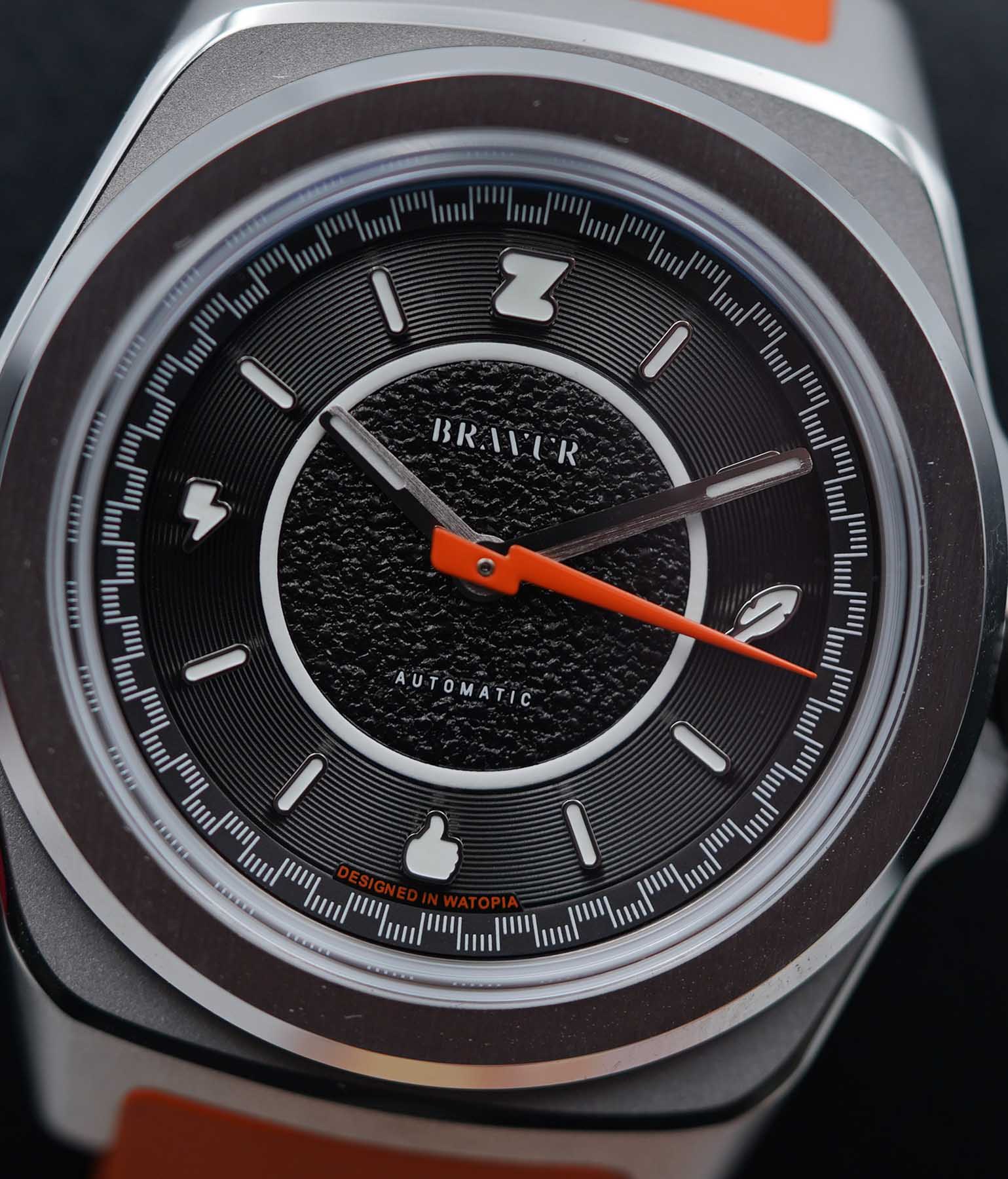
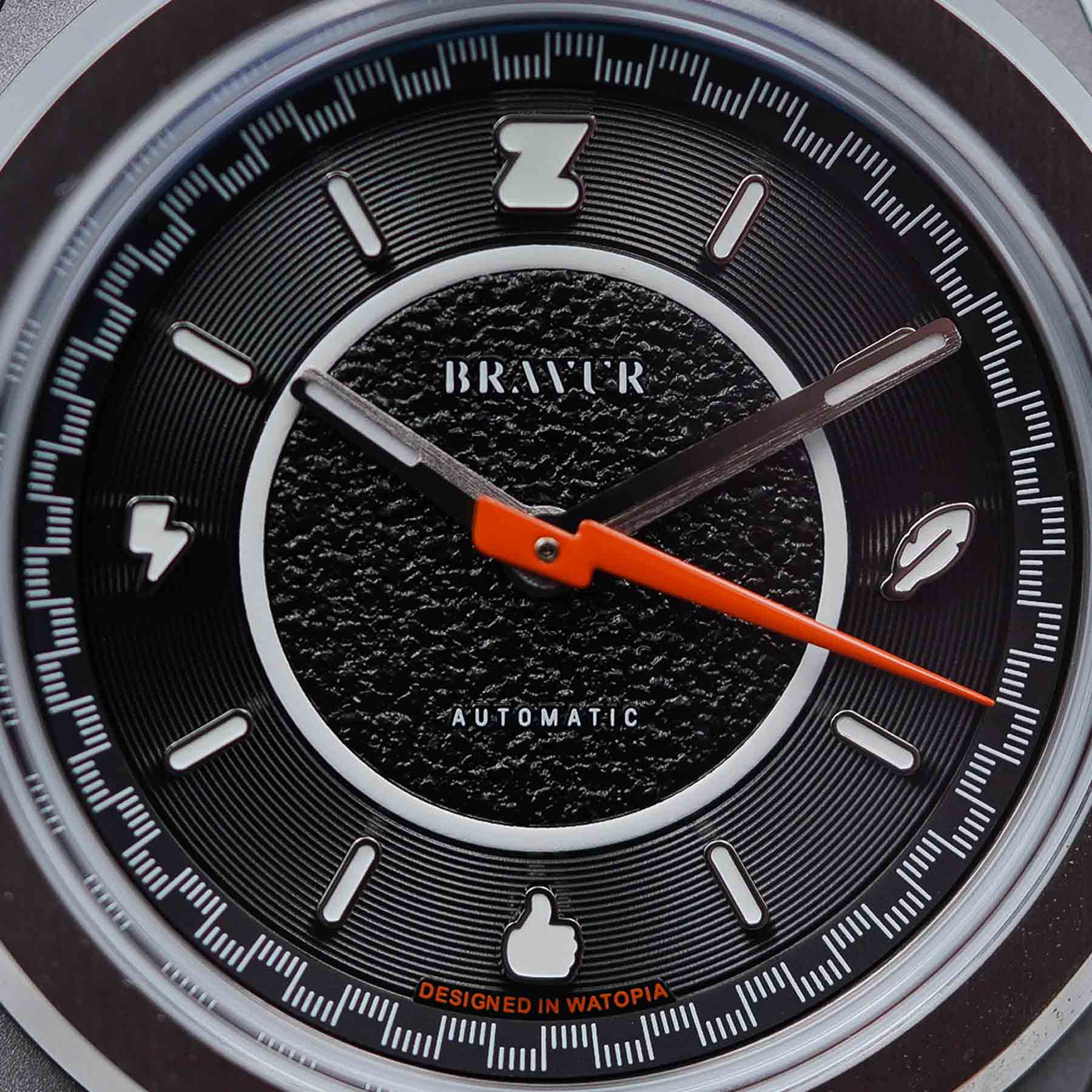
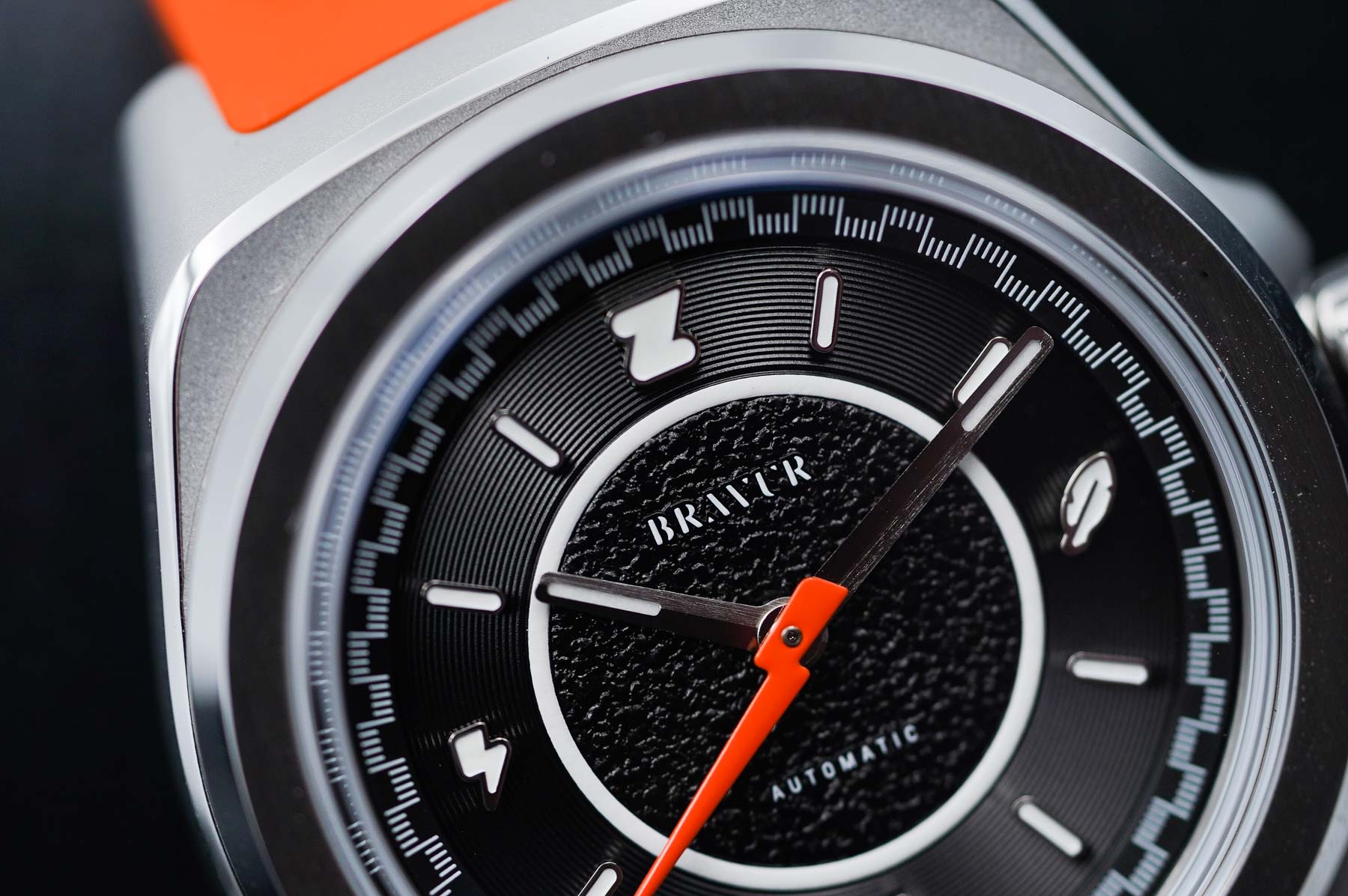
The dial’s centre is particularly interesting. Its dark textured surface is inspired by the road found around Zwift’s volcanic environment in Watopia. Viewed closely, it has an almost asphalt-like appearance, which seems entirely appropriate for a cycling watch. Surrounding this textured centre is a snailed hour track, creating a noticeable contrast in surface and depth. Then there is another clever reference: a luminous ring around the dial inspired by Zwift’s famous Tron bike, the virtual machine with its distinctive glowing wheels that riders can unlock after completing major elevation challenges. Around this sits the racing-style minute scale with a castellated rehaut pattern. It gives the outer edge of the dial a more technical character and reinforces the feeling of speed and competition without becoming too literal.
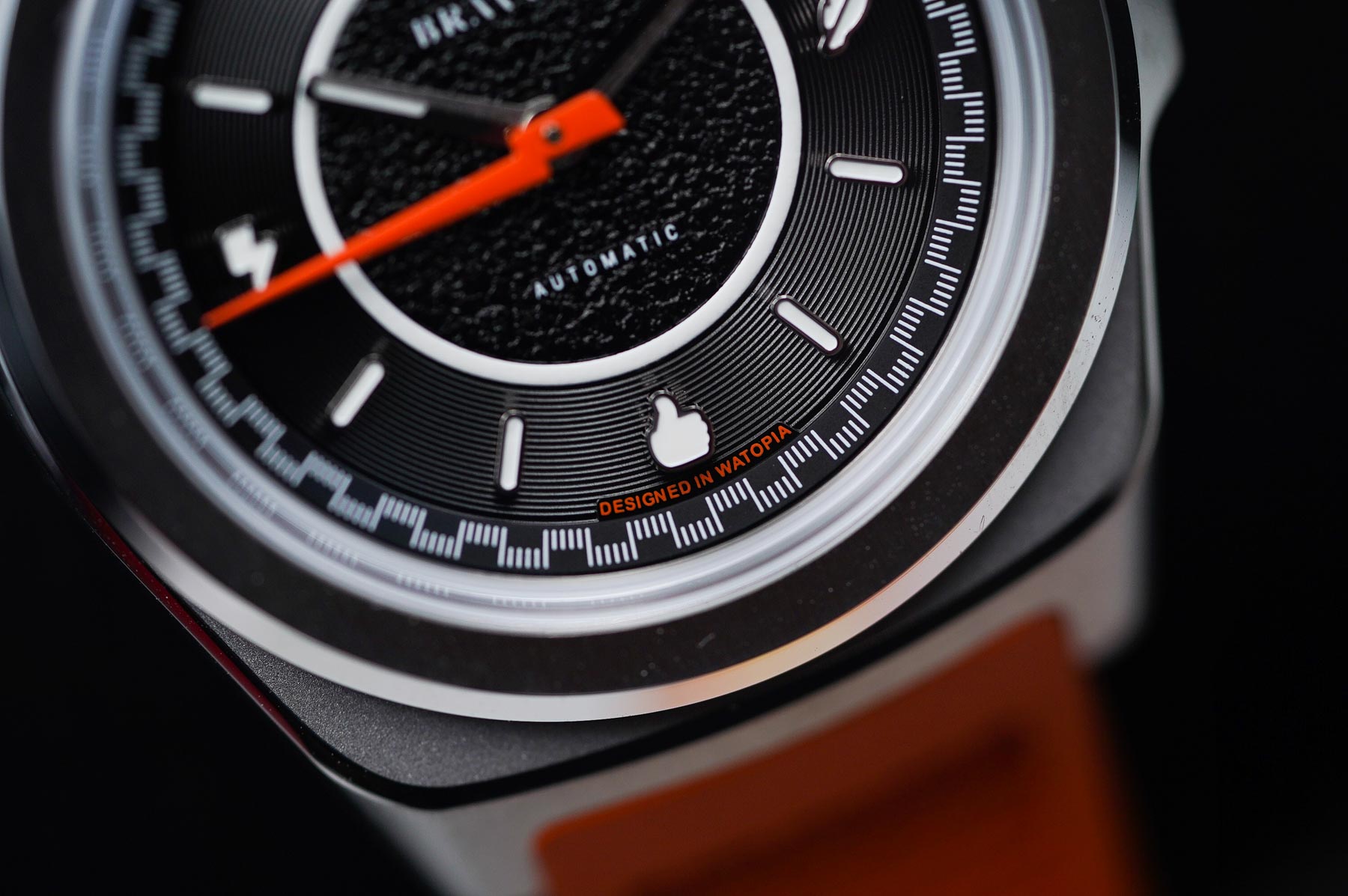
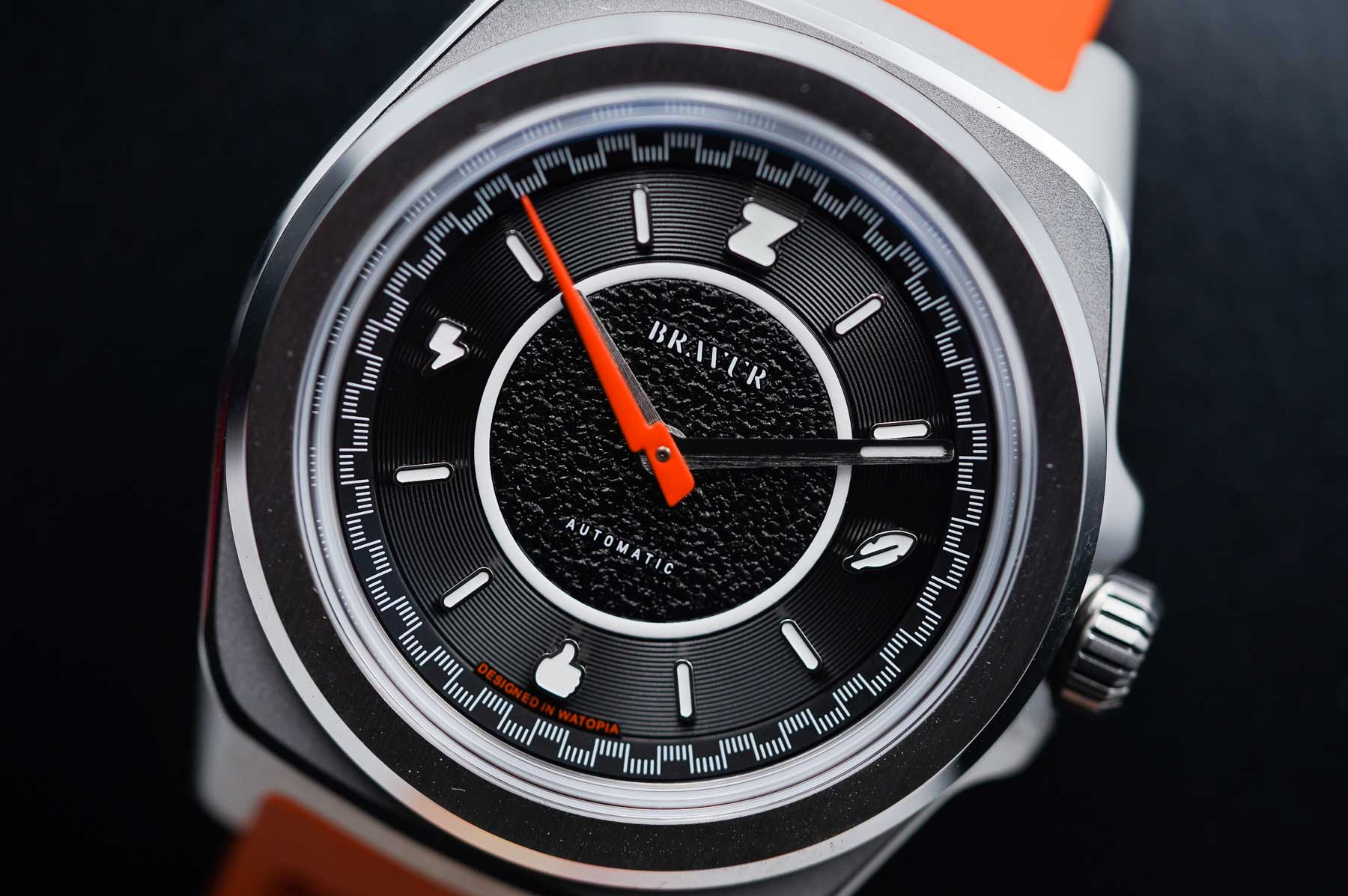
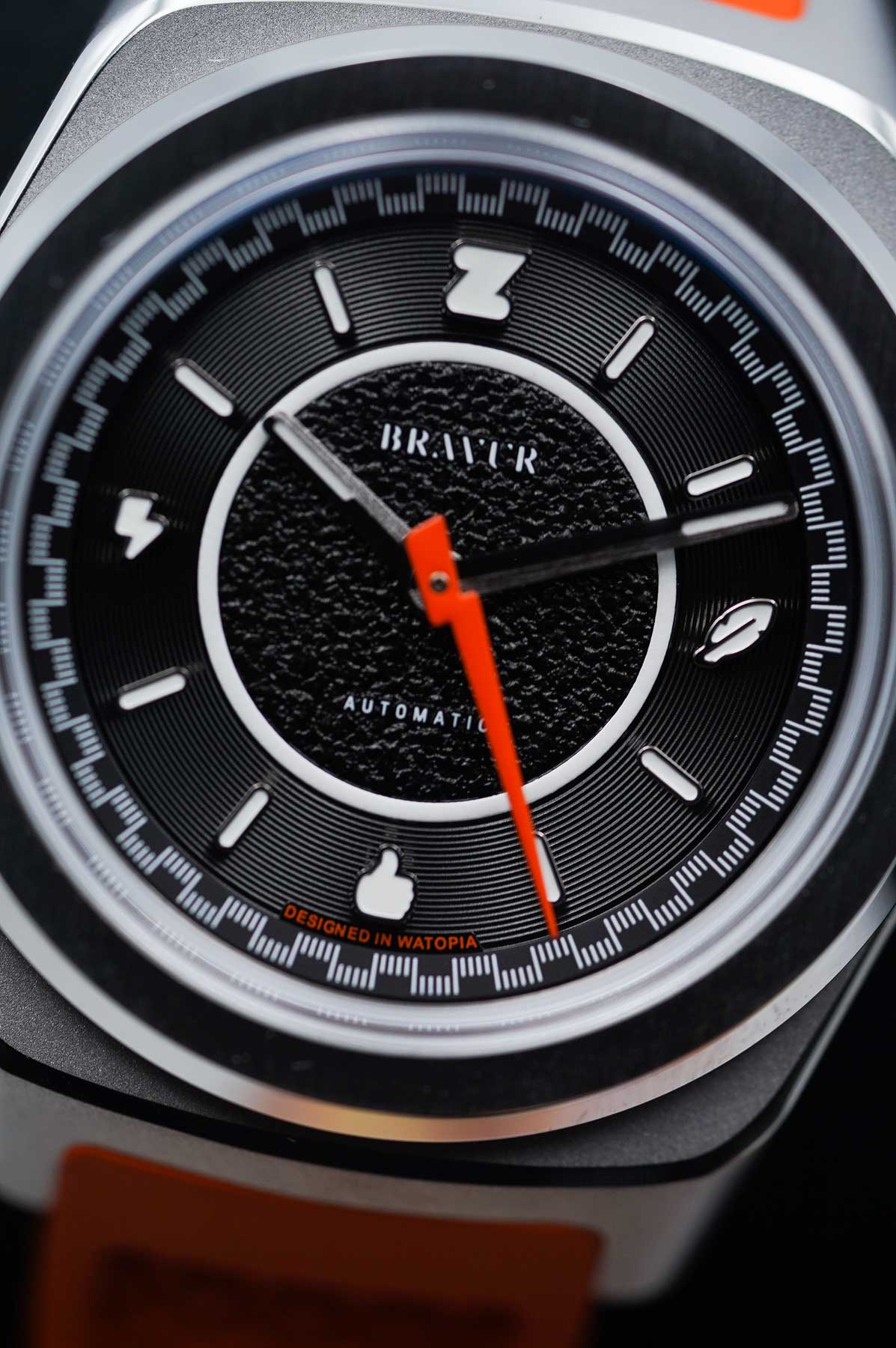
The handset and hour markers receive Super-LumiNova, although the lume is more adequate than spectacular. It is evenly applied and useful in low light, but this isn’t a watch I would choose primarily for its nighttime performance. And then we have perhaps my favourite detail: the seconds hand. Finished in Zwift’s signature orange, it sweeps around the otherwise predominantly monochromatic dial like a small streak of energy. Its lightning-bolt form adds just enough playfulness to remind you that this isn’t meant to be a conservative watch. Look closely and you’ll also find the words “Designed in Watopia” Technically, of course, the watch is assembled in Sweden. Watopia is Zwift’s virtual world. But that little line perfectly captures the humour behind the collaboration. There are textures, symbols, colours and references everywhere, yet the dial never feels like an advertisement for Zwift. That balance is difficult to achieve.
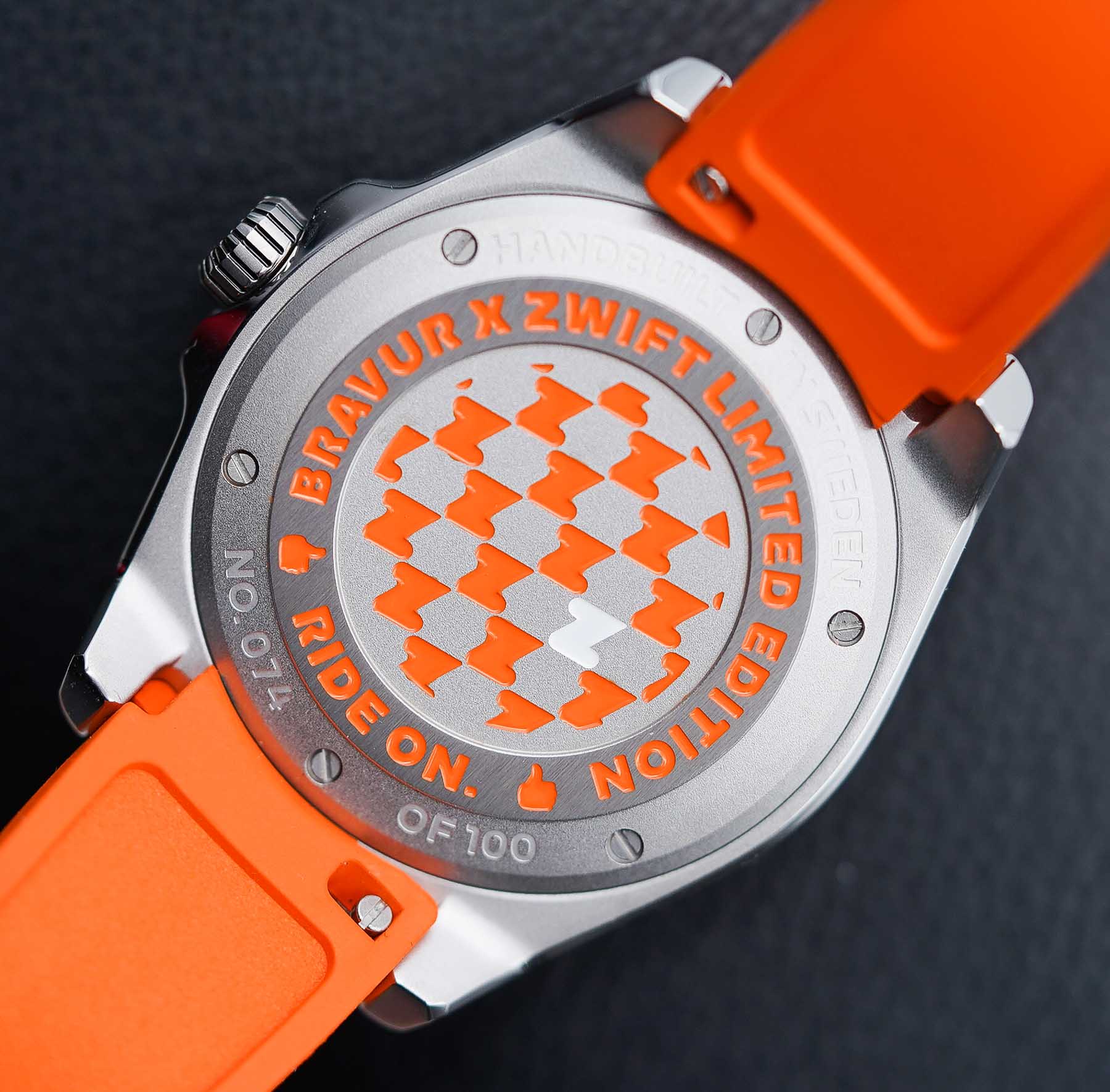
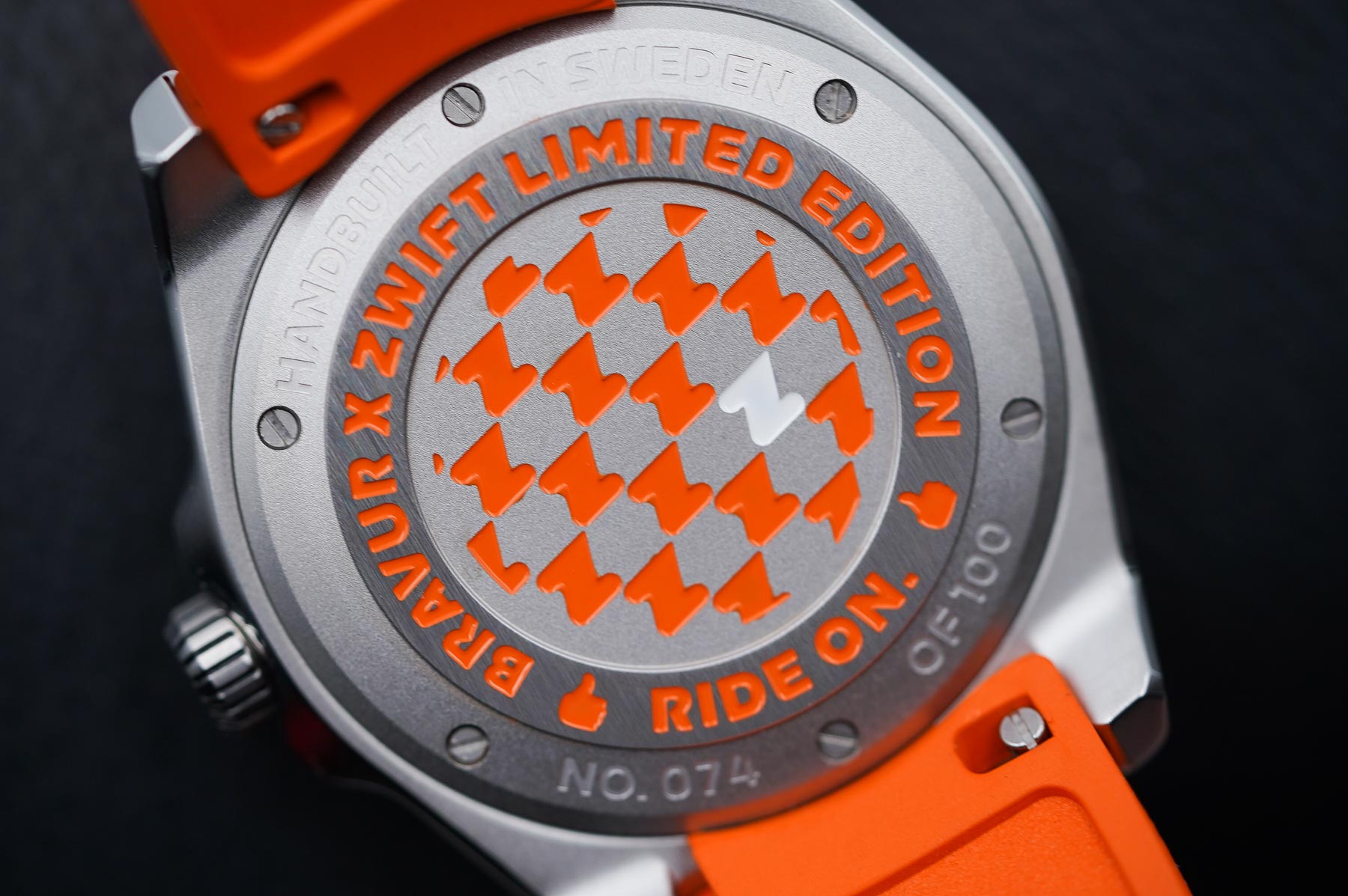
Inside the Bravur x Zwift is the recently introduced Sellita SW200-2 Power+, an evolution of the familiar Swiss automatic SW200 architecture. The important development here is the power reserve. Thanks to an optimised barrel and mainspring, Bravur quotes approximately 68 hours of running time — a considerable improvement over the traditional SW200 and a genuinely useful upgrade in everyday ownership. The movement operates at 28,800 vibrations per hour, or 4Hz, providing the familiar smooth sweep of the seconds hand. Sellita movements aren’t about exotic haute horlogerie decoration or technical theatre. Their appeal lies in something much more practical: they are proven, dependable Swiss automatic movements that can actually be serviced. For a sporty watch intended to be worn rather than hidden in a safe, that makes perfect sense.
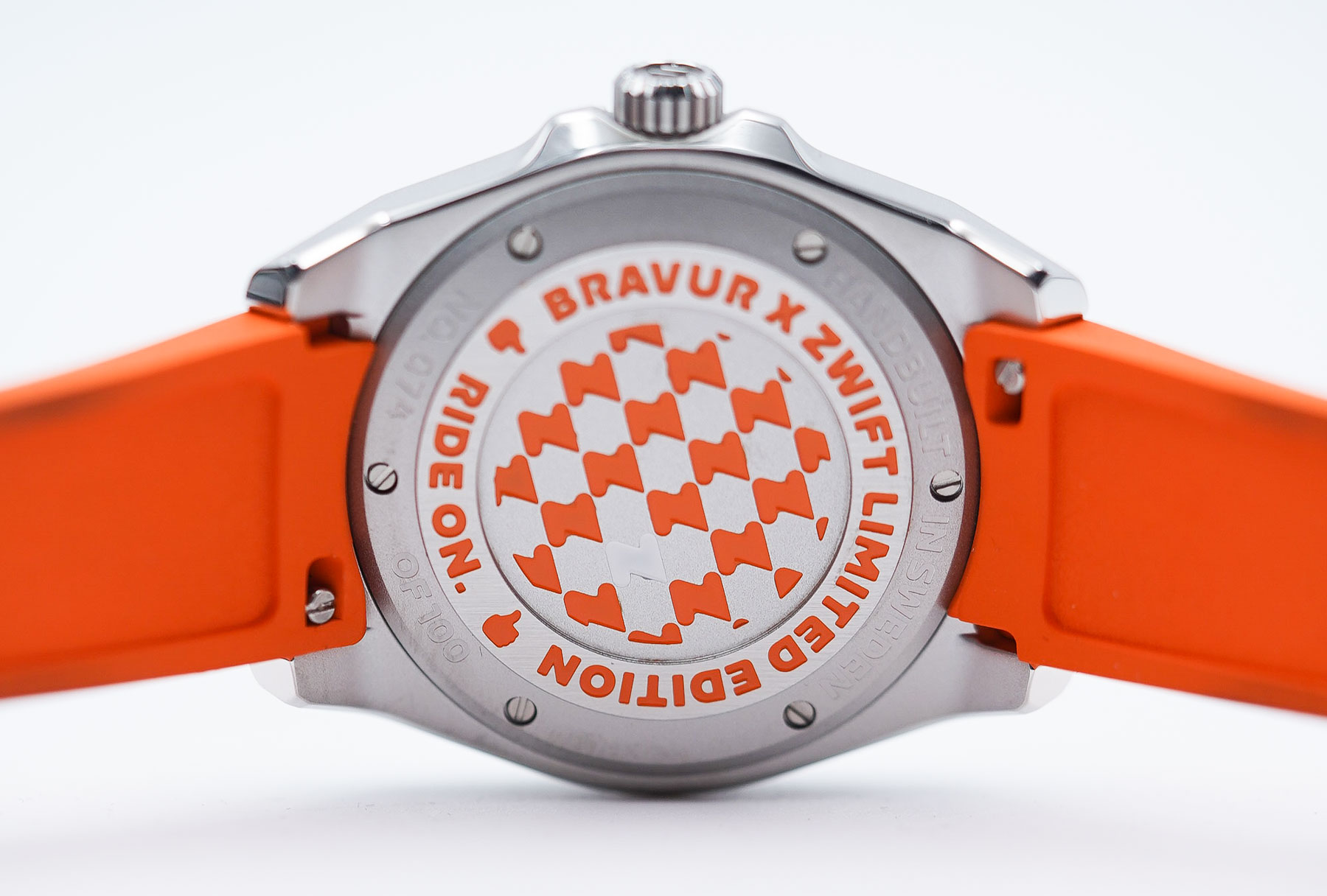
Each Bravur x Zwift is assembled in Båstad, where the movement is tested and, when necessary, finely regulated by Bravur’s watchmaker. The watches are built to order, with assembly and testing taking approximately two weeks before the final visual inspection. Turn the watch over and Bravur hasn’t forgotten about the fun. The screwed caseback features a repeating Zwift pattern recessed into the metal and filled with bright orange lacquer. The “Ride On” theme appears again, and each watch carries its individual number from the production run of only 100 pieces. In some ways, the back is actually more overtly Zwift than the front — which I think is exactly how it should be.
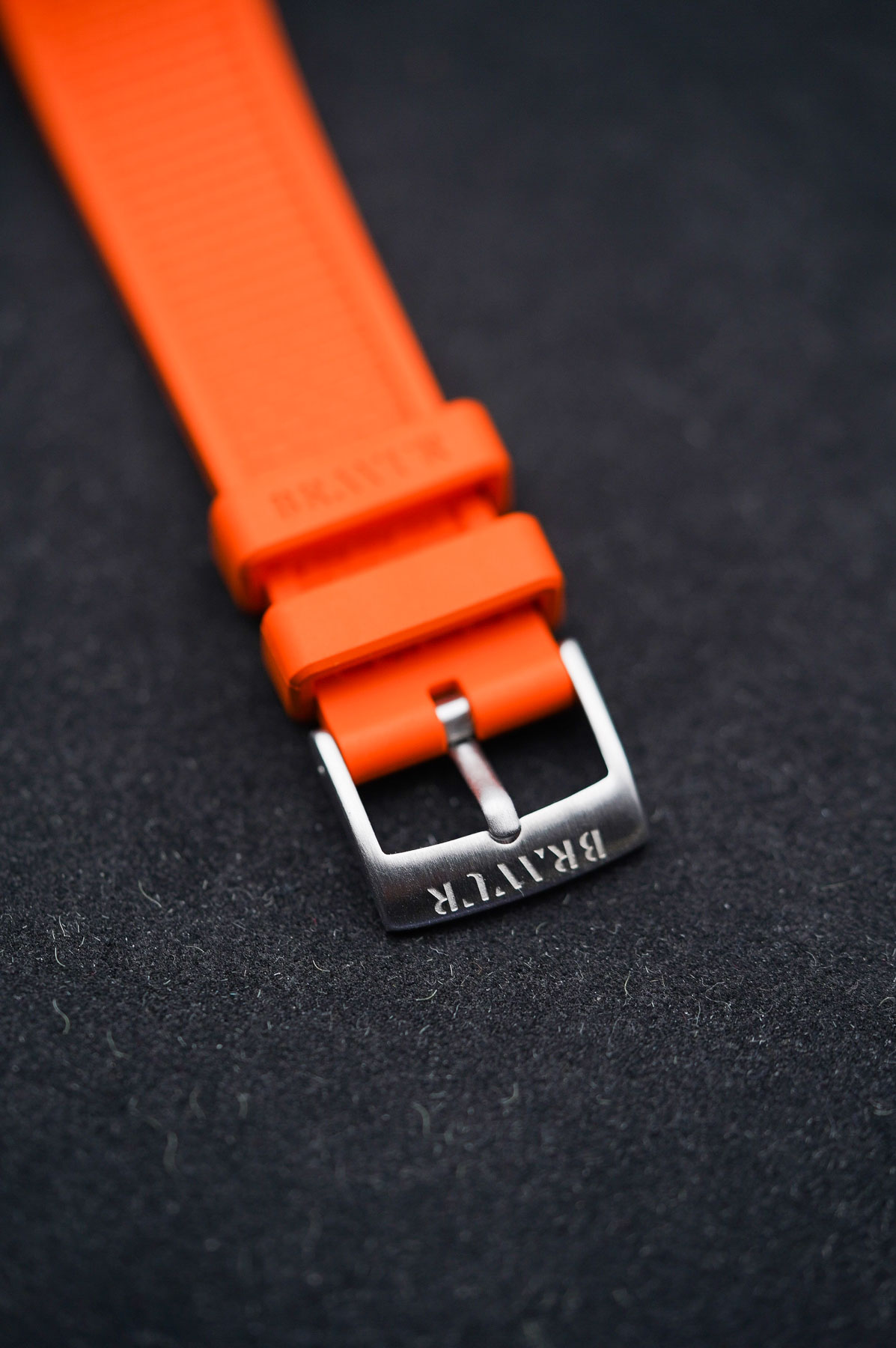
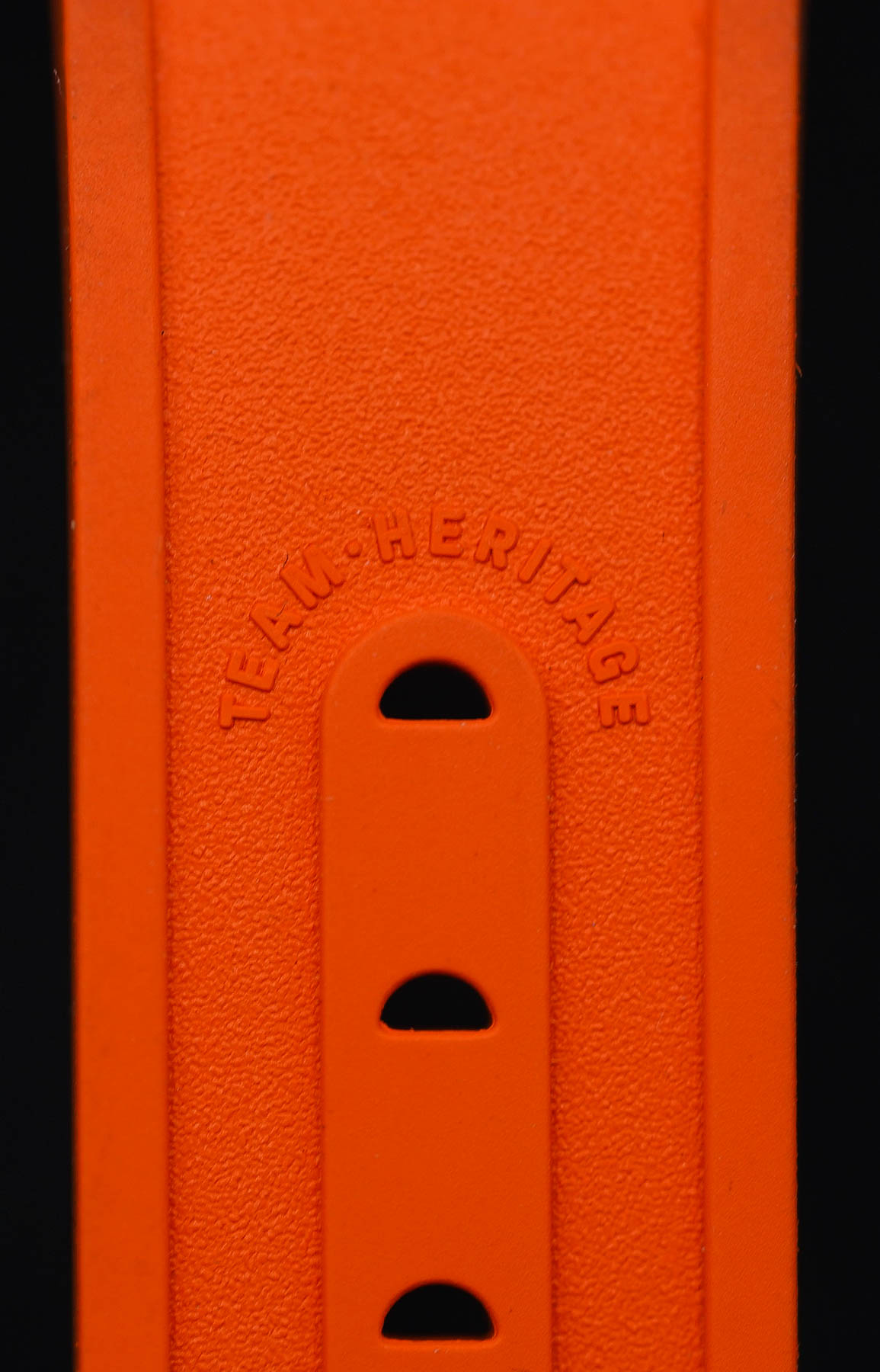
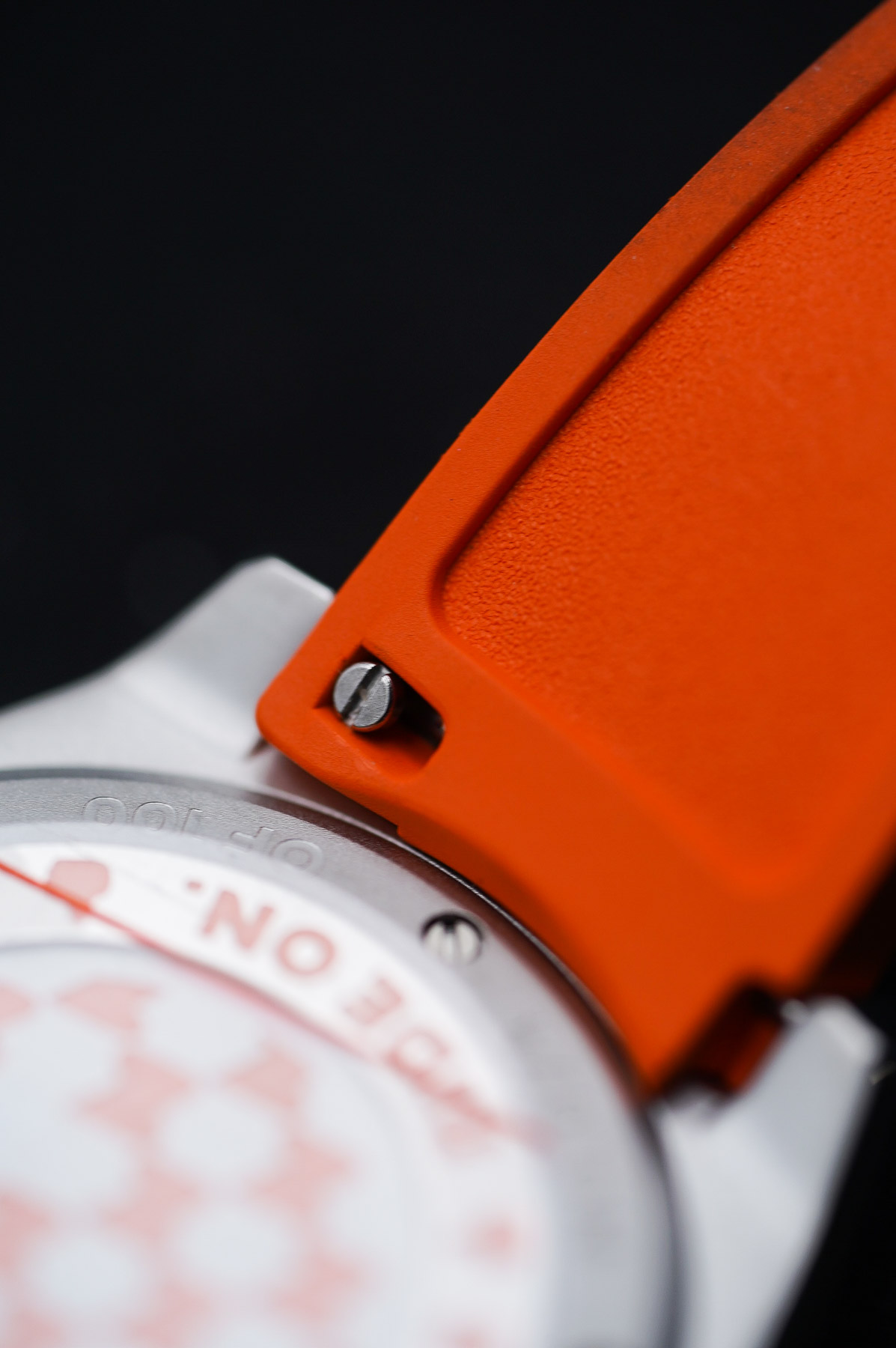
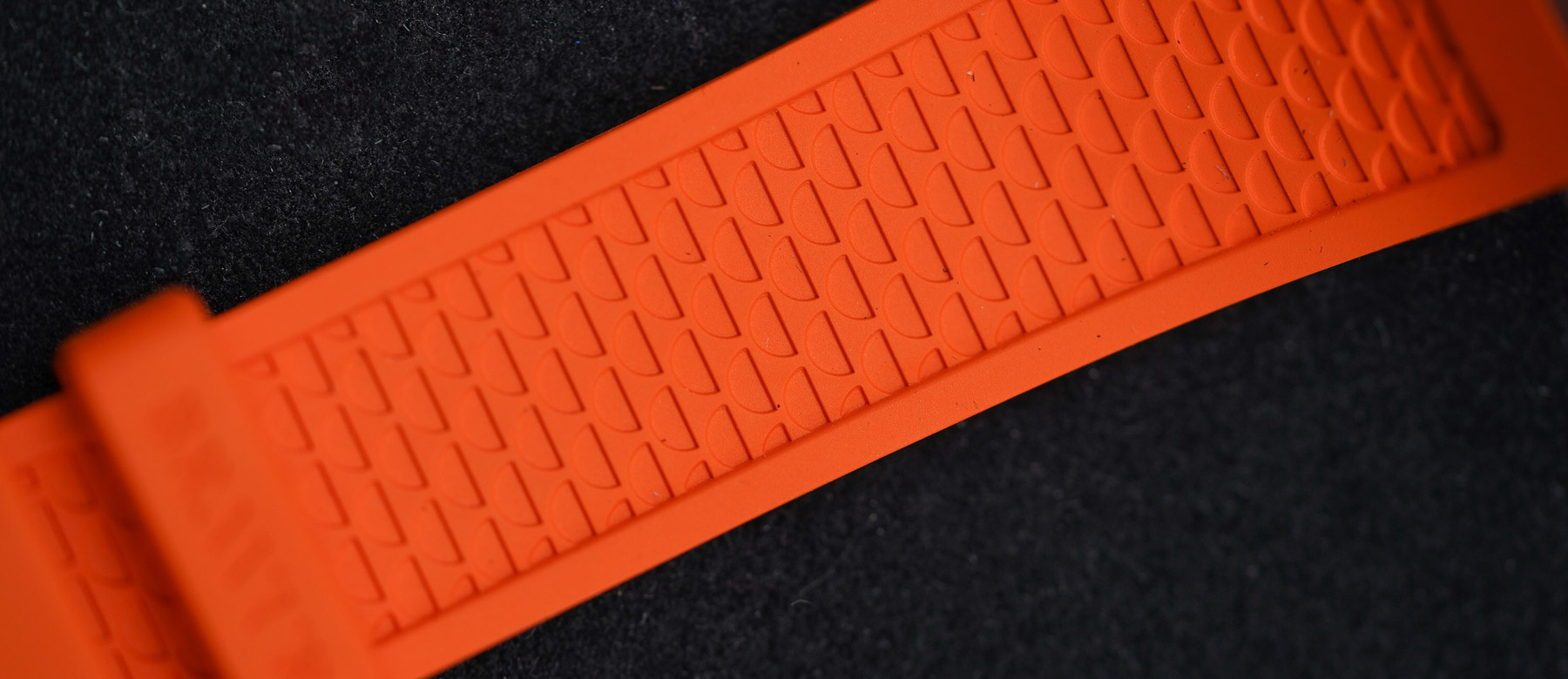
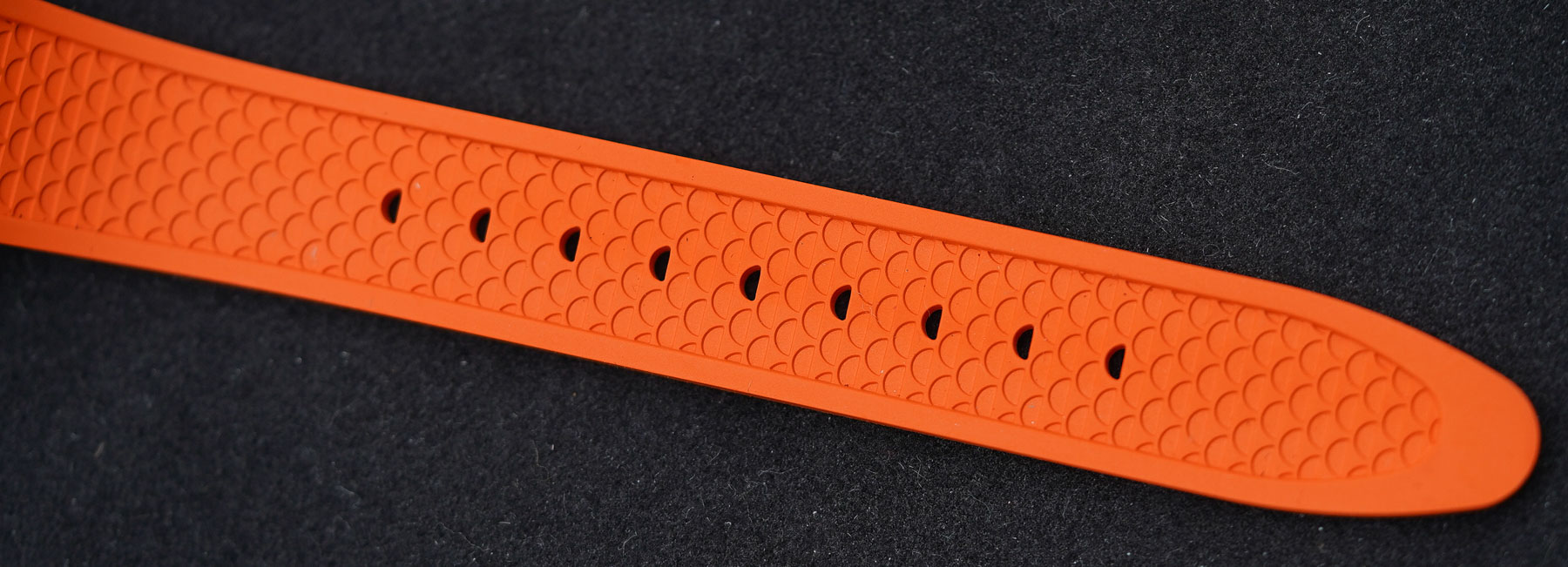
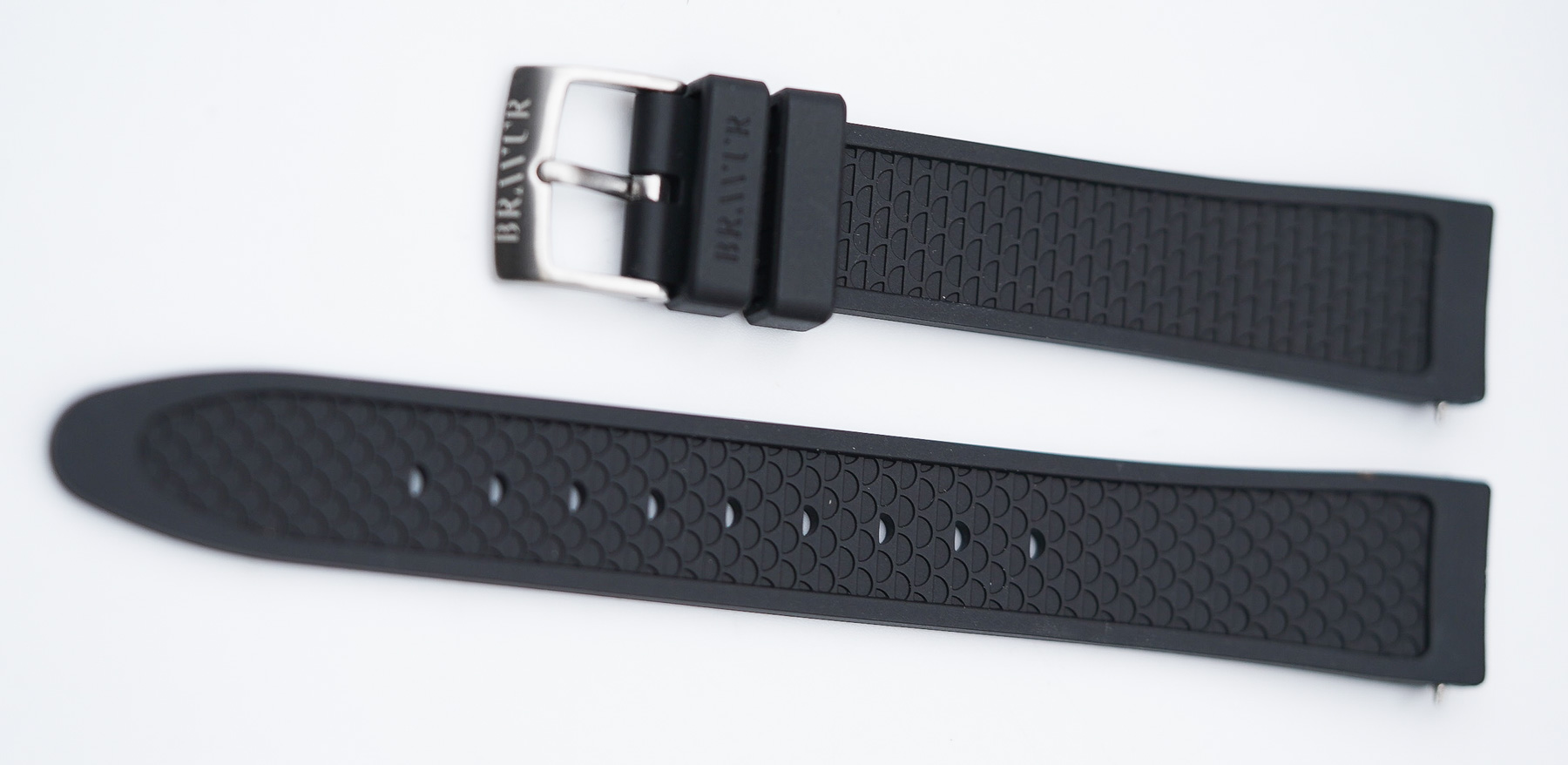
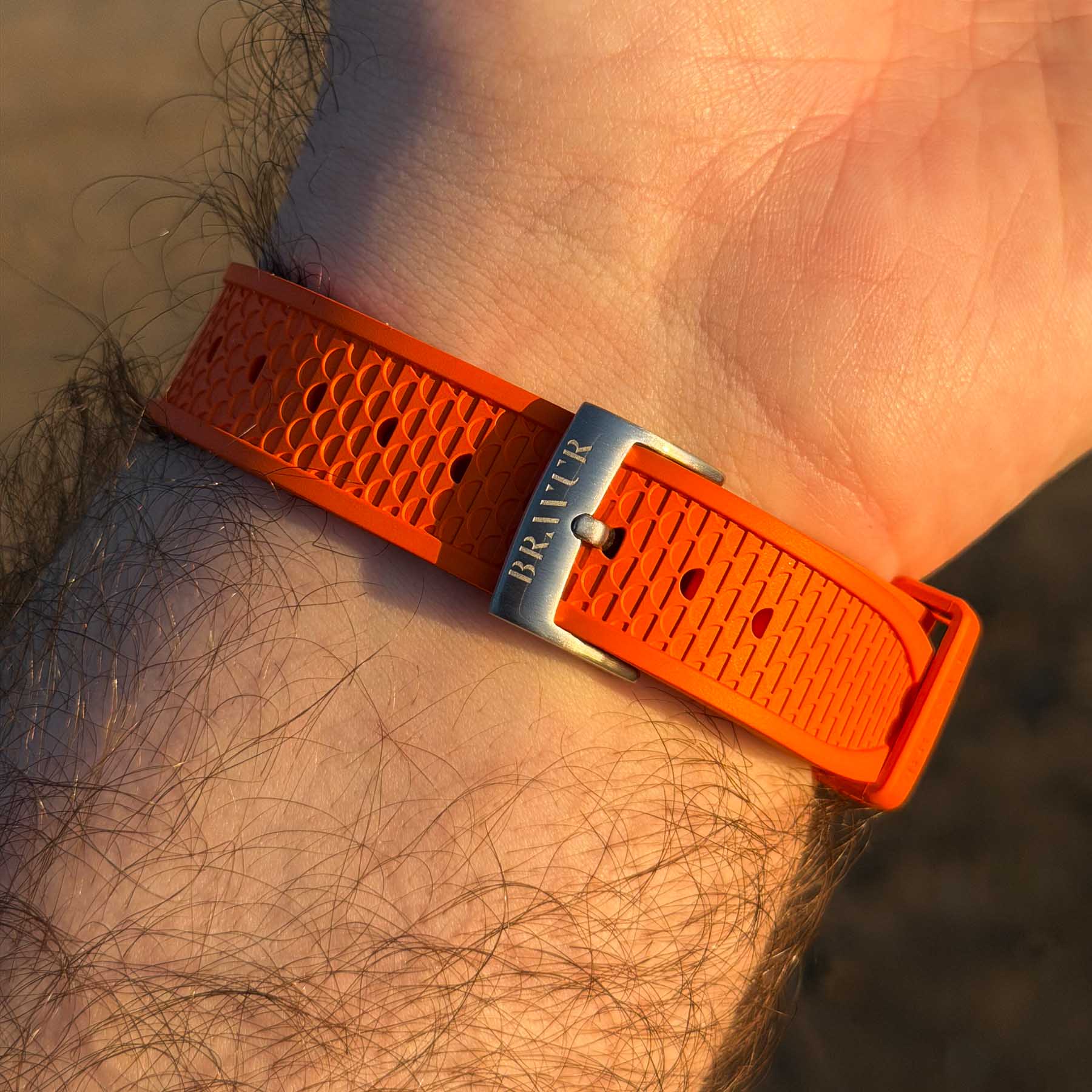
The watch comes with not one but two FKM rubber straps: black and, naturally, Zwift orange. The orange option completely transforms the personality of the watch. It emphasises the seconds hand and collaboration details and makes the whole package considerably more playful. The black strap, meanwhile, makes it much more understated and allows the dial itself to become the focus. At 18mm between the lugs, the straps are proportionally correct for the compact case. They feature quick-release spring bars, so changing between the two colours is simple and doesn’t require tools.
There is also an embossed cycling-cap motif on the rubber — another small cycling reference that doesn’t shout for attention. The buckle is relatively straightforward, with a conventional three-piece construction. It isn’t trying to become a design feature in itself, which is probably the right decision considering how much detail is already present elsewhere. More importantly, the combination of the compact case and rubber strap makes the watch extremely comfortable. This is a sports watch that genuinely feels as though you could forget it was on your wrist.
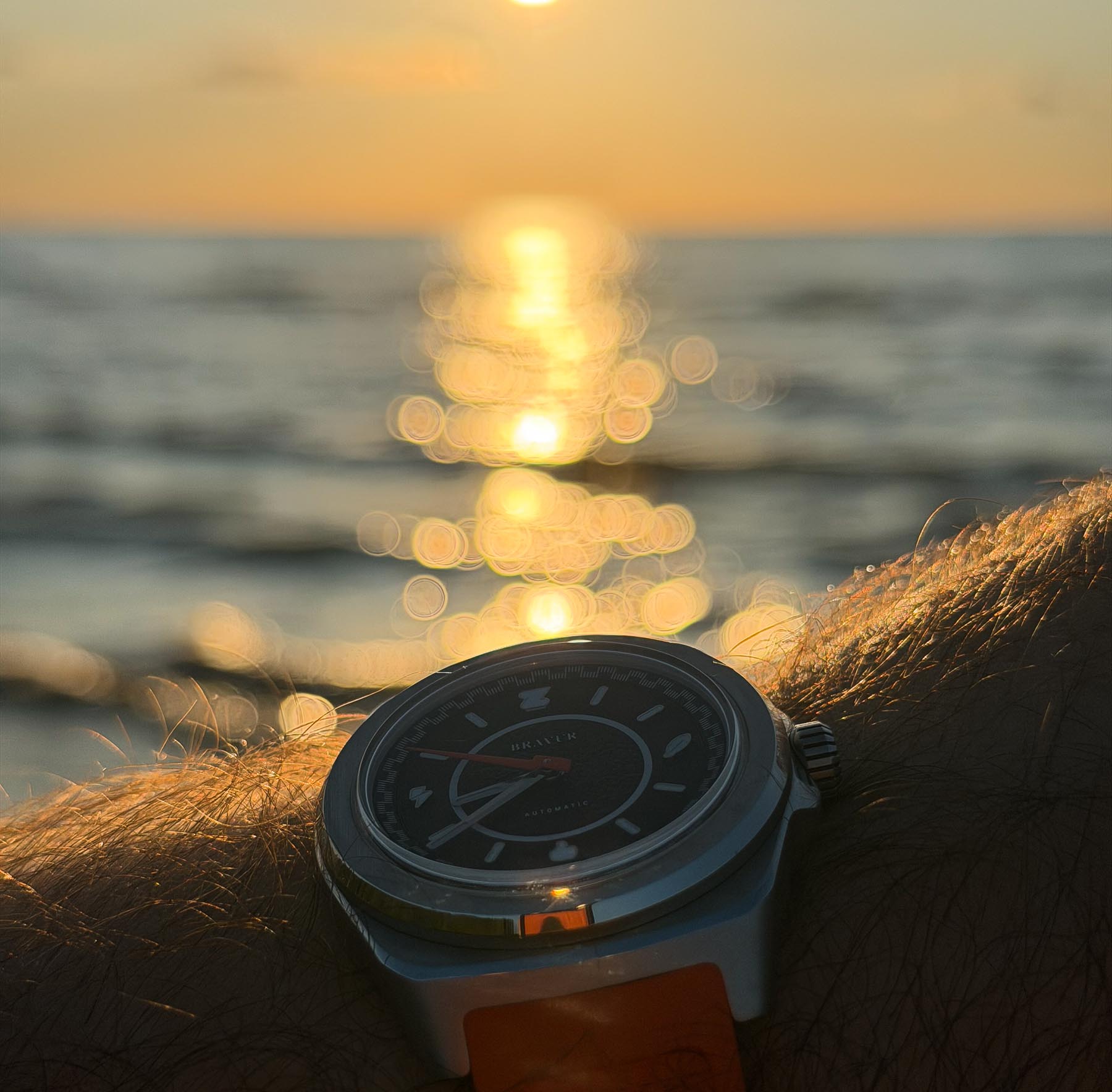
Collaborations are surprisingly difficult to get right. Too little reference to the collaborating partner and the whole exercise becomes pointless. Too much branding and the watch begins to resemble merchandise. The Bravur x Zwift sits somewhere in the sweet spot. You don’t need to know what the feather means. You don’t need to recognise the “Ride On” symbol, understand the Tron-bike reference or have spent hundreds of hours climbing virtual mountains in Watopia. Without that knowledge, you are still left with an attractive, unusual sports watch with an excellent case, interesting dial textures, strong proportions and flashes of orange that give it personality. But if you are a cyclist — and particularly if you are a Zwift user — another layer of the watch suddenly opens up.
That’s where I think Bravur has been particularly clever. The company hasn’t simply printed a Zwift logo onto an existing watch. It has taken the visual language of Zwift and translated it into the traditional vocabulary of watch design: hour markers, textures, lume, hands, engraving and colour. And underneath all that fun is a serious little mechanical watch. You get a beautifully finished 37mm stainless-steel case, domed sapphire crystal, 100 metres of water resistance, screw-down crown, Swiss automatic movement with approximately 68 hours of power reserve, two FKM straps, Swedish assembly and production limited to just 100 examples.
At €1,395, it also occupies an interesting position. There are certainly many automatic watches available around this price, but relatively few combine such distinctive case architecture, genuinely small-scale assembly and this much original design. Perhaps most importantly, the Bravur x Zwift has personality. The watch doesn’t take itself too seriously, yet neither does it feel like a novelty. Mechanical watches are fundamentally analog objects in an increasingly digital world. Zwift, meanwhile, takes one of the most physical and traditional activities imaginable — riding a bicycle — and transports it into a digital universe. Bringing those two ideas together could have been a disaster. Instead, Bravur has produced a watch that feels coherent, thoughtful and genuinely fun. And whether you’re racing through Watopia or simply wearing it while drinking coffee after a Sunday ride, the little orange seconds hand will keep circling the dial.


